FSS: "Insurance Companies with Low Retention Rates Must Submit Improvement Plans"
"Retention Rates to Be Set as Key Indicator for Supervision and Inspection"
As the cancellation of savings-type insurance policies has increased, the three-year policy retention rate for insurance companies dropped to 54% last year. The financial supervisory authorities plan to require improvement plans from insurance companies with insufficient retention rates.
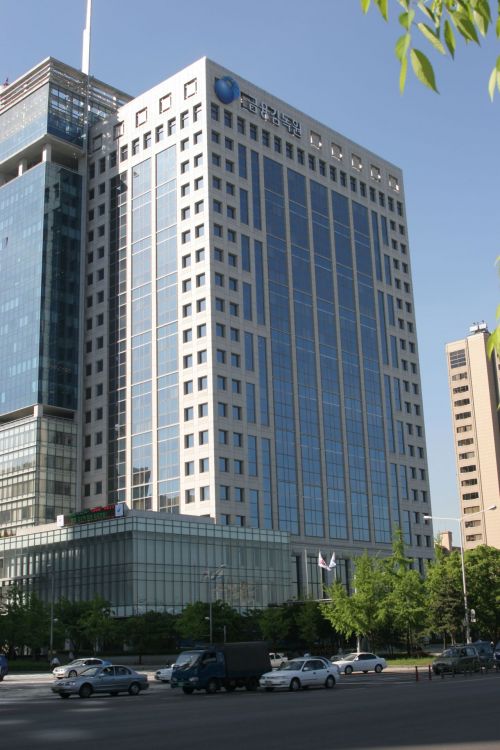 Financial Supervisory Service Headquarters, Yeouido, Yeongdeungpo-gu, Seoul. Financial Supervisory Service
According to the "2024 Insurance Company Sales Channel Business Efficiency and Supervisory Direction" report released by the Financial Supervisory Service on April 22, the three-year retention rate for insurance companies last year fell to 54.2%. This represents a 3.1 percentage point decrease from 57.3% in 2023.
The three-year retention rate for life insurance companies, which have a high proportion of savings-type insurance, dropped to 48.8%. This was due to a surge in cancellations of savings-type insurance policies that were purchased in 2021, when interest rates were in the 0% range. The increase in interest rates to the 3% range since 2021 has also had an impact.
The Financial Supervisory Service explained that among life insurance sales channels, the retention rate for bancassurance?insurance agency services provided by financial institutions, which account for the largest share at 69.8%?plummeted after the third year.
The three-year retention rate for non-life insurance companies also declined by 0.9 percentage points to 61.1%, compared to 62.0% in the previous year.
Last year, the retention rates for insurance companies were 87.5% after one year, 69.2% after two years, 54.2% after three years, 50.0% after four years, and 46.3% after five years. While the one- and two-year retention rates increased compared to the previous year, all retention rates after the third year declined.
The two-year retention rate is also more than 20 percentage points lower than those overseas. According to the Financial Supervisory Service, the two-year (25th month) retention rate is 96.5% in Singapore, 90.9% in Japan, 90.0% in Taiwan, and 89.4% in the United States. The retention rate for Korean insurance companies was 20.2 to 27.3 percentage points lower than major countries.
By sales channel, the one-year retention rate for exclusive agents and general agencies (GAs) was relatively high at 87.7% and 88.3%, respectively, but dropped to 57.0% and 58.4% after three years.
The Financial Supervisory Service plans to prepare a revised insurance sales commission system in the first half of the year to encourage improvements in policy retention rates. The plan includes setting a cap on advance commissions and introducing a retention and management commission system that pays out over several years. The aim is to improve the business practice of paying high commissions upfront and to increase retention rates.
For insurance companies with insufficient retention rates, the authorities will require an analysis of the causes of the low retention and improvement plans. In addition, retention rates will be set as a key management indicator for the supervision and inspection of insurance companies, and oversight will be strengthened.
Furthermore, monitoring of competition in the sale of protection-type products through bancassurance channels will be intensified. Since the permitted share of sales for specific insurance companies through bancassurance channels has been relaxed this month?from 25% to 33% for life insurers and 75% for non-life insurers?there are concerns that competition in the bancassurance channel could intensify. The authorities plan to introduce mandatory disclosure of sales proportions by partner insurance company and to strengthen requirements for product comparison and explanation.
As of the end of last year, the number of insurance agents stood at 651,256, a 7.8% increase from the previous year. By sales channel, the distribution for life insurers was: bancassurance (69.8%), direct sales channels by insurance company employees (16.1%), GAs (6.9%), and exclusive agents (6.7%). For non-life insurers, the breakdown was: GAs (31.1%), direct sales channels (25.1%), online channels (CM, 19.2%), and exclusive agents (7.2%).
The rate of incomplete sales by insurance companies continued to improve, reaching 0.025%. The rate for life insurers was 0.05%, higher than the 0.014% for non-life insurers.
The agent retention rate was 52.4%, a 5.1 percentage point increase from 47.3% in the previous year. The retention rate refers to the proportion of agents who continue to engage in regular sales activities one year after initial registration.
The average monthly premium income per exclusive agent was 21.4 million won, a decrease of 6.6% (1.52 million won) from the previous year, while the average monthly income per agent rose by 11.2% (340,000 won) to 3.38 million won.
© The Asia Business Daily(www.asiae.co.kr). All rights reserved.












