Trump Again Pressures Powell: "Cut Rates Immediately"
Concerns Rise Over Threats to Monetary Policy Independence Amid Tariff Uncertainty
U.S. Stocks, Treasuries, and Dollar Suffer 'Triple Decline'
U.S. Economic Confidence Shaken by Trump Risk
The three major U.S. assets?stocks, Treasuries, and the dollar?are all declining simultaneously. As former President Donald Trump continues to pressure Federal Reserve (Fed) Chair Jerome Powell for interest rate cuts following his tariff offensives, thereby undermining the independence of monetary policy, investors are accelerating the so-called "Sell America" trend by selling off even U.S. Treasuries and the dollar, which are considered the world's safest assets. With confidence in the U.S. economy wavering, the outlook of "American exceptionalism," which predicted that only the U.S. would continue to enjoy economic prosperity, is also rapidly fading.
Trump Lashes Out at Powell as a "Loser" ... "Immediate Rate Cut Needed to Prevent Economic Slowdown"
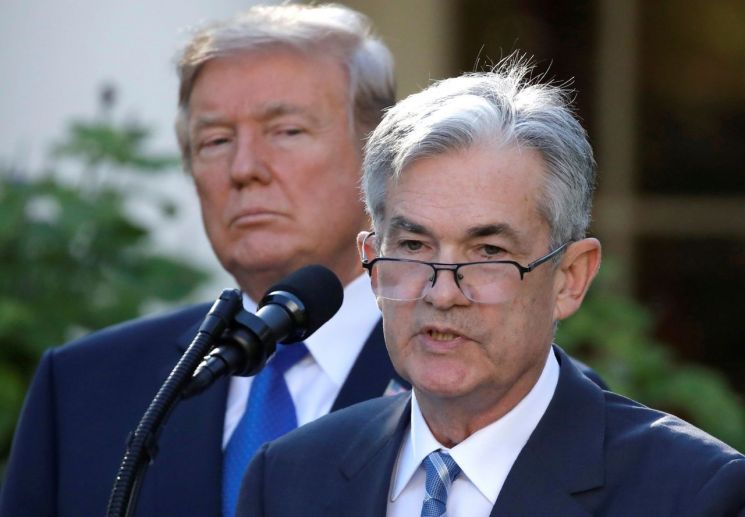
On April 21 (local time), President Trump once again pressured for a preemptive interest rate cut, attacking Chair Powell as a "loser" and "Mr. Too Late." In a post on his self-created social networking service, Truth Social, Trump claimed, "There is virtually no inflation," adding, "Energy costs are falling, and food prices, including Biden's (former President Joe Biden) egg disaster, have dropped significantly. Most other things are also on a downward trend."
President Trump further stated, "If the main loser, Mr. Too Late, does not cut rates immediately, the economy could slow down," and added, "Europe has already cut rates seven times." He continued, "Except for the time when Powell lowered rates during the election to help 'Sleepy Joe Biden' (and later Kamala Harris) win, he has always been too late. What was the result?" Just four days after mentioning on April 17 that "if I wanted to get him (Chair Powell) out, he would be gone very quickly" while demanding a rate cut from the Fed, Trump has once again intensified his criticism of Powell.
As President Trump escalates his attacks on Chair Powell, market analysts suggest that he is pressuring for rate cuts to prevent a tariff-induced recession, while also laying the groundwork to blame Powell should a recession materialize. Not only President Trump but also his aides have publicly discussed the possibility of firing Powell. Kevin Hassett, Chair of the White House National Economic Council (NEC), stated on April 18, "President Trump and his team will continue to review the matter." According to a previous Wall Street Journal (WSJ) report, President Trump discussed firing Chair Powell as recently as early last month and even considered appointing former Fed Governor Kevin Warsh as his successor.
However, due to President Trump's tariff policies, the Fed now faces a dilemma regarding the direction of monetary policy. The shock from tariffs has raised concerns about stagflation (rising prices amid slowing growth), forcing the Fed to address both inflation and economic slowdown simultaneously. While President Trump pressures for rate cuts, tariff hikes are driving up import prices, and if consumer prices rise, the Fed may have to hold rates steady or even raise them to maintain price stability.
U.S. Stocks, Treasuries, and Dollar See 'Triple Decline'... Sell America Rush
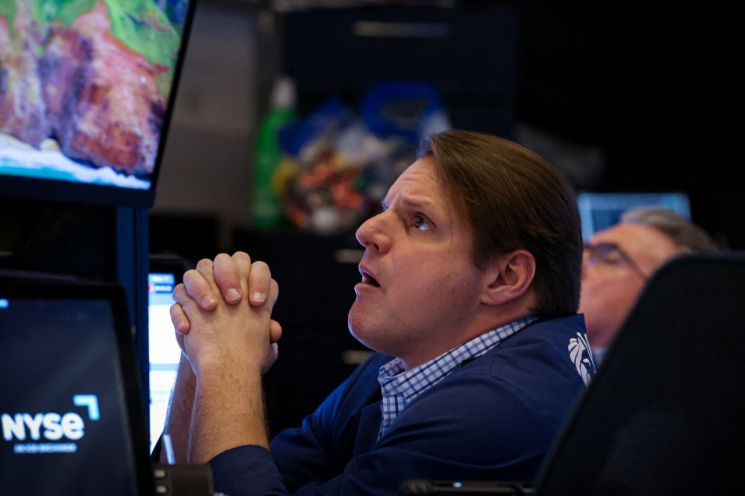
As President Trump continues his relentless criticism of Powell, the U.S. financial markets saw a rapid acceleration of the "triple weakness," with stocks, Treasuries, and the dollar all plunging. It is unusual for risk assets like stocks and safe-haven assets like U.S. Treasuries and the dollar to fall simultaneously.
According to the global bond market, as of 5:05 p.m. Eastern Time, the yield on the 30-year U.S. Treasury had jumped 9 basis points (1bp = 0.01 percentage point) from the previous session to 4.9%. The yield on the 10-year Treasury, considered the global benchmark, also surged 9 basis points to 4.41%. Treasury yields move inversely to prices. The rise in long-term yields indicates that investors are selling off longer-maturity Treasuries. This can be interpreted as a sign that investors' medium- to long-term outlook and confidence in the U.S. economy are faltering. The dollar also declined, with the dollar index?which measures the value of the dollar against the currencies of six major countries?falling 1.01% from the previous session to 98.13, its lowest level in three years. The New York stock market also closed sharply lower. The Dow Jones Industrial Average fell 2.48% from the previous session, while the S&P 500 and Nasdaq indices dropped 2.36% and 2.55%, respectively.
In contrast, demand for gold, a traditional safe-haven asset, surged, pushing gold futures prices above $3,400 per ounce to a new all-time high.
Amid uncertainty over tariff policies, a lack of clear progress in trade negotiations, and growing concerns over the erosion of monetary policy independence, the "Sell America" phenomenon?where investors exit dollar-denominated assets en masse?is intensifying. Since President Trump officially announced reciprocal tariffs on the 2nd, yields on the 30-year and 10-year U.S. Treasuries have jumped by about 40 basis points and 30 basis points, respectively, while the dollar index has dropped by more than 5%. The S&P 500 index has fallen by more than 9%. In particular, the exodus from U.S. Treasuries, which are considered the ultimate safe-haven asset, can be interpreted as a sign that confidence in the U.S. economy and its status as the world's key currency issuer is being shaken.
Yujiro Goto, foreign exchange strategist at Nomura Securities, said, "It is highly unusual for a major reserve currency country like the U.S. to see both Treasury sell-offs and currency depreciation at the same time," adding, "Concerns about stagflation in the U.S. economy and distrust in U.S. assets are growing."
On Wall Street, there are warnings that if President Trump continues to undermine the independence of monetary authorities, the sell-off in U.S. Treasuries, the dollar, and stocks could accelerate, and financial market turmoil could be prolonged.
Krishna Guha, head of global policy and central bank strategy at Evercore ISI, said, "If there is actually an attempt to remove the Fed chair, we can expect serious market backlash, including rising bond yields, a falling dollar, and stock sell-offs," adding, "I cannot believe the administration would actually try to do such a thing." He also noted, "Once questions are raised about the Fed's independence, it actually raises the bar for the Fed to cut rates," suggesting that President Trump's public pressure for rate cuts could, in fact, make the Fed more reluctant to lower rates.
© The Asia Business Daily(www.asiae.co.kr). All rights reserved.













