30-Year Yield Rises 8bp, 10-Year Up 6bp
Trump Pressures Powell for Rate Cut, Calling Him a "Loser"
Concerns Over Monetary Policy Independence... Dollar Also Falls
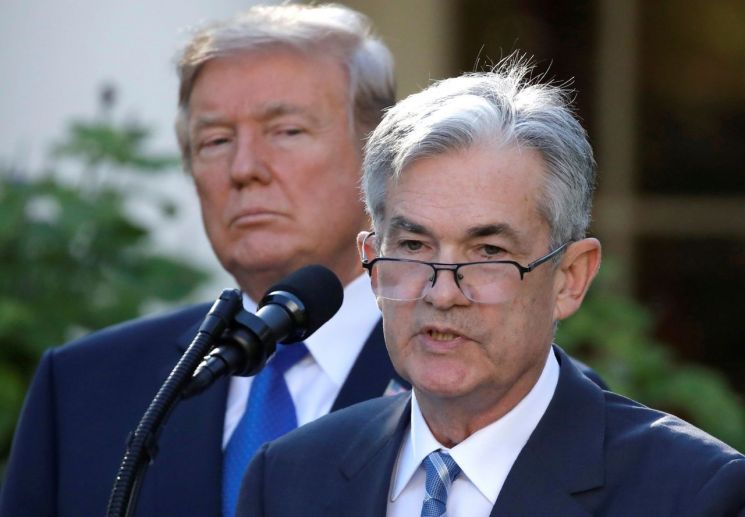
U.S. President Donald Trump has been stepping up his attacks on Jerome Powell, leading investors to pull out of U.S. Treasuries, which are widely considered the world's safest assets. As President Trump continues to pressure Federal Reserve Chair Jerome Powell to cut interest rates, concerns over the independence of the central bank and confidence in the U.S. economy have been shaken. This has prompted investors to sell off long-term U.S. Treasuries. The U.S. dollar is also on a downward trend.
According to the global bond market on the 21st (local time), as of 2:39 p.m. Eastern Time, the yield on the 30-year U.S. Treasury was 4.89%, up 8 basis points (1bp = 0.01 percentage point) from the previous trading day. The yield on the 10-year U.S. Treasury, which serves as a global benchmark, was up 6 basis points from the previous day, trading at 4.39%.
In contrast, the yield on the 2-year U.S. Treasury was down 6 basis points from the previous day, at 3.73%.
Treasury yields move inversely to prices. The rise in long-term Treasury yields indicates that investors are selling off longer-maturity bonds. This suggests that investors' medium- to long-term outlook and confidence in the U.S. economy may be weakening.
President Trump's attacks on Powell appear to be driving the sell-off in Treasuries. On this day, through his self-created social networking service, Truth Social, Trump called Powell a "loser" and "Mr. Too Late," pressuring him to cut interest rates. Trump stated, "In reality, there is no inflation," and warned, "If the major loser, Mr. Too Late, does not cut rates immediately, the economy could slow down." Just four days earlier, on April 17, Trump had demanded a rate cut and threatened Powell's dismissal, saying, "If I want him out, he will be gone very quickly." Now, he has renewed his pressure on Powell.
Officials in the Trump administration have also openly discussed the possibility of dismissing Powell. Kevin Hassett, Chairman of the White House National Economic Council (NEC), said on the 18th, "President Trump and his team will continue to review the matter." According to a previous Wall Street Journal (WSJ) report, President Trump discussed removing Powell as recently as early last month and considered appointing former Fed Governor Kevin Warsh as his replacement.
Concerns over the Fed's independence have accelerated capital outflows from U.S. assets, weakening not only stocks and Treasuries but also the dollar. The dollar index, which measures the value of the dollar against the currencies of six major countries, was down 1.08% from the previous trading day, at 98.06.
On Wall Street, there are warnings that continued encroachment on monetary policy independence under the Trump administration could accelerate the sell-off of U.S. Treasuries, stocks, and the dollar, potentially causing turmoil in financial markets.
Krishna Guha, head of global policy and central bank strategy at Evercore ISI, stated, "If there is an actual attempt to remove the Fed chair, we would expect a severe market backlash, including rising bond yields, a falling dollar, and stock sell-offs." He added, "It's hard to believe the administration would actually try to do such a thing." He further noted, "If you start questioning the Fed's independence, it raises the bar for the Fed to cut rates." This is a warning that President Trump's public pressure for rate cuts could actually make the Fed more reluctant to lower rates, as it seeks to protect its policy independence.
© The Asia Business Daily(www.asiae.co.kr). All rights reserved.











