Delivering the Life of Jesus in an Easy and Friendly Way with 'King of Kings'
Director Jang Sungho Covers 9 Billion KRW of Production Costs with Personal Funds
"I Decided from the Start to Complete the Film with Domestic Capital and Technology"
Utilizing Unreal Engine "Can Minimize Trial and Error"
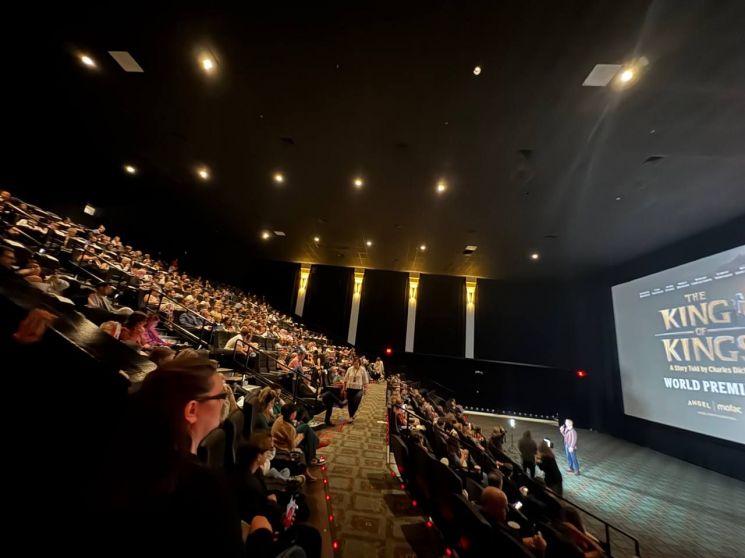
The Korean animated film 'King of Kings' is gaining popularity in North America. After its release on April 11 (local time), it ranked second at the box office for seven consecutive days. As of April 18 (local time), ticket sales reached $34,693,552 (approximately 49.4 billion KRW). The decline in sales has been minimal, and the number of theaters screening the film has even increased, suggesting that its upward trend is likely to continue for some time.
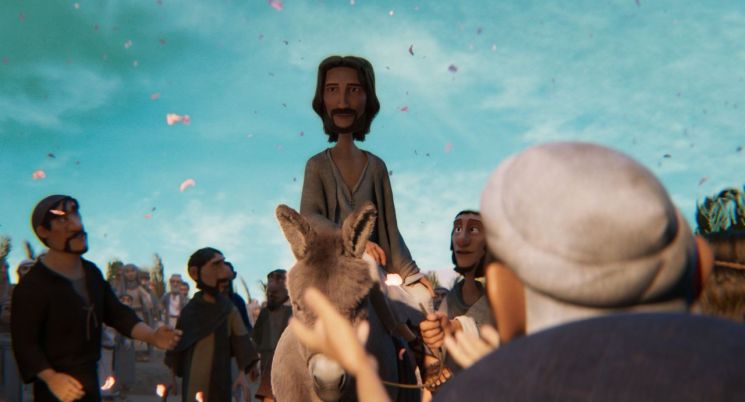
This work depicts the story of Jesus in a way that is accessible and friendly to children. Jang Sungho, CEO of Mofac Studio, was responsible for the script, direction, and production, capturing the journey from Jesus' birth to his resurrection. Inspired by Charles Dickens' 'The Life of Our Lord,' the film interprets the New Testament through a father explaining the story to his son.
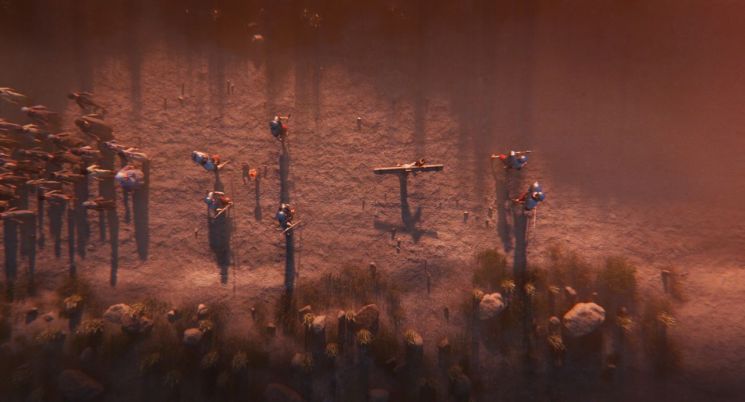
There have been many films and dramas that shed light on the life of Jesus, such as 'The Passion of the Christ' (2004), 'Son of God' (2014), and 'The Bible' (2013). However, only a few works are accessible to children. Jang saw the potential for animation in this gap. In an interview with our publication on April 18, he stated, "Just as Dickens conveyed the life and teachings of Jesus to his children in a simple and kind manner, I developed the scenario with a pure heart."
"Unlike other works that focus on pain and suffering in stories familiar even to non-Christians, I presented the story from a new perspective to spark interest and curiosity. By incorporating adventure and fantasy elements through the concept of time travel, and by expressing detailed emotions, I encouraged the audience to identify with the main character, Walter (voiced by Roman Griffin Davis)."

The challenge was the production cost, which reached 36 billion KRW. Many domestic investors rejected the project, arguing that Korean animation?especially religious-themed works?would not succeed in North America. However, acquaintances in the American film industry had a different opinion. After hearing the proposal, they responded with unwavering confidence. Nevertheless, Jang insisted on securing domestic investment, as he did not want to lose creative control or intellectual property rights. He said, "It feels like I spent 90% of the ten years it took to complete the film on investment alone."
"It was truly a history of rejection. While the initial investment process was relatively smooth, we made little progress during the development of the concept. At that time, I received an offer to connect with Hollywood investors in the United States, but I couldn't accept it. I had always decided that the film had to be completed with domestic capital, technology, and talent."
Jang secured 27 billion KRW in investment and covered the remaining 9 billion KRW with his own funds. He was confident in achieving a level of quality that warranted such commitment. He is a visual effects (VFX) master in Chungmuro. Since the mid-1990s, he has created imaginary spaces and beings in numerous films, including 'Haeundae' (2009), 'A Werewolf Boy' (2012), and 'Hansan: Rising Dragon' (2022). By securing advanced technology early on, he also demonstrated new possibilities for virtual production (filming in virtual spaces).
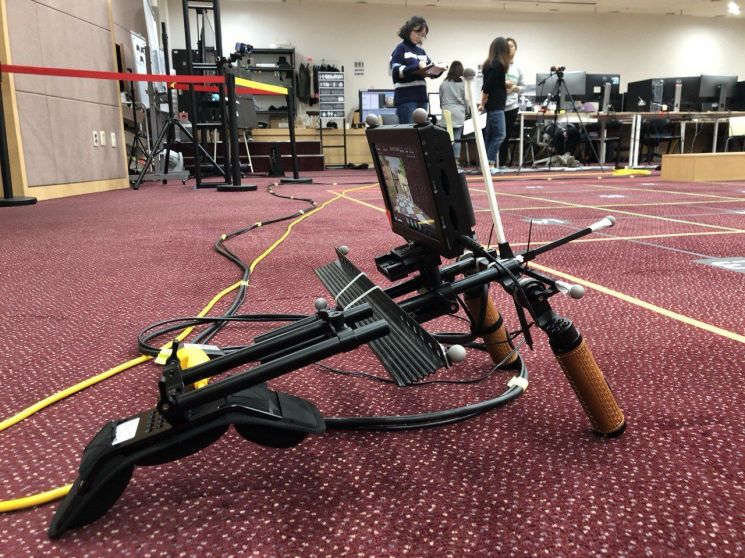
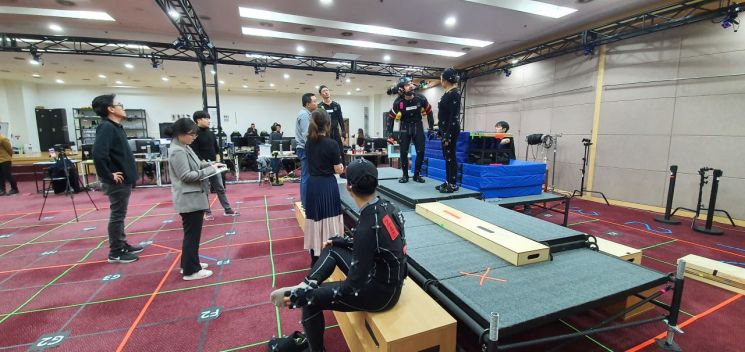
'King of Kings' is the result of that time and effort. It was produced as the world's first real-time animation using Unreal Engine, a 3D game engine developed by Epic Games in the United States. Before production began, Jang established a new animation pipeline using performance capture and virtual filming technology. Actors' performances were recorded via motion capture (digitally recording human movements) in a virtual space and then converted into the final animated version through editing. He asserted, "This is an effective system that can minimize trial and error during production."
"On film, drama, and animation sets, things often do not go as planned. Even with a storyboard (a visual plan of scenes to be filmed using drawings or photos), chaos or wasted time can occur for various reasons. Many directors, in particular, shoot extra footage to make up for it in the editing room. The virtual production platform I built can efficiently resolve these issues with thorough preparation. It also significantly reduces production costs. 'King of Kings' is only the beginning."
© The Asia Business Daily(www.asiae.co.kr). All rights reserved.
![Clutching a Stolen Dior Bag, Saying "I Hate Being Poor but Real"... The Grotesque Con of a "Human Knockoff" [Slate]](https://cwcontent.asiae.co.kr/asiaresize/183/2026021902243444107_1771435474.jpg)


















