Chinese Inventory Hit by U.S. Tariffs Raises Industry Concerns
U.S. Imposes 120% Tariff on Small Parcels from China
Potential for Dumping of Unsold Inventory in South Korea
Fears of False Country-of-Origin Labeling and Transshipment via Korea
As the U.S.-China tariff war continues to escalate, domestic retail and small manufacturing industries in South Korea are on high alert. This is because if China redirects its vast inventory of low-priced goods, which it can no longer export to the United States, to South Korea, it could disrupt the entire domestic consumer market.
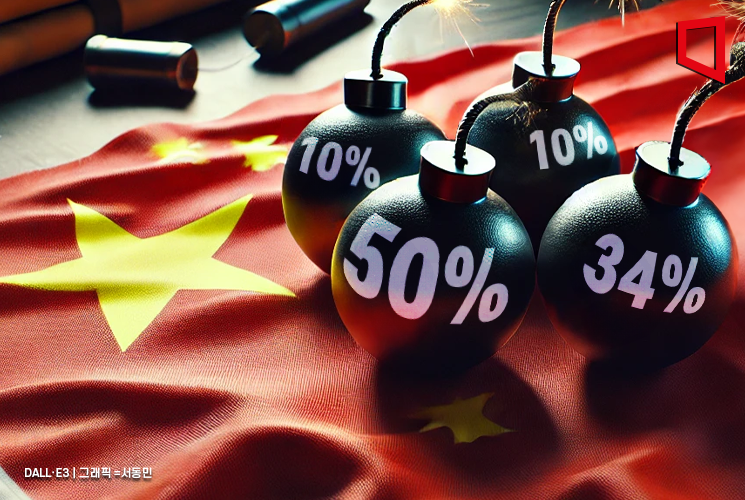
According to industry sources on April 20, U.S. President Donald Trump, after imposing a 104% reciprocal tariff on Chinese goods on April 9, recently abolished the "de minimis" rule, which exempted imports valued under $800 (approximately 1.14 million won) from tariffs. As a result, starting from May 2, even small parcels sent from China to the United States will be subject to a high tariff rate of 120%. Last year, 60% of the 1.4 billion duty-free parcels processed by U.S. customs originated from China.
This tariff bomb is now targeting ultra-low-priced Chinese goods that have previously dominated the U.S. consumer market. Chinese e-commerce companies such as Temu and Shein, which have targeted the U.S. online retail market with ultra-low-priced products, are also facing a crisis. Temu and Shein have notified U.S. consumers that they will raise product prices starting April 25 and are taking measures such as reducing advertising expenses, but it appears inevitable that they will experience a significant decline in sales and a contraction in business operations.
The domestic retail industry is also closely monitoring where the massive volume of Chinese goods, now blocked from entering the U.S. market, will be redirected. If Chinese manufacturers and distributors seek alternative markets to replace the United States, South Korea is likely to be one of the top candidates. South Korea is geographically close to China, has consumers who prefer low-priced or "value for money" products, and boasts the world's fifth-largest online shopping market. In particular, Chinese platforms such as AliExpress, Temu, and Shein?collectively referred to as "AlTeShi"?are expected to make South Korea their main stage of activity.
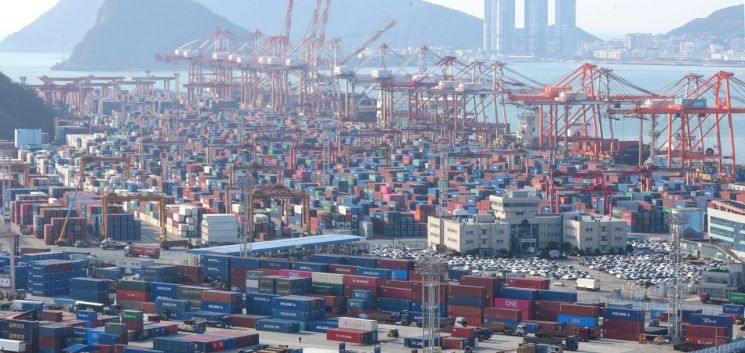 Concerns are growing that South Korea is also within the scope of Trump's "tariff war" due to the tariffs imposed by U.S. President Donald Trump on Canada, Mexico, and China. The photo shows export and import cargo piled up at Sinsundae Pier in Busan Port. Photo by Yonhap News
According to retail analytics service WiseApp Retail, as of last month, AliExpress had 9.129 million monthly active users (MAU) in South Korea, ranking second among comprehensive online malls after Coupang, which had 33.618 million users. Temu ranked fourth with 8.307 million users. An industry insider stated, "Although there may be a time lag, it is highly likely that China will use AlTeShi to launch large-scale discount promotions and dumping offensives to clear out its accumulated inventory."
According to Statistics Korea, in the first quarter of this year, the value of direct overseas purchases from China reached $786 million (about 1.1197 trillion won), up 11.5% from $705 million (about 1.0043 trillion won) in the same period last year. During the same period, the total value of direct overseas purchases decreased by 4.4%, from $1.421 billion (about 2.0244 trillion won) to $1.358 billion (about 1.9346 trillion won). China's share of total direct overseas purchases also rose from 49.6% to 57.9%, marking the highest quarterly figure ever. The number of direct purchases from China in the first quarter of this year was 32.486 million, up 12.3% from 28.919 million in the first quarter of last year.
In this situation, analysts warn that if China's low-priced goods offensive intensifies due to the fallout from the tariff war, it will pose a significant threat not only to domestic small and medium-sized manufacturers, who are already struggling with shrinking consumer demand, but also to local e-commerce companies. There are also concerns that false labeling of the country of origin could become widespread, exploiting the tariff gap between Chinese and Korean exports to the United States. If Chinese goods are rerouted through South Korea and exported to the United States as so-called "Made in Korea" by switching tags, domestic small manufacturers could suffer further damage.
The Korea Customs Service plans to strengthen inspections of the country of origin for Chinese goods entering South Korea in response to these concerns.
© The Asia Business Daily(www.asiae.co.kr). All rights reserved.


















