"Building Partnerships with Global Cloud Companies"
"Understanding Data Center Characteristics and Requirements Must Come First"
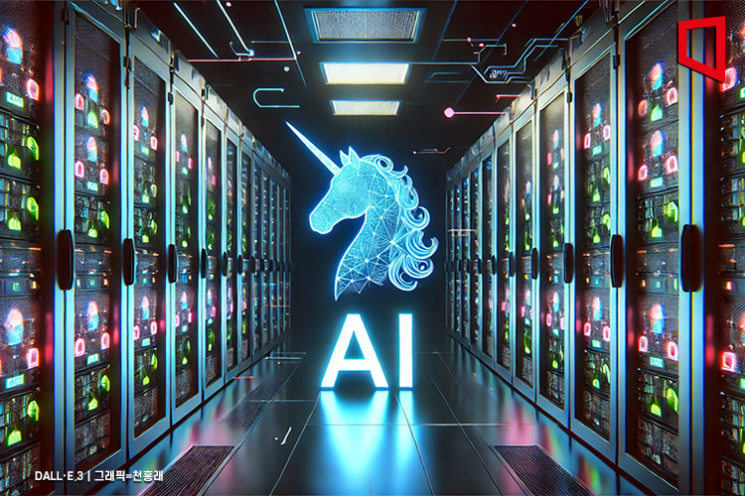
As the demand for data centers increases due to advancements in artificial intelligence (AI), calls have been made for the government to play a greater role in supporting domestic construction companies seeking to enter the overseas data center construction market.
According to the report "Data Center Construction Status and Industrial Implications Amid Digital Infrastructure Expansion" released on the 19th by the Korea Research Institute for Construction Policy (KRICP), competition for leadership is intensifying as demand for digital infrastructure and data centers rises.
Lee Gyueun, Associate Research Fellow at KRICP, stated, "There is a need to strengthen the government's role in responding to the global market, along with establishing standards and regulatory frameworks related to data centers." Lee added, "The government should have a strategy both to attract investment from global IT companies in domestic data centers and to support domestic construction firms in advancing into the overseas data center construction market."
To capture demand for digital infrastructure, global big tech companies such as Microsoft (MS), Google, and Amazon are promoting large-scale data center construction investments not only in the United States but also in Asia. Data centers, which were previously concentrated in certain regions, are now spreading worldwide due to the need for geographical proximity. As a result, construction in the Asia-Pacific region is also expected to increase.
Lee emphasized that, for domestic construction companies to expand into data centers, it is necessary to establish partnerships with global cloud companies. Additionally, Lee noted, "The government's role is required, including linking diplomatic channels to respond to overseas local licensing systems, providing financial and guarantee support, and expanding R&D support to secure international certifications and eco-friendly technologies."
In addition to supporting overseas expansion, Lee explained that it is urgent to establish policies for the domestic construction environment. There are ongoing debates over metropolitan area congestion, power supply imbalances, and environmental cost burdens, which require comprehensive policy responses.
Lee pointed out, "As data centers become concentrated in the metropolitan area, the burden of securing power infrastructure is increasing. Along with environmental impacts from cooling facilities, there are also rising complaints about electromagnetic waves, noise, and the urban heat island effect. These issues are causing delays in construction and licensing."
Lee continued, "The government must urgently establish and implement comprehensive policies and regulations, including site planning for data centers, improving energy efficiency, and mandating the use of renewable energy."
Lee also stressed the need for a prior understanding of the characteristics and key requirements of data center construction technology. "State-of-the-art multi-layered security systems and high-efficiency energy designs are being applied as core technologies in data center construction," Lee said. "Because areas such as power supply and systems are where telecommunications companies or system integrators play a critical role, real estate asset managers and builders entering the data center construction market must form close cooperation and partnerships."
© The Asia Business Daily(www.asiae.co.kr). All rights reserved.

















