Is the task of retouching wedding photos merely simple editing, or is it the creation of a secondary work? To conclude, the 'degree' of alteration determines whether it violates copyright law, but from the perspective of the bride and groom, who are not legal experts, they unknowingly become accomplices to copyright infringement, leaving their dissatisfaction unresolved.
According to Supreme Court precedents, in the case of photographic works, copyright protection is granted only when the photographer's individuality and creativity are recognized through the selection of the subject, composition setting, light adjustment, shooting angle, shutter timing, etc. (98Da43366). To be recognized as a secondary work, new creativity must be added while maintaining substantial similarity to the original work (2010Da66637). If it is merely a matter of slight modification or addition, it cannot be protected.
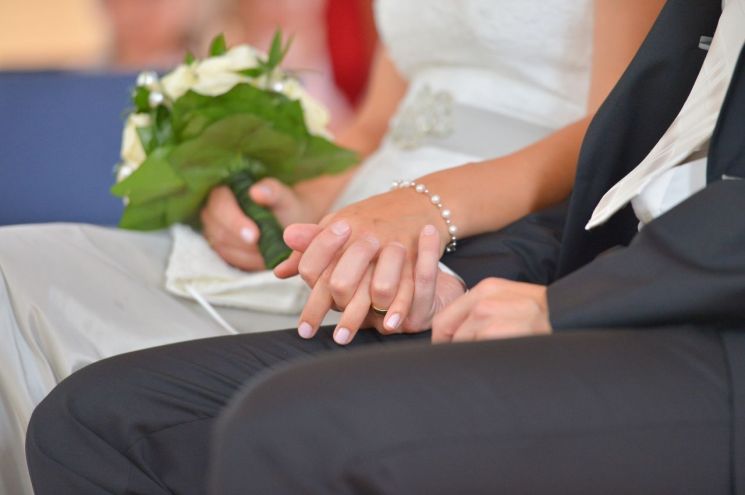
The problem lies in the fact that the degree of retouching must be judged on a case-by-case basis, making it difficult for those performing the retouching to clearly determine whether they are violating copyright law. A more fundamental issue arises from costs. In the industry, the original creator charges an additional fee of over 50,000 KRW per photo for retouching. The bride and groom, seeking to save this cost, entrust retouching to private companies, which leads to copyright disputes between the original creator and the private retouching companies.
The studio industry is pushing back. In 2024, some wedding studios, with consumer consent, have initiated collective legal actions against private retouching companies, claiming copyright infringement. The original creators argue that "wedding photos contain creative elements and know-how of the photographer such as composition, background, and color tone, which are protected under copyright law." They also claim that when photos retouched by private companies are distributed on social media (SNS) or mobile wedding invitations, it negatively affects the studio brand's reputation and quality control of their work.
On the other hand, the bride and groom and private retouching companies counter that "considering retouching the original photos received by consumers for a fair price for non-commercial purposes as copyright infringement excessively restricts consumer choice." A photographer active in the industry said, "Private retouching companies complement parts that photographers cannot resolve, so I think it is for the consumers' benefit," but added, "However, sometimes retouching companies use 'before and after' comparisons of the photographer's original photos and their retouched results for promotional purposes, which can be problematic." He said, "Using the composition and directing know-how painstakingly built by photographers without permission for marketing constitutes copyright infringement." Lawyer Kim Jin-cheol (53, 16th Military Legal Officer), from Seoho Law Firm, said, "Personal retouching may be allowed, but from the studio's perspective, which invests hundreds of thousands to millions of KRW in research and shooting, the indiscriminate online exposure of secondarily retouched wedding photos dampens creative motivation."
Lawyer Kang Dong-hee (41, 4th Bar Exam), from Hwawoo Law Firm, also said, "Wedding photos especially have significant creative contributions from the photographer in terms of light composition and the subject's posture, so they are likely to be protected as works," adding, "It is reasonable to consider that the copyright belongs to the studio-affiliated photographer." However, Lawyer Kang noted that regarding consumers using privately retouched photos, "Unauthorized use may constitute infringement not only for commercial use but also for personal use under copyright law, but there is room to consider it an exception under 'fair use' according to Article 35-5 of the Copyright Act."
Kim Ji-hyun, Legal Newspaper Reporter
※This article is based on content supplied by Law Times.
© The Asia Business Daily(www.asiae.co.kr). All rights reserved.












