Hyundai Motor Group Hybrid Tech Day
Optimized Transmission Structure... P1 Motor Directly Coupled to Engine
Increased System Output and Improved Fuel Efficiency
HEV Installation Possible Across All Vehicle Segments, from Compact to Large
Rear-Wheel Drive HEV to Be Introduced in Genesis in 2026
Hyundai Motor Group has unveiled a next-generation hybrid (HEV) system that offers improved fuel efficiency and power compared to internal combustion engines of the same class. While HEVs have traditionally been praised for their fuel economy, they have often been criticized for lacking in driving performance and system output. Hyundai Motor Group has addressed these issues to present an HEV system with world-class competitiveness.
On the 10th, Hyundai Motor Group held the 'Hyundai Motor Group Next-Generation HEV System Tech Day' at Crest 72 in Jung-gu, Seoul, showcasing the newly launched hybrid system technology. The next-generation HEV system from Hyundai Motor Group features a new transmission with two built-in motors that can be combined with various engines, enabling optimized performance across vehicles ranging from compact cars to large vehicles.
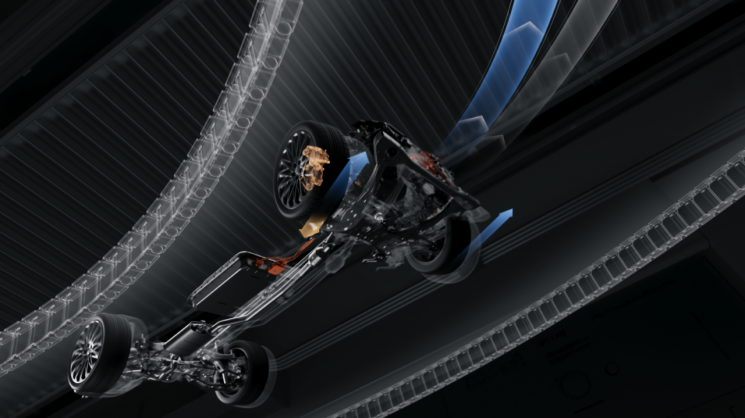
2.5T HEV Equipped in New Palisade Improves Fuel Efficiency by 45% and Power by 19%
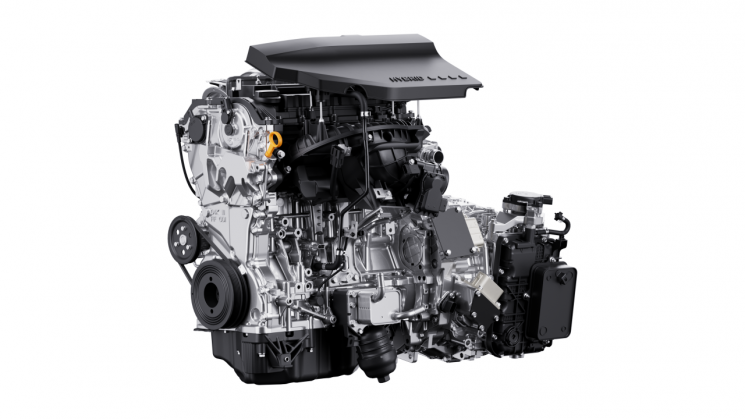
The existing parallel-type HEV systems from Hyundai and Kia also used two motors. However, in the next-generation HEV, the motor positions have changed. Previously, the P0 motor responsible for starting and generating was connected to the engine via a belt, but in the next-generation HEV, the P1 motor, which handles starting, generating, and driving assistance, is directly coupled to the engine. This reduces friction loss, improving energy transfer efficiency, and allows the P1 motor to assist in driving depending on the driving conditions, thereby enhancing power performance.
For the 2.5 turbo HEV installed in large sport utility vehicles (SUVs), fuel efficiency is improved by 45% compared to the gasoline model, with maximum power and torque increased by approximately 19% and 9%, respectively (based on Palisade 2WD 7- and 9-seater with 18-inch wheels). For the 1.6 turbo HEV installed in mid-size SUVs, fuel efficiency has improved by about 4% compared to previous models, and the transmission's allowable torque has increased, enhancing acceleration responsiveness.
Additionally, electrification convenience features previously available only in electric vehicles, such as Stay Mode, V2L (Vehicle To Load), and smart regenerative braking, are also provided.
Stay Mode allows the use of all in-vehicle convenience functions, including air conditioning and multimedia, without starting the engine. Depending on the battery charge level, it can be used for up to one hour. The V2L function, which enables the use of external electronic devices powered by the vehicle's electricity, is equipped at the same level as electric vehicles, with a maximum output of 3.6 kW. It can be used continuously while the engine is running, and in Stay Mode, V2L can be used up to 50% of the battery capacity.
From Compact to Large... Genesis to Launch Rear-Wheel HEV in 2026
Hyundai Motor Group plans to sequentially release the new HEV transmission combined with various engines. This will cover vehicles ranging from entry-level compact HEVs with just over 100 horsepower to large SUVs with mid-300 horsepower. Previously, Hyundai Motor Group's HEV systems were only compatible with 1.6ℓ and 2.0ℓ engines, which was considered insufficient for large vehicles.
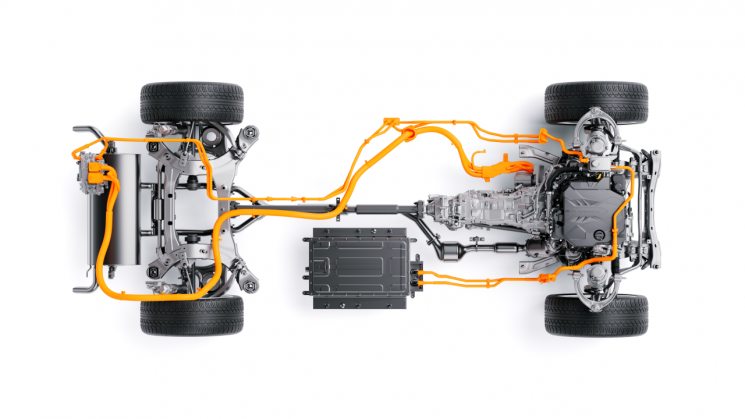
With the introduction of the new HEV system, Hyundai Motor Group can now expand HEV adoption into the high-performance segment exceeding 300 horsepower. Hyundai Motor Group's HEV powertrain lineup will increase from the current three types to five in the future. The front-wheel HEV will be first installed in the Hyundai Palisade HEV, which began mass production this month, while the rear-wheel drive HEV, combined with the 2.5 turbo engine, will be sequentially applied to key Genesis models.
Han Dong-hee, Vice President of Hyundai Motor's Electrification Development Division, said, "Developing this next-generation hybrid required precise control of the engine and transmission, seamless shifting, and comprehensive technology to manage the movements of both the engine and transmission using the motor. This was possible because of the technological capabilities we have developed over the past 20 years."
© The Asia Business Daily(www.asiae.co.kr). All rights reserved.














