EU provides temporary phones and basic equipment to officials visiting the US
US authorities can seize and inspect mobile phones... Social media scrutiny also possible
A symbolic incident reflecting the deterioration of transatlantic relations
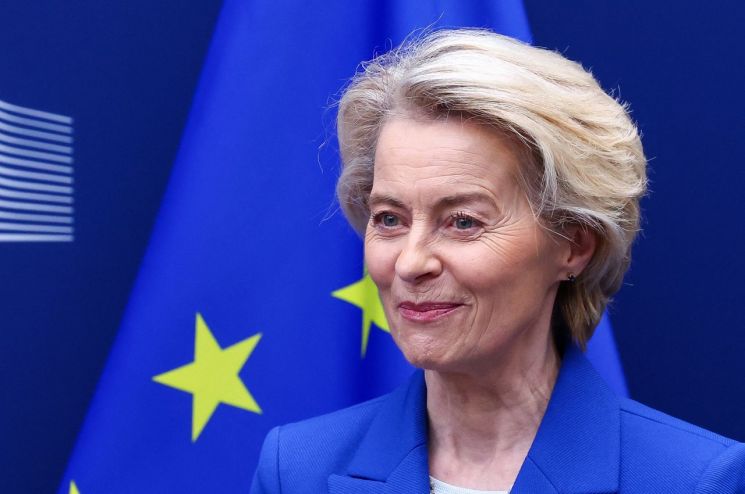
As the United States and the European Union (EU) began formal tariff negotiations on the 14th (local time), it has been reported that the EU provided 'temporary phones' and basic laptop equipment to senior officials visiting the U.S. on the 21st. This reflects the perception of the traditional ally, the U.S., as an 'information surveillance risk country' equivalent to China.
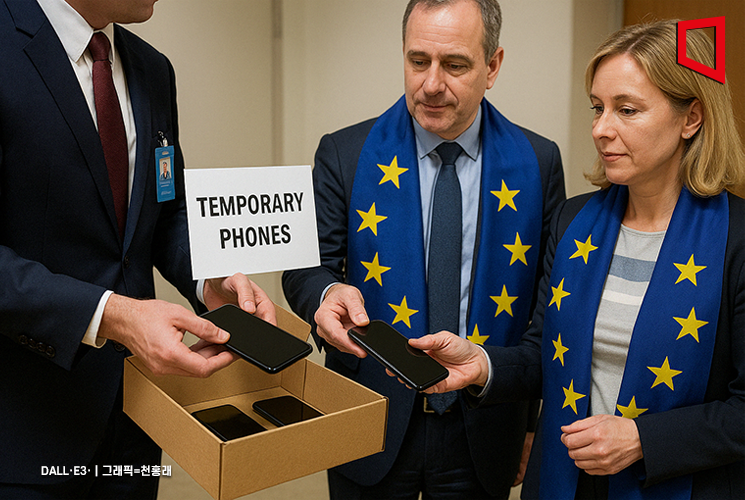
The British daily Financial Times (FT), citing sources, reported that executive members and senior officials visiting the U.S. from the 21st to the 26th to attend the International Monetary Fund (IMF) and World Bank (WB) Spring Meetings in Washington received new guidelines of this nature.
This is a measure similar to those for trips to Ukraine and China, where concerns about Russian and Chinese surveillance prevent the use of standard information and technology (IT) devices. One official said, "They (the Commission) are concerned that the U.S. might access the Commission's systems."
The European Commission confirmed that security recommendations were recently revised but did not disclose detailed information. Among the senior EU officials heading to the U.S. this time are Valdis Dombrovskis, Executive Vice-President for the Economy; Mairead McGuinness, Commissioner for Financial Services; and Josep Borrell, Commissioner for International Partnerships.
The FT pointed out that an additional risk factor of traveling to the U.S. is that U.S. border agents have the authority to seize visitors' mobile phones or computers to inspect their contents. Recent reports of tourists and scholars being denied entry at the border due to critical remarks about the Trump administration found on their social media accounts, phones, or laptops are also believed to have influenced this situation.
Luc Paniedolaar, director of the Brussels Geopolitical Institute think tank, said, "In 2013, the Barack Obama administration was suspected of spying on then-German Chancellor Angela Merkel's phone," adding, "Democratic administrations use the same tactics. Now the Commission has accepted this reality."
This incident symbolizes the deterioration of transatlantic relations following Donald Trump's return to the White House. The U.S. and the EU have experienced trade conflicts due to tariff impositions. President Trump disparaged the EU as "an organization created to hurt the U.S." and classified the long-time ally as the "worst country," imposing retaliatory tariffs of 20% on its exports. His public gestures of friendliness toward Russia during the Russia-Ukraine war peace negotiations also shocked the West.
Meanwhile, on the same day the EU began formal tariff negotiations with the U.S., Europe confirmed the suspension of retaliatory tariff measures. The European Commission announced that it adopted an implementing regulation to postpone the retaliatory measures initially scheduled to be phased in from the 15th in response to U.S. steel and aluminum tariffs. This suspension will apply for 90 days until July 14.
© The Asia Business Daily(www.asiae.co.kr). All rights reserved.
![Clutching a Stolen Dior Bag, Saying "I Hate Being Poor but Real"... The Grotesque Con of a "Human Knockoff" [Slate]](https://cwcontent.asiae.co.kr/asiaresize/183/2026021902243444107_1771435474.jpg)

















