'Big Three' Anticipate Orders for Eco-Friendly LNG Carriers
Small and Medium Shipbuilders to Benefit from Bulk Carrier Orders Avoiding China
China's Bulk Carrier Orders Drop by 90.9% in Q1 This Year
The International Maritime Organization (IMO) has decided to impose a carbon tax on greenhouse gases emitted from ships starting in 2027, raising expectations within the domestic shipbuilding industry for orders of eco-friendly vessels. Coupled with the U.S.'s stance to counter China by excluding Chinese shipbuilders from new ship orders, not only large companies but also small and medium-sized shipbuilders are seeing opportunities to expand their orders.
According to industry sources on the 15th, due to the imposition of the carbon tax, large domestic shipbuilders expect to expand orders for LNG carriers, while small and medium-sized shipbuilders anticipate benefits from increased bulk carrier orders excluding China. The IMO recently decided at the 83rd Marine Environment Protection Committee (MEPC) to restructure carbon emission standards for ships over 5,000 tons and collect a 'carbon tax' starting in 2027. This measure will be finalized in October 2025 and implemented from 2027, with actual costs expected to be imposed from the second half of 2028.
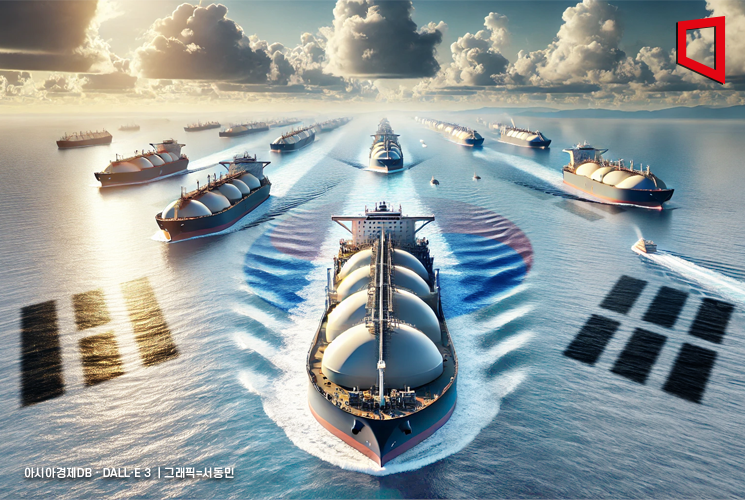
The carbon tax will be levied based on the greenhouse gas (GHG) intensity of ship fuel. Ships exceeding the standard will have to bear a minimum cost of $100 (approximately 140,000 KRW) per ton of CO2 emitted. The industry evaluates this regulation as "higher than expected." Consequently, older LNG carriers using steam turbine systems fueled by conventional bunker C oil are likely to be phased out of the market. In fact, eight steam turbine LNG carriers were dismantled in 2024, marking a record high.
Since the anticipation of the carbon tax introduction, global shipping companies have been considering the adoption of eco-friendly ships as a way to reduce operating costs. In particular, demand for LNG dual-fuel propulsion vessels is increasing. Currently, the three major domestic shipbuilders?HD Hyundai Heavy Industries, Samsung Heavy Industries, and Hanwha Ocean?are negotiating orders with the U.S. company Venture Global for up to 12 LNG carriers of 180,000 cubic meters, including 4 firm orders and 8 options.
In the small and medium-sized vessel sector, demand from shipowners aiming to exclude China is expected to shift toward domestic small and medium shipbuilders. An industry insider said, "Domestic small and medium companies could benefit in feeder container ships and bulk carriers." According to the maritime and shipping specialized publication TradeWinds, the number of bulk carrier orders by Chinese shipbuilders in the first quarter of this year dropped sharply by 90.9% year-on-year to 13, marking the lowest level since 1993.
The current average order backlog in the global shipbuilding industry is about 3.8 years, meaning it takes at least three years from order placement to delivery. Accordingly, shipowners and shipping companies aiming to operate ships in line with the effective date in the second half of 2028 need to proactively place orders for eco-friendly vessels starting now.
© The Asia Business Daily(www.asiae.co.kr). All rights reserved.











