Espionage Law Applies Only to North Korea
Violations of the Military Base Act Used Instead, with Lighter Sentences
Recently, two Chinese high school students were caught illegally photographing South Korean Air Force fighter jets, but it is expected that applying espionage charges against them will be difficult.
According to Yonhap News on the 13th, investigative authorities including the Security Investigation Division of the Gyeonggi Southern Provincial Police Agency have booked two Chinese teenagers on charges of violating the Military Bases and Military Facilities Protection Act (Military Base Act) and are investigating. They are accused of entering the country on tourist visas and roaming around U.S. military facilities and major international airports, taking thousands of photos with DSLR cameras. It was reported that one of them stated his father works in public security.
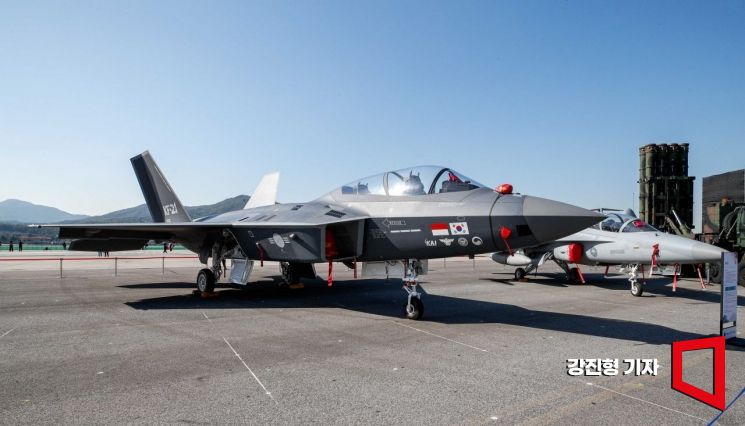 The photo is not related to the specific content of the article. Image of the domestically produced supersonic fighter jet KF-21. Photo by Kang Jin-hyung
The motive behind their actions is still under investigation, but even if they took the photos under instructions from the Chinese government for military intelligence gathering purposes, it seems difficult to punish them under espionage charges.
Article 98, Paragraph 1 of the Criminal Act, which pertains to espionage, states, "Anyone who commits espionage for an enemy country or aids an enemy country's spy shall be punished by death, life imprisonment, or imprisonment for not less than seven years." However, the term "enemy country" in this provision is limited to North Korea, so espionage activities for other countries cannot be punished under espionage charges.
Due to this legislative gap, the investigative authorities applied the Military Base Act to the two individuals. If someone photographs military bases or military facilities without authorization, they can be punished under the Military Base Act with imprisonment of up to three years or a fine of up to 30 million won.
Recently, incidents of Chinese tourists being caught photographing domestic security facilities have continued. In November last year, a Chinese person was caught by police for filming the National Intelligence Service building with a drone, and in January, another Chinese individual was caught filming Jeju International Airport. Even if these acts are done with malicious intent, unless a connection to North Korea is proven, it is difficult to apply espionage charges as in the above cases. Investigative authorities are prosecuting such crimes under the Military Secrets Protection Act and the Military Base Act. However, these charges carry lighter sentences than espionage charges, which require a minimum of seven years imprisonment, highlighting their limitations.
To address these loopholes, several amendments to the Criminal Act have been proposed to expand the definition of "enemy country" in espionage charges from only North Korea to "foreign countries or foreign organizations." However, since the relevant amendment was approved by the Legislation and Judiciary Committee's Subcommittee No. 1 on November 13 last year, there has been little progress.
© The Asia Business Daily(www.asiae.co.kr). All rights reserved.

















