"New Operational Plan Already Tested and Verified Through FS-UFS"
"ROK-U.S. Alliance, the Linchpin of Northeast Asia" Attention on Adjusting the Role of U.S. Forces Korea
On the 9th (local time), General JB Branson, Commander of the United States Forces Korea, revealed that South Korea and the United States signed a new combined operational plan (OPLAN) last year to respond to North Korea's advancement of weapons of mass destruction (WMD) and missile capabilities.
In a statement submitted to the U.S. House Armed Services Committee hearing that day, General Branson stated, "Last year, South Korea and the U.S. signed a new operational plan, making significant progress in combat readiness."
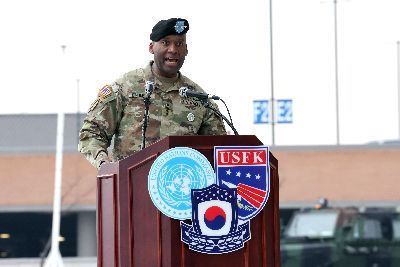
Regarding this, General Branson said, "The new operational plan is designed to enable the Combined Forces Command (CFC) to better prepare before any armed conflict in response to the evolving security environment with North Korea's advanced WMD and missile capabilities. For years, both countries have developed this plan and continuously tested and validated it through the 'Freedom Shield (FS)' exercise and the 'Ulchi Freedom Shield (UFS)' training."
General Branson also stated, "We will continue to utilize, refine, and execute this operational plan through training, and carry out corresponding operations, activities, and investments (OAI). Additionally, we will organize and maintain training programs according to the new plan and seek opportunities to further improve integration and interoperability."
Previously, as North Korea's nuclear capabilities advanced, there were domestic calls to include response plans in the operational plan addressing the possibility of North Korea using nuclear weapons and missiles against the South. The ROK-U.S. Security Consultative Meeting (SCM) last year also agreed to incorporate this into the operational plan.
Former South Korean Minister of National Defense Kim Yong-hyun and former U.S. Secretary of Defense Lloyd Austin announced at the 56th SCM held in Washington last October that "future combined exercises will include realistic scenarios, including responses to North Korea's nuclear use."
Meanwhile, General Branson emphasized that the ROK-U.S. Mutual Defense Treaty is the "linchpin" of stability in Northeast Asia. He said, "The Mutual Defense Treaty with the Republic of Korea has been maintained for over 70 years and has served as a linchpin for stability in Northeast Asia, one of the world's most important economic regions. This treaty is even more crucial in this region where collusion among authoritarian states poses a persistent and increasing threat to the interests of both South Korea and the United States."
He continued, "The alliance and friendship that began with the Korean War must be revitalized and strengthened in preparation for any future needs. Ultimately, the alliance with the Republic of Korea and multinational partnerships will play a key role in maintaining stability in the region and preventing tensions from escalating into a global crisis."
General Branson's remarks align with recent discussions about adjusting the role of U.S. Forces Korea. John N. (acting U.S. Deputy Assistant Secretary of Defense for Indo-Pacific Affairs) also stated that day, "To reestablish deterrence in the Indo-Pacific region, the Department of Defense will focus on strengthening our military posture across the region, empowering our allies and partners, and increasing burden-sharing to address all threats," lending support to this interpretation.
© The Asia Business Daily(www.asiae.co.kr). All rights reserved.
![From Hostess to Organ Seller to High Society... The Grotesque Scam of a "Human Counterfeit" Shaking the Korean Psyche [Slate]](https://cwcontent.asiae.co.kr/asiaresize/183/2026021902243444107_1771435474.jpg)
















