Discovered at Hwayagang Wetland and Dongcheon in Buk-gu, Ulsan in December Last Year and February This Year
Recognized as a Wintering and Stopover Site for Migratory Birds...
Need to Secure and Maintain Habitat Environment
The city of Ulsan announced that during the past winter, the Black-faced Spoonbill, a natural monument and a first-grade endangered wild species, visited the Hwayagang Wetland and Dongcheon in Buk-gu.
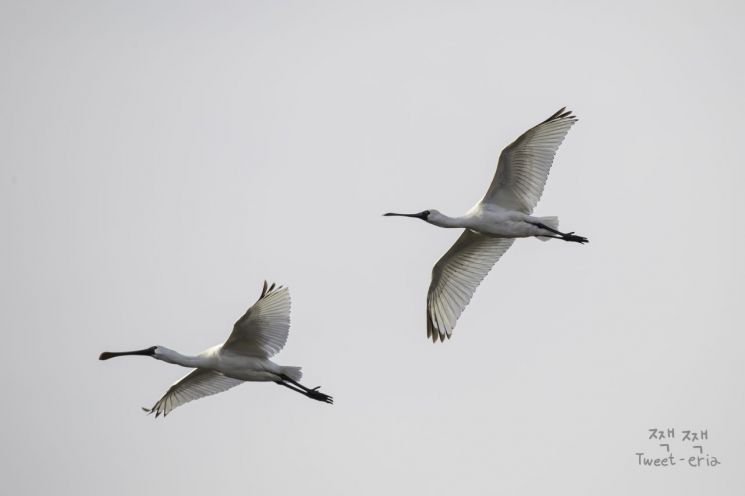
This is the first time that the Black-faced Spoonbill has been observed and confirmed on video in Ulsan.
From December 12 to 14 last year, Hong Seungmin, CEO of Jjaekjjaek Rest Area, discovered two Black-faced Spoonbills and two Yellow-billed Spoonbills feeding at the Hwayagang Wetland. Judging by the black tips of their wings, they were identified as juveniles.
Subsequently, from December 23 to 24, resident Shin Seungtae of Buk-gu captured footage of one Black-faced Spoonbill feeding alongside two Yellow-billed Spoonbills at Dongcheon.
The Black-faced Spoonbill is distinguished from the Yellow-billed Spoonbill by its English name, as the wide black skin in front of its eyes makes its bill and eyes appear connected, unlike the Yellow-billed Spoonbill.
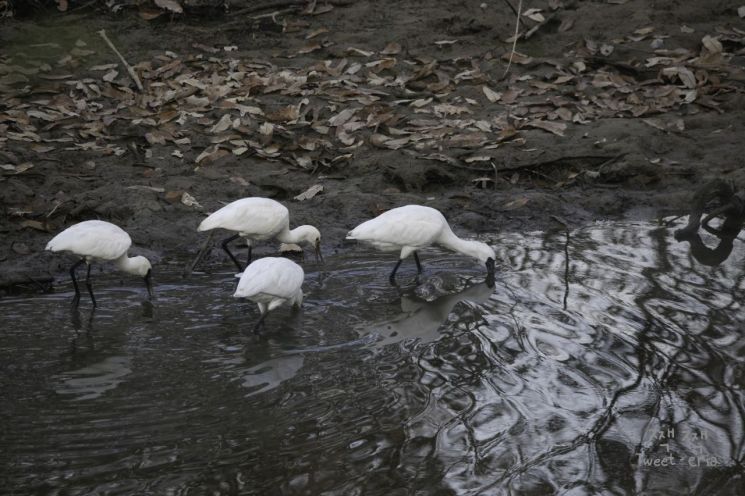
Additionally, the Black-faced Spoonbill is classified as Endangered (EN) on the IUCN Red List, making it an internationally protected species with a high risk of extinction in the wild.
The Black-faced Spoonbills that visited Hwayagang stayed for two days before leaving, while the two that visited Dongcheon remained until February 27 before departing, according to research.
The Yellow-billed Spoonbill, which was found together with the Black-faced Spoonbill, has been frequently observed, with one spotted at Dongcheon in December 2022 and four at the Taehwagang Estuary last November.
The Yellow-billed Spoonbill has a shorter and thicker neck than an egret. As an adult, it develops wrinkles on its bill and the tip of its bill turns yellow. Juveniles have a faded yellow color in front of their eyes, black wingtips, and lack the yellow color at the tip of the bill.
The Yellow-billed Spoonbill is also listed as Vulnerable (VU) on the IUCN Red List, making it an internationally protected species, a natural monument, and a second-grade endangered wild species in Korea.
Hong Seungmin, CEO of Jjaekjjaek Rest Area, said, "Since the Hwayagang Wetland and Dongcheon have sand and abundant food, they are recognized as wintering sites for migratory birds. The habitat environment must be preserved, such as separating spaces used by birds and people, so that they can return next year."
An Ulsan city official stated, "To promote Ulsan Bird Safari, we will work with citizens, migratory bird monitoring staff, bird correspondents, and citizen biologists to protect habitats and utilize them for education and tourism through bird observation."
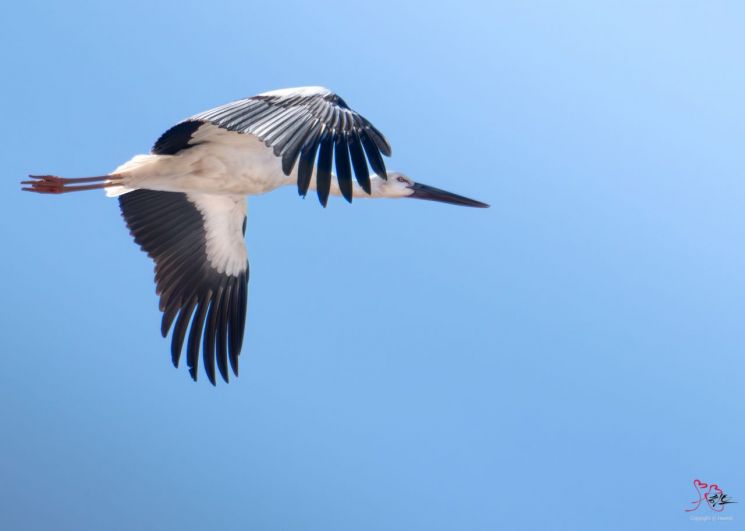
Along with the Black-faced Spoonbill, one Oriental Stork, also an internationally protected species, was observed feeding in the area of Munjuk-ri, Cheongnyang-eup, Ulju-gun from February 22 to March 1 by Ulsan bird correspondents Cho Hyeonpyo and Cho Woojin. It is presumed to have stopped by for a short rest while migrating north from its wintering grounds.
© The Asia Business Daily(www.asiae.co.kr). All rights reserved.
![User Who Sold Erroneously Deposited Bitcoins to Repay Debt and Fund Entertainment... What Did the Supreme Court Decide in 2021? [Legal Issue Check]](https://cwcontent.asiae.co.kr/asiaresize/183/2026020910431234020_1770601391.png)


















