Ministry of Health and Welfare to Invest 278.8 Billion KRW in Resident Training Innovation This Year
Improving Working Conditions for Residents... Enhancing Training Quality with Supervising Specialists
The government is expanding a pilot project to improve the excessive working conditions of residents by reducing the weekly working hours to 72 hours and continuous working hours to 24 hours. It also plans to continue implementing medical reform tasks prepared through the Presidential Commission on Medical Reform (Uigae Special Committee), including investing about 280 billion KRW this year in resident training innovation.
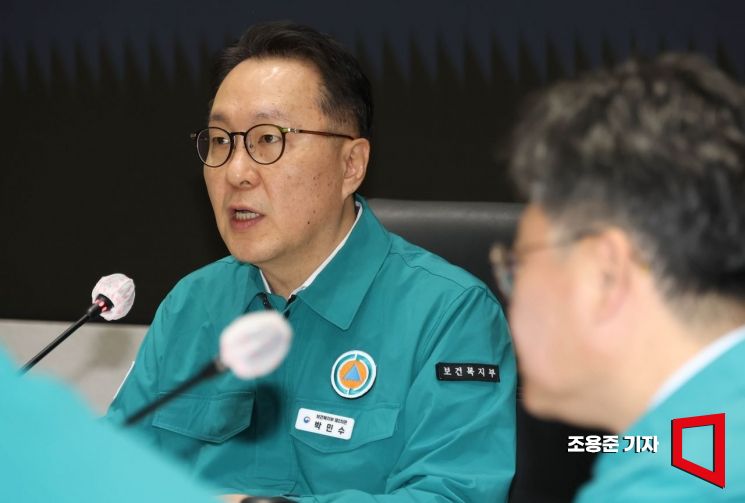 Park Min-su, Vice Minister of Health and Welfare, is speaking at the Central Disaster and Safety Countermeasures Headquarters meeting on the doctors' collective action held at the Government Seoul Office in Jongno-gu, Seoul on April 10, 2025. Photo by Jo Yong-jun
On the morning of the 10th, Park Min-su, the 2nd Vice Minister of Health and Welfare, said at the Central Disaster and Safety Countermeasures Headquarters (CDSCH) meeting on doctors' collective action held at the Government Seoul Office, "The government will steadily carry out medical reform tasks, including innovation in resident training environments."
Vice Minister Park emphasized, "The tasks announced through the first phase of medical reform implementation have already entered the execution stage," adding, "Since the medical community also recognizes the urgency of the second phase tasks such as fostering regional comprehensive secondary hospitals, managing non-reimbursable health insurance items, and strengthening the medical accident safety net, we will continue to promote medical reform tasks." Earlier, the Korean Medical Association and other medical groups demanded the disbandment and suspension of the Uigae Special Committee following the president's dismissal, but the government expressed its determination to continue the reforms.
Vice Minister Park continued, "Last August, the government announced resident training innovation as one of the core tasks of the first phase of medical reform implementation," and explained, "This year, we secured a budget of 278.8 billion KRW to promote policies that strengthen the national responsibility for training specialists, who are key national talents."
Accordingly, starting this year, the government plans to provide systematic education to residents through supervising specialists and support the associated costs. It will also change the training environment by expanding support for procedural training to enhance residents' clinical competencies. A 'multi-institution cooperative training pilot project' will be conducted to allow residents to experience various severity levels, public and regional medical care, thereby fostering sufficient clinical skills.
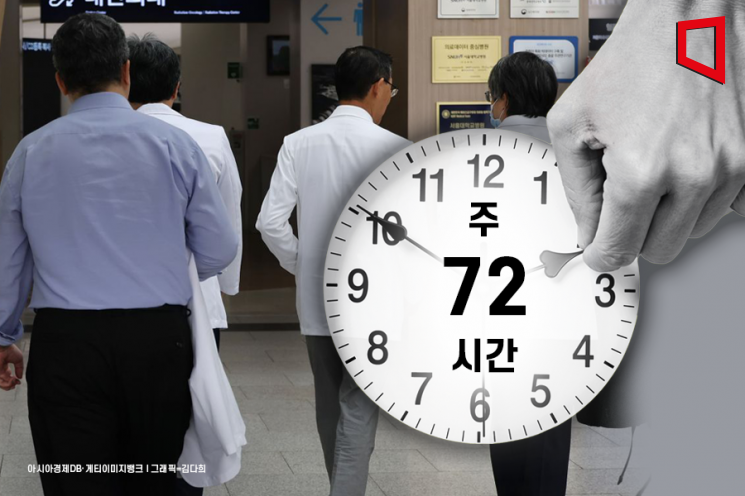
Along with this, the government will also promote a pilot project to improve the excessive working conditions of residents, who currently work "80 hours per week." Following last year's pilot project, this year the weekly working hours will be reduced to 72 hours and continuous working hours to 24 hours.
Vice Minister Park explained, "The government is expanding support for resident training costs focusing on essential medical departments," adding, "To balance the supply and demand of specialists at the national level, the government started paying a monthly training allowance of 1 million KRW to pediatric residents last year, and this year, support is being strengthened by expanding to eight essential medical departments, including obstetrics and gynecology."
Efforts will also be accelerated for follow-up work to promptly launch the Medical Workforce Supply and Demand Forecasting Committee, which will decide on medical school quotas and other matters from 2027 onward.
Vice Minister Park said, "The amendment to the Framework Act on Health and Medical Services related to the supply and demand forecasting discussion body, which passed the National Assembly last week, will be transferred to the government this week and is scheduled to be approved at the Cabinet meeting next week," adding, "The government will swiftly proceed with follow-up procedures such as preparing subordinate laws, appointing committee members, and designating the supply and demand forecasting center to ensure the committee can be launched promptly."
© The Asia Business Daily(www.asiae.co.kr). All rights reserved.


















