Selection Through School Record Evaluation Instead of Written Exam
Multiple Factors Such as Interviews and Fitness Tests Determine Acceptance
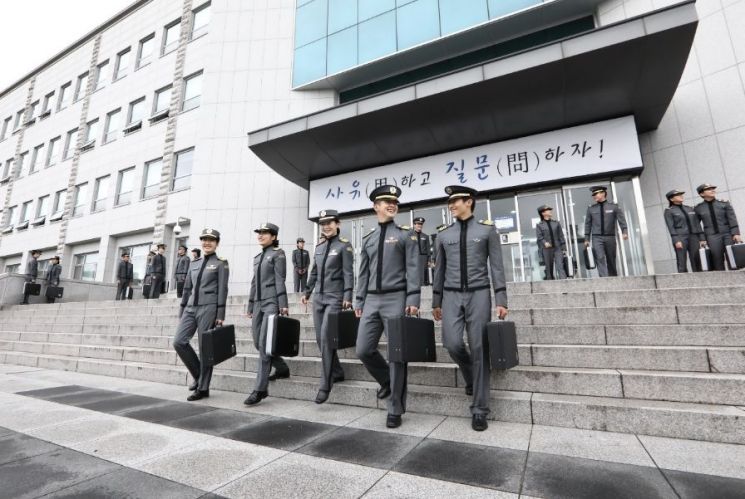
A new admission track has been established that allows candidates to enter the Korea Military Academy without taking a written exam.
According to the recruitment platform Jinhaksa on the 10th, the Korea Military Academy introduced the 'Future Defense Talent Track' this year. This track selects outstanding candidates through a school record document evaluation instead of a written test.
In the first stage, acceptance is determined based on the student record (document evaluation). Academic achievement (80%), academic attitude (10%), and career competency (10%) are assessed. Although it is a document evaluation, unlike the comprehensive student record evaluation used by general universities, it is conducted through a quantitative evaluation method. For current students, grades up to the first semester of the third year are reflected, and for graduates, grades up to the second semester of the third year are considered. All subjects related to Korean, English, Mathematics, Social Studies, and Science that produce rank grades (9 levels) are reflected 100% without weighting by grade level. Career elective subjects are not included.
The second stage exam places a high emphasis on interviews, accounting for 80% of the evaluation. The academy interview includes a physical examination and fitness test. Since it takes place before the College Scholastic Ability Test (CSAT), it may be burdensome, but performing well here significantly increases the chances of acceptance. The AI interviews conducted until last year have been completely abolished this year.
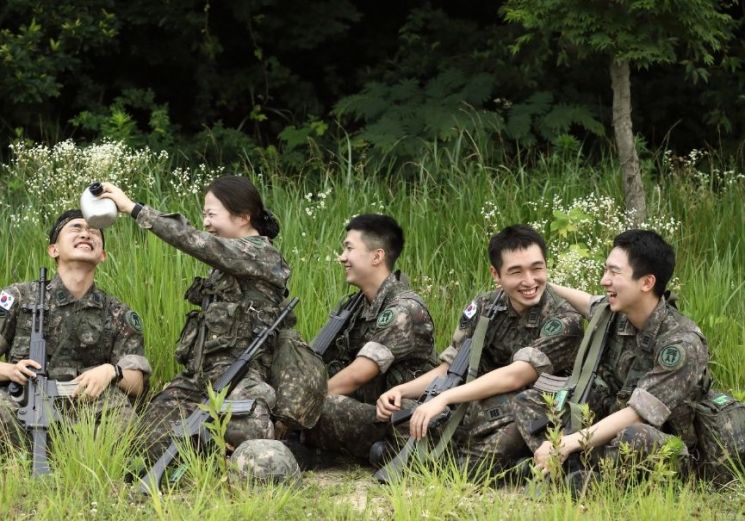
Another difference from other tracks is the application of a minimum CSAT score requirement. The minimum CSAT standard requires a combined rank of 8 or better across three subjects out of Korean, Mathematics, English, and two average scores from the Inquiry subjects.
Especially, to apply through this newly established track, candidates must receive recommendations from up to three high school principals. However, students from schools with different grading systems such as specialized high schools, Meister high schools, science high schools, arts high schools, specialized departments in general/comprehensive high schools, and foreign high schools are not eligible to apply.
Woo Yeon-cheol, director of the Jinhaksa Admission Strategy Research Institute, explained, "There is no need to be intimidated by the apparent competition rate." Although the competition rate for the military academy is high at about 20 to 30 applicants per spot, there is a significant difference from the actual competition rate. Many students who pass the first stage do not take the second stage exam or withdraw due to overlapping admissions with other universities. Woo added, "Last year, the competition rate increased because the exam dates for the Police University and the military academy were separated, but this year, since the first stage exam dates are scheduled on the same day again, the competition rate may decrease." However, he emphasized that since there are many other factors determining acceptance such as interviews and fitness tests beyond exam scores, thorough preparation until the end is advisable.
© The Asia Business Daily(www.asiae.co.kr). All rights reserved.


















