41% Increase in Apartment Sales Compared to Early This Year
Growth in Metropolitan Cities Such as Busan, Daejeon, and Daegu
On-Site Experts Say "Transactions Limited to Urgent Sales Only"
Too Early to Predict a Market Revival
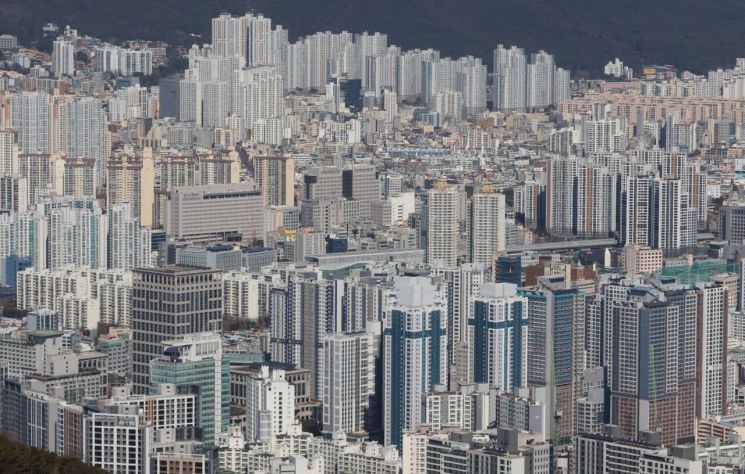
This year, the volume of apartment sales transactions in non-metropolitan areas has increased. These areas have been unaffected by the 'smart one-house' effect, and transaction volumes have risen in regions where unsold units are abundant. On-site experts analyzed this as a result of absorbing cheap urgent sales and predicted that it would be difficult for this to lead to price increases.
According to the Ministry of Land, Infrastructure and Transport's real transaction price disclosure system on the 10th, the number of apartment sales transactions excluding Seoul, Incheon, and Gyeonggi from January to March this year was 16,161, 21,384, and 22,842 respectively, showing a gradual upward trend. Compared to the beginning of the year, last month's transaction volume increased by about 41%.
Increase in Sales Transactions in Provincial Areas
Among non-metropolitan apartment sales transactions, the increase was particularly notable in metropolitan cities such as Busan. In Busan, the number of apartment sales transactions from January to March this year was 1,648, 2,185, and 2,445, rising by more than 48% in two months. This is about 7 percentage points higher than the overall increase in non-metropolitan areas. Daejeon also increased from 816 to 1,104, and last month was recorded at 1,214, showing about a 49% increase during the same period. Although the increase in Daegu was lower, it also showed an upward trend with 1,435 transactions in January, 1,850 in February, and 1,962 last month. However, in smaller provincial cities with a smaller scale than metropolitan cities, apartment sales transactions actually decreased. In Gyeongsangbuk-do, apartment transactions increased from 1,511 in January to 2,012 in February but decreased to 1,924 last month.
Experts judged that despite this increase in sales transaction volume, it is too early to predict a revival of the non-metropolitan apartment market. Ham Young-jin, head of the Real Estate Research Lab at Woori Bank, said, "It appears to be a phenomenon where demand existed due to the overlap of base rate cuts and the spring moving season issue," but added, "We need to observe this month's situation a bit more before concluding that the provincial apartment market has revived." The fact that prices are not rising despite increased transaction volume compared to the beginning of the year adds credibility to this claim. According to data from the real estate big data platform 'Asil,' apartment prices in higher-grade areas among provincial metropolitan cities showed mixed increases and decreases.
For example, the Doosan 1st Apartment in Jwadong, Haeundae-gu, Busan, with an exclusive area of 84㎡, was transacted at 513 million KRW in January this year but dropped to 480 million KRW last month. The Lotte Apartment in Udong, Haeundae-gu, with an exclusive area of 84㎡, recorded 590 million KRW in January but was traded at 560 million KRW the following month. The Clover Apartment in Dunsan-dong, Seo-gu, known as the Gangnam of Daejeon, with an exclusive area of 114㎡, was traded at 1.4 billion KRW in January and then at 1.33 billion KRW last month.
Locals Say "Result of Clearing Urgent Sales"... Severe Unsold Inventory Backlog
Local real estate agencies analyzed that the increase in transaction volume was due to discounted properties finding new owners. A real estate agency in Haeundae-gu, Agency A, said, "Actual buyers saw this as an opportunity to secure their own home now, so transactions increased through urgent sales," adding, "Transactions are mainly occurring in popular apartment complexes." Nearby Agency B added, "Apartments with reduced prices, especially new ones, are being traded."
Although apartment transaction volumes have increased, the backlog of unsold units remains severe. According to the Ministry of Land, Infrastructure and Transport's disclosed status of unsold houses in February, the number of unsold houses in Busan was 4,565 units, an increase of 39 units from the previous month. The number of unsold houses after completion, classified as malignant unsold, was 2,261 units, a decrease of only 7 units from 2,268 units in January. The number of unsold houses in Daegu, Gwangju, and Chungcheongnam-do also increased by 309, 135, and 992 units respectively compared to the previous month. In particular, Daegu had the highest number of unsold houses nationwide in February, with 9,051 unsold units and 3,067 unsold units after completion.
© The Asia Business Daily(www.asiae.co.kr). All rights reserved.

















