Just 13 Hours After Full Implementation of Reciprocal Tariffs
125% Tariff on China Takes Immediate Effect... Focused Firepower on China
Did Financial Market Turmoil and Recession Warnings Influence the Decision?
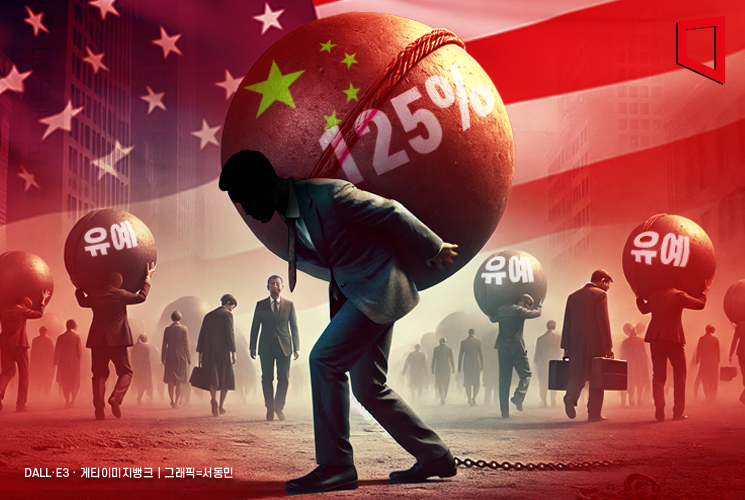
On the 9th (local time), U.S. President Donald Trump raised reciprocal tariffs on China to 125% and postponed country-specific reciprocal tariffs on other countries for 90 days. This marked a sudden retreat about 13 hours after the full implementation of reciprocal tariffs just after midnight that day.
This tariff postponement came amid growing financial market turmoil, including a sell-off in U.S. stocks and government bonds triggered by indiscriminate tariff bombardments targeting both allies and adversaries, as well as expanding domestic criticism in the U.S. due to inflation and recession concerns. The move also appears to be a strategic effort to narrow the tariff front to China, which declared retaliation against the U.S., and to concentrate firepower on the U.S.-China tariff war by maximizing pressure on China. It seems clear that the tariff war initiated by Trump is now aimed squarely at China.
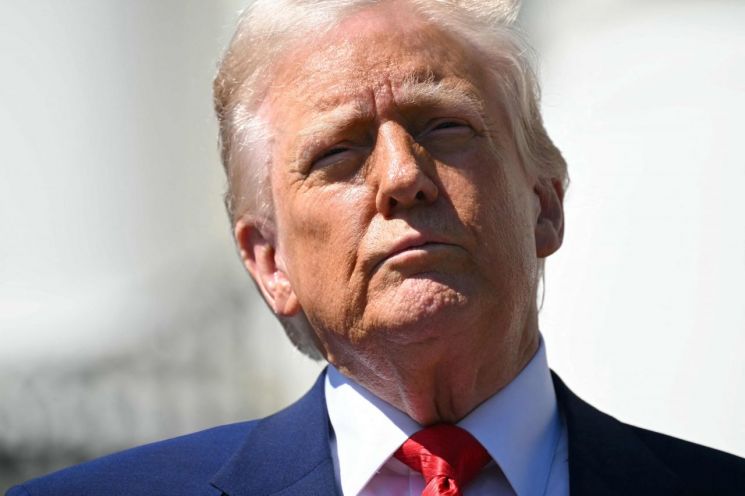
President Trump stated in a post on his social media platform Truth Social that "China does not respect the global market at all," and announced, "We are raising tariffs on China to 125% and implementing them immediately."
For countries other than China, only a basic tariff of 10% will be imposed, and country-specific reciprocal tariffs will be postponed for 90 days.
Instead of retaliatory measures, President Trump said he would approve a "90-day postponement (of reciprocal tariffs) and immediately implement measures to adjust the reciprocal tariff rate to a significantly reduced 10% during this period" for countries that contacted the U.S. for trade negotiations. He added, "More than 75 countries have contacted the U.S. to discuss trade, trade barriers, tariffs, currency manipulation, and non-monetary (non-tariff) barriers. These countries, following my strong recommendation, have not taken any form of retaliation against the U.S. I appreciate their cooperation."
Previously, President Trump imposed reciprocal tariffs of "10% + α" on all trading partners worldwide. After first implementing a 10% basic tariff on the 5th, he activated additional punitive tariffs ("+ α") considering country-specific tariffs and non-tariff barriers just after midnight on the 9th. However, about 13 hours after the full implementation of reciprocal tariffs, Trump decided to apply only the 10% basic tariff to countries other than China and suspend the imposition of "+ α" tariffs for three months. However, for China, which imposed retaliatory tariffs on the U.S., he raised the reciprocal tariff rate to a cumulative total of 125% during his second term by adding a 50% first retaliatory tariff and a 21% second retaliatory tariff on top of the original 34% reciprocal tariff.
The background for President Trump’s decision to adopt a "two-track" tariff policy, separating China from other countries just 13 hours after the full implementation of reciprocal tariffs, is attributed to China’s ultra-hardline response to the U.S. As China strongly retaliated with counter-tariffs on U.S. products, stronger than initially expected, Trump aims to concentrate firepower on China to corner it and seize the initiative in the tariff war. Earlier, China declared it would not back down by labeling the U.S. tariff measures as "unilateral bullying," imposing retaliatory tariffs at the same level, and placing U.S. military contractors on a sanctions list. China’s moves to ally with the European Union (EU), including holding a China-EU summit in July, in response to the U.S. tariff bombardment, are also seen as one of the reasons behind the U.S. strategy to "divide and conquer" China and other countries.
Above all, warnings that tariff policies could trigger not only a U.S. economic crisis but also a financial crisis are cited as the decisive reason for President Trump’s retreat by postponing reciprocal tariffs for most countries. Recently, the financial market has seen a sell-off in stocks followed by a surge in sales of U.S. Treasury bonds, the world’s safest asset. As Treasury prices fell, the 30-year bond yield soared about 50 basis points (1bp = 0.01 percentage points) over the past three trading days. When bond prices drop, the pressure to liquidate trades financed by bonds as collateral increases, which can lead to liquidity shortages and potentially escalate into a financial system crisis. President Trump mentioned to reporters at the White House regarding the reason for the tariff postponement, "(People) got a little scared," adding, "I was watching the Treasury market. Last night, people were a bit nervous."
The market interprets President Trump’s appointment of Treasury Secretary Scott Baesent, a Wall Street veteran who has advocated flexible tariff policies, as a move aimed at easing financial market turmoil and facilitating tariff negotiations. Some speculate that Trump’s tariff bombardment may backfire on the U.S. economy and financial markets, potentially causing the global tariff war to be short-lived.
The Trump administration has repeatedly sent messages that it intends to pursue negotiations with countries after the implementation of reciprocal tariffs. Regarding the tariff postponement, Secretary Baesent explained, "Solutions for each country will be customized and will take time," adding, "President Trump wanted to participate directly in the negotiations, so he approved the 90-day postponement." Jamieson Greer, U.S. Trade Representative (USTR), said about the tariff postponement, "Many countries are saying they want to cooperate instead of retaliate," and "The President is trying to find ways to negotiate with these countries."
© The Asia Business Daily(www.asiae.co.kr). All rights reserved.


















