Diversifying the Ecosystem with the Miro Meta Art Open Lab
Promoting Collaborative Art Projects with Local Artists
Spreading the Value of Coexistence through Exhibitions, Performances, and Workshops
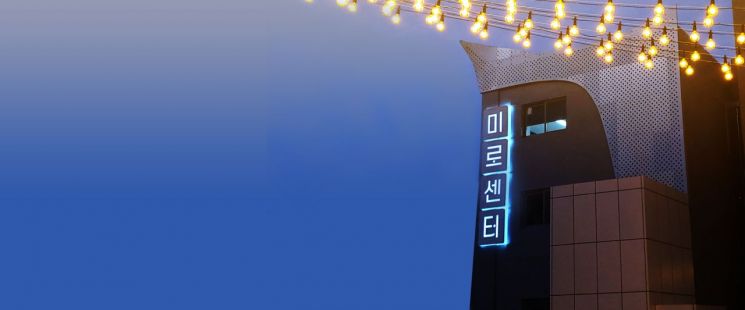
Gwangju Dong-gu (District Chief Lim Taek) announced that the Miro Center, a cultural complex facility representing the Street of Art, will mark its sixth anniversary by strengthening cooperation with the local community under the vision of becoming a "Cultural Platform of Connection and Coexistence."
According to Dong-gu on the 9th, the Miro Center, which opened in 2019, has set a goal to become a hub of the local cultural ecosystem and a venue connecting art and community, making this year the beginning of a new leap toward cultural integration. The "(Carable Gwangju) Miro Meta Art Open Lab" project, which was selected last year for the Ministry of Science and ICT's "Smart Village Dissemination and Expansion Project," has started this month. This project explores the expansion of interactive experiences by integrating digital technology and art, diversifying the region's cultural and artistic ecosystem.
The core content includes: ▲Establishing a smart exhibition environment with AI (artificial intelligence) exhibition guide robots ▲Creating and installing eco-friendly art sculptures based on energy harvesting (converting natural energy into electrical energy) ▲Building digital stories reflecting Dong-gu's historical identity ▲Activating metaverse experiences based on 3D and VR ▲Hosting digital art contests, among other plans to introduce a new environment for artistic creation.
Through these initiatives, citizens will be offered a variety of programs to expand opportunities for online and offline participation in the arts, while artists will be provided with opportunities to enhance their technological capabilities through changes in the perception of digital art. It is expected that the Miro Center will be reborn as a future-oriented cultural and artistic platform suitable for the digital era.
Art is not just a creative act but also an important medium that realizes social values and connects communities. This year, in order for art to permeate more deeply into the lives of citizens, the center will actively promote art projects that explore various social issues through collaboration with local artists.
Main initiatives include: ▲Art education content to raise sensitivity to environmental and climate crises ▲Community art projects for intergenerational communication ▲Projects to restore local identity and revitalize spaces through public art in urban areas ▲Art-based healing projects for mental health recovery, all to be carried out with the Street of Art as a base.
Rather than stopping at simple artistic activities, the process of examining, interpreting, empathizing, and participating in social issues through an artistic perspective, together with citizens, is expected to present alternatives to various social problems we face, such as environmental issues, community decline, and mental health.
The Miro Center is preparing multifaceted support so that local artists can grow into creators equipped with both social sensitivity and cultural planning capabilities, including: ▲Operating creative planning education and mentoring based on social issues ▲Supporting the planning of collaborative projects in connection with local organizations and institutions ▲Providing experimental art practice spaces with governance groups.
Additionally, a variety of citizen participation projects are planned, such as: ▲"Miro Artist Residency" to establish a foundation for the sustainable growth of local arts and culture ▲"Miro Art School" to promote cultural and artistic activities among citizens (children and seniors) ▲"Miro Performing Arts Project" to promote performing arts ▲Projects to revitalize the Street of Art.
Lim Taek, the district chief, said, "Empathizing and planting the seeds of change through art is precisely the reason for the existence of the Miro Center," and added, "We will continue to expand projects that connect the region, art, and the community."
© The Asia Business Daily(www.asiae.co.kr). All rights reserved.
![Clutching a Stolen Dior Bag, Saying "I Hate Being Poor but Real"... The Grotesque Con of a "Human Knockoff" [Slate]](https://cwcontent.asiae.co.kr/asiaresize/183/2026021902243444107_1771435474.jpg)
















