Fox News Interview
Tariffs Emphasized as a Long-Term Battle for America's Future
There are expectations that a new agreement with trade partners regarding the reciprocal tariffs imposed by the Donald Trump administration could be reached this week.
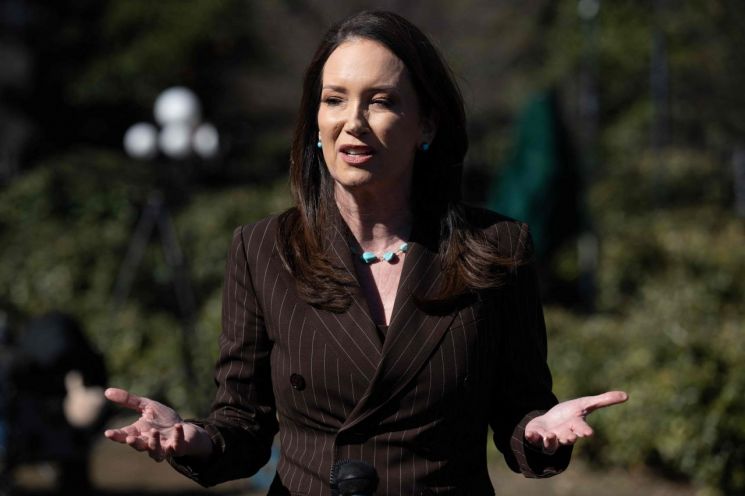
On the 8th (local time), Brook Rollins, U.S. Secretary of Agriculture, said in an interview with Fox News that when asked how long negotiations with trading partners over tariffs might take, she "seriously believes it will happen sooner rather than later."
Secretary Rollins said that no one knows the exact timing of the negotiation settlement but predicted, "I believe we will probably hear news of a newly reached agreement by the end of this week."
She added that she will "continue to watch and listen" to the progress of the negotiations, emphasizing that "this (the Trump administration's high tariff policy and negotiations) is a long-term battle for the future of America."
Earlier, on the 2nd, President Trump announced reciprocal tariffs imposing a basic 10% tariff on all countries and additional rates on trading partners with large U.S. trade deficits. Secretary Rollins defended the Trump tariff policy, saying the tariffs were designed to realign the U.S. economy according to America First principles.
She also expressed agreement with President Trump's view that the U.S. is being treated unfairly by trading partners, pointing out that the European Union (EU) and Australia have raised issues regarding imports of U.S. beef. Secretary Rollins said, "Some countries do not want to import our corn. This is not a tariff issue," adding, "It is simply unfair trade practices and the use of unfair trade barriers."
Furthermore, Secretary Rollins said that after President Trump imposed tariffs on over 180 countries, egg prices are not expected to rise significantly in the coming weeks. Due to the spread of avian influenza (AI) and a decrease in egg production, the U.S. has faced an egg supply shortage and has been importing eggs from other countries such as Turkey and Mexico to compensate.
© The Asia Business Daily(www.asiae.co.kr). All rights reserved.

















