Government and Local Authorities' Support Plays a Key Role
The ESG (Environmental, Social, Governance) management performance of domestic companies has significantly improved, especially in the environmental sector. Government and local authorities' support for companies in response to domestic and international ESG regulations is also evaluated to have been a great help.
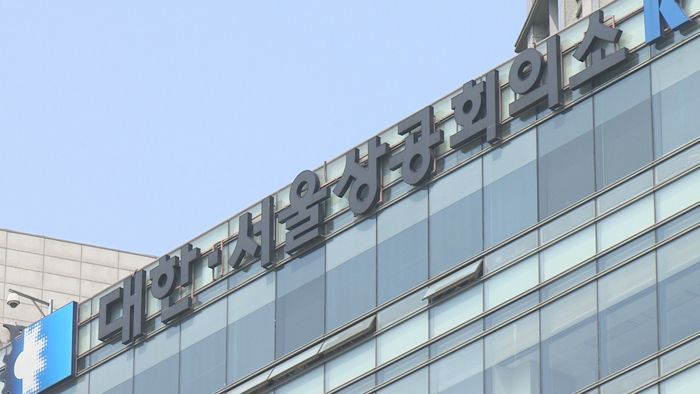
The Korea Chamber of Commerce and Industry (KCCI) announced on the 9th that an analysis of ESG evaluation results from 2,131 small and medium-sized enterprises (SMEs) and mid-sized companies in Korea from 2022 to 2024 showed that the overall management level improved more than twofold from vulnerable (2.0?2.2 points in 2022) to satisfactory (4.6?4.8 points in 2024). ESG stands for Environmental, Social, and Governance, which are key elements for sustainable corporate management.
The improvement in companies' ESG scores was led by the environmental sector, including air pollutants (1.13→6.48) and greenhouse gases (0.7→4.15). Evaluation grades are divided into vulnerable (0?2.99), satisfactory (3?6.99), and excellent (7?10) ranges.
KCCI, in cooperation with regional chambers of commerce, has been verifying the ESG management levels of SMEs and mid-sized companies nationwide. In 2022, when the diagnosis first began, 45.7% of companies were classified as vulnerable, indicating high potential risk, nearly half of the total. In last year’s survey, the proportion of vulnerable companies significantly decreased to 32.4%, while the satisfactory grade increased from 50.8% to 58.1%. The proportion of excellent companies scoring 7 or higher also rose from 3.5% to 9.5%.
A KCCI official stated, "As social issues such as climate change and fine dust air pollution risks have become serious, local governments have expanded support projects for companies to reduce air pollutant emissions." He added, "Activities such as signing agreements to reduce air pollutants have been reflected, leading to improved scores in the environmental sector."
The 'Information Security' sector saw a decline in scores compared to two years ago. This is attributed to the increasing sophistication of hacking techniques and the spread of routes such as the 'dark web,' making domestic companies with advanced technology targets of crimes such as technology leakage, infringement, and counterfeiting. In fact, 140 cases of such crimes were detected between 2017 and 2023.
Furthermore, KCCI evaluated that the support from the Ministry of Trade, Industry and Energy and other government agencies, as well as efforts by local governments to respond to domestic and international ESG regulations, have greatly helped improve companies' ESG response levels.
Cho Young-jun, Director of the KCCI Sustainability Management Institute, said, "Despite recent relaxations in ESG regulations, export companies still face environmental and human rights management issues within their supply chains." He added, "We will support domestic companies in building carbon data management systems and hold ESG response briefings linked with chambers nationwide to help them enhance competitiveness and overcome trade barriers."
© The Asia Business Daily(www.asiae.co.kr). All rights reserved.
![Clutching a Stolen Dior Bag, Saying "I Hate Being Poor but Real"... The Grotesque Con of a "Human Knockoff" [Slate]](https://cwcontent.asiae.co.kr/asiaresize/183/2026021902243444107_1771435474.jpg)
















