Alcohol Purchases at Restaurants Plummet Amid Sluggish Consumption
Down 5.5% in the Fourth Quarter of Last Year Compared to the Previous Year
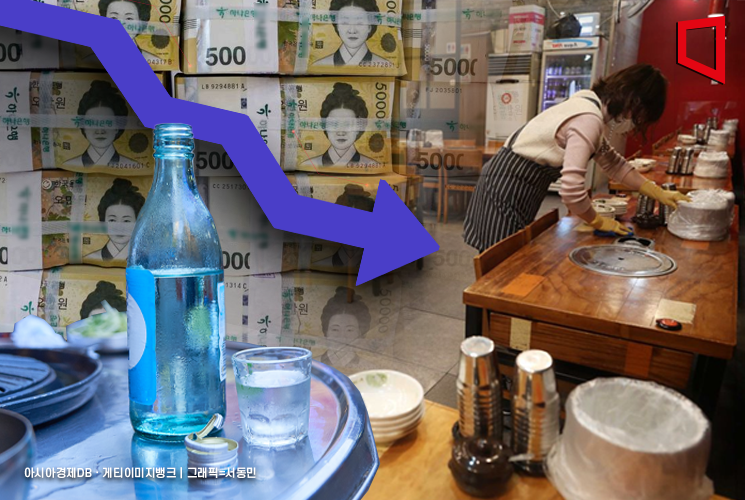
At the end of last year, consumer sentiment froze solid due to the impact of illegal martial law, leading to a sharp decline even in social drinking occasions.
According to the 'Small Business Data Insight - Alcohol Purchase Trend Report' published by Korea Credit Data on the 8th, the average alcohol purchase amount at restaurants in the fourth quarter of last year was about 1.37 million KRW, a 5.5% drop compared to the same period the previous year (about 1.45 million KRW).
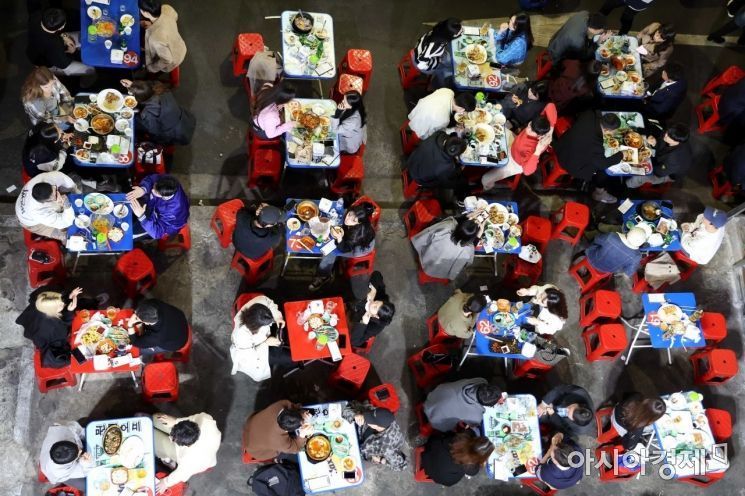
Analyzing data extracted from about 40,000 businesses using the management service 'Cash Note' by Korea Credit Data, which had alcohol purchase experience from 2023 to 2024, the alcohol purchase amount at restaurants showed a declining trend from around 1.42 million KRW in the first and second quarters of last year to 1.39 million KRW in the third quarter and 1.37 million KRW in the fourth quarter. The average monthly alcohol purchase amount for the entire year last year was about 1.39 million KRW, a 2.7% decrease compared to 2023. A Korea Credit Data official stated, "It is estimated that the alcohol purchase amount decreased due to the contraction of consumer sentiment caused by overlapping factors such as sluggish domestic demand and martial law at the end of last year, which led to a decline in various psychological indices."
According to the Bank of Korea, the Economic Sentiment Index (ESI), which reflects the economic sentiment of all private economic agents including companies and consumers, has been steadily declining since the second half of last year. The seasonally adjusted ESI and cyclical component fell every month from 93.6 in July last year to 90.2 in December, and shrank further to 87.3 as of last month. An ESI below 100 means that the economic sentiment of all private economic agents such as companies and households has worsened compared to the past.
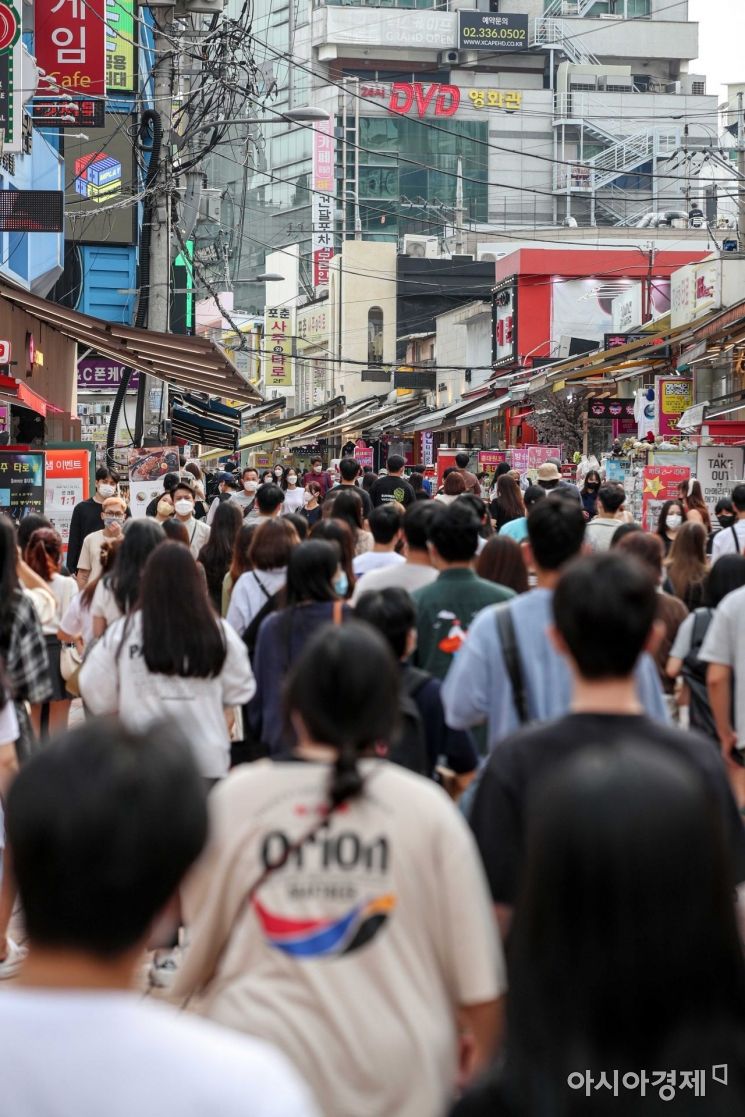
In particular, it is analyzed that small business owners suffered significant damage due to cancellations of gatherings caused by the martial law situation and the Jeju Air disaster ahead of the year-end peak season last year. In fact, a survey conducted by the Korea Federation of Small and Medium Business on 1,630 small business owners last year showed that 88.4% of respondents reported a decrease in sales after the emergency martial law situation. Among them, 36.0% of small business owners said their sales dropped by more than 50%, followed by 25.5% reporting a 30-50% decrease, 21.7% a 10-30% decrease, and 5.2% less than 10% decrease.
Closures are also expected to reach a record high. The number of business closures reported to the National Tax Service (individual and corporate) was 986,487 in 2023, the highest ever, and the small business sector estimates that the number of closure reports last year will exceed 1 million. A representative from the alcohol industry said, "Due to the recession, customers have decreased across commercial districts, and many restaurants are closing." Additionally, there is an analysis that political uncertainty caused by delays in the impeachment ruling contributed to the prolonged contraction of consumer sentiment.
© The Asia Business Daily(www.asiae.co.kr). All rights reserved.














