Wall Street Titans:
"America's Credibility Is Being Destroyed...
A 90-Day Truce Must Be Declared"
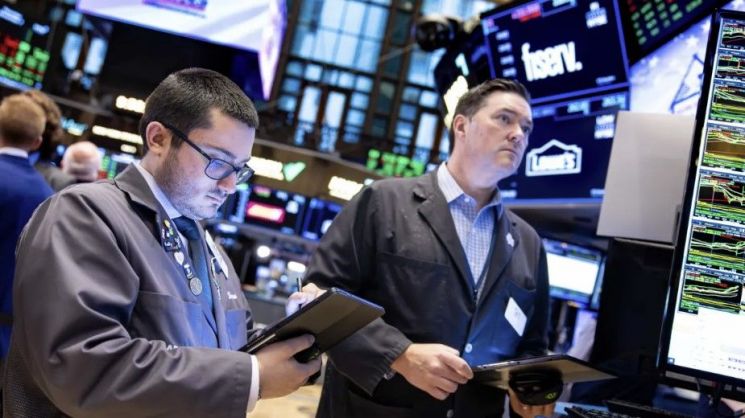
The U.S. financial market is anxiously bracing for 'Black Monday' ahead of Monday's opening.
According to foreign media on the 6th (local time), market anxiety has not subsided following President Donald Trump's announcement of reciprocal tariffs. As concerns about an economic recession spread, $6.6 trillion (approximately 9690 trillion won) in market capitalization vanished over two days in the New York stock market since the 3rd, but signs of a continued sell-off remain.
As of 6 p.m. on Sunday, the Dow Jones Industrial Average futures had fallen more than 1,700 points, approaching the 2,231.07-point (-5.50%) drop recorded on the 4th. There are forecasts that a 'Black Monday' event could occur when the New York Stock Exchange opens on Monday. Jim Cramer, host of the U.S. economic news channel CNBC, warned that if President Trump persists with his tariff policy, a market crash similar to the 1987 collapse, when the Dow plunged 22.6%, could happen.
Many also say the current atmosphere in the U.S. financial market resembles that of the 2008 global financial crisis. A 10% plunge in stock prices within two days, as seen last week, is rare except during the collapse of Lehman Brothers in 2008.
The stocks of major U.S. asset management firms Apollo and large private equity firm Kohlberg Kravis Roberts (KKR) fell more than 20% over two days. Notably, in the recent U.S. financial market, selling pressure has spread comprehensively, not only in stocks but also in oil, copper, gold, and cryptocurrencies.
Amid this atmosphere, the initial public offerings (IPOs) of StubHub and other companies, which had been highly anticipated, have also been postponed. Unlike in 2008, the difference now is that the market has no expectations from the government. In 2008, the U.S. government prevented market collapse with astronomical bailouts, but this year’s financial turmoil was triggered by the White House itself.
According to Bank of America (BoA), if countries targeted by President Trump's reciprocal tariffs retaliate, the profits of companies included in the Standard & Poor's (S&P) 500 could plunge by about one-third.
Market dissatisfaction with Treasury Secretary Scott Baesant is also growing. When Baesant, a former hedge fund manager, joined the Trump administration, Wall Street heavyweights welcomed him as having a friend inside the White House, but this incident has led them to give up those expectations.
In an interview with NBC on the same day, Secretary Baesant defended President Trump, saying tariffs "build a long-term economic foundation for prosperity." Some Wall Street heavyweights are actively voicing their concerns about this situation. Billionaire investor Bill Ackman, chairman of Pershing Square Capital, warned on X (formerly Twitter) that tariffs could trigger an "economic nuclear war," with Trump supporters suffering the most damage.
Ackman pointed out, "The current approach of imposing disproportionate tariffs indiscriminately on allies and adversaries alike is waging economic war against the entire world, destroying America's credibility as a trade partner and capital investment market." He advised that after President Trump declares a "90-day truce," unfair trade systems should be corrected through tariff agreements during that period, and new investments should be encouraged. Ackman, who supported Trump in the last presidential election, said, "I did not vote for Trump to witness this situation," and insisted, "President Trump must immediately declare a 90-day truce on Monday."
© The Asia Business Daily(www.asiae.co.kr). All rights reserved.












