Real Estate Bills Including Reconstruction Law Pending
Abolition of the Two Lease Laws Remains Uncertain
Policies Likely to Diverge Depending on Regime Change
With the Constitutional Court's ruling to dismiss former President Yoon Seok-yeol, confirming an early presidential election, there is a possibility that major policies such as the relaxation of reconstruction regulations may be either scrapped or maintained depending on the next administration's stance. The real estate market is paying close attention to the pledges of the presidential candidates.
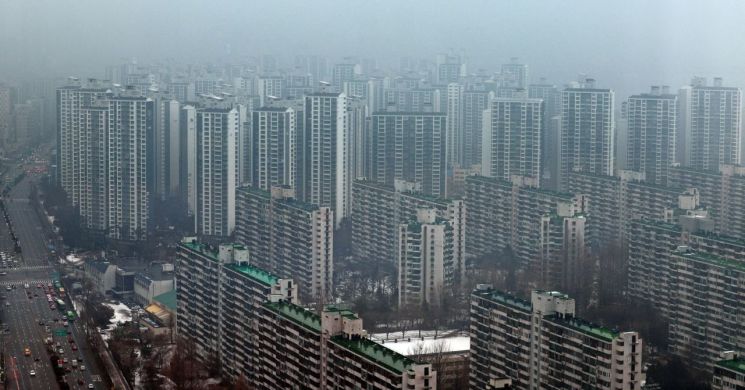
According to the Ministry of Land, Infrastructure and Transport and the National Assembly Land, Infrastructure and Transport Committee on the 6th, there are currently bills pending in the National Assembly, including the "Special Act on Promotion of Reconstruction and Redevelopment Projects" (Reconstruction Special Act), which aims to shorten the approval procedures for redevelopment and reconstruction and raise the floor area ratio cap to 1.3 times. In addition, there is also a proposed amendment to lower the resident consent rate required for establishing reconstruction associations from 75% to 70%, but it has yet to pass the National Assembly.
In particular, since the martial law incident on December 3 last year, the review of bills in the National Assembly has come to a halt. The passage of real estate-related bills during the presidential election phase remains uncertain. Furthermore, the Democratic Party of Korea has expressed opposition to the abolition of the reconstruction excess profit recovery system and the repeal of the two lease laws (right to request contract renewal and rent ceiling system), causing these bills to stagnate in discussions.
Experts are making various predictions about the direction of real estate policy after the presidential election. It is expected that, in the event of a regime change, acquisition tax, capital gains tax, and comprehensive real estate tax on owners of two homes will be strengthened, and public rental housing supply for low-income households will be promoted. Additionally, analyses suggest that loan regulations and interest rate cuts will have a significant impact on housing prices.
© The Asia Business Daily(www.asiae.co.kr). All rights reserved.












