Infants and Children Should Be Cautious...
"Strict Hygiene Management" Urged
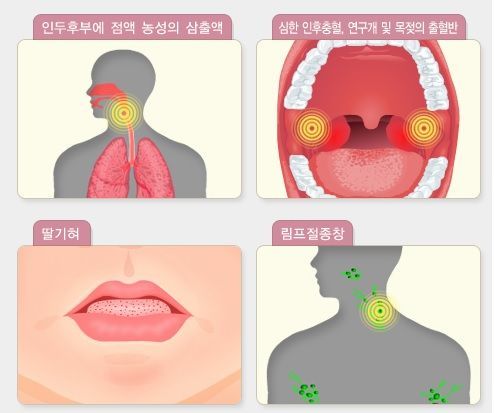 Scarlet fever symptoms (Korea Disease Control and Prevention Agency National Health Information Portal). Provided by Gwangju City
The Gwangju Institute of Health and Environment announced on the 4th, "Recently, there has been a sharp increase in scarlet fever, a second-class notifiable infectious disease," and urged the public to "thoroughly practice personal hygiene such as handwashing and proper cough etiquette."
The Gwangju Institute of Health and Environment regularly tests samples from suspected cases of notifiable infectious diseases (classes 1 to 3) reported by local health centers and medical institutions. According to the test results, as of the end of March this year, the detection rate of scarlet fever soared to 74.4% (38 positive cases out of 51), marking a significant increase. Over the past five years, the detection rates of scarlet fever were 5.9% in 2021, 33.3% in 2022, 25% in 2023, 68.2% in 2024, and 74.4% in 2025, showing a dramatic rise.
Scarlet fever, a second-class notifiable infectious disease, is a bacterial respiratory infection that mainly occurs in children aged 5 to 15. It spreads through respiratory secretions of patients or by contact with hands or objects. Symptoms include sore throat, high fever, headache, and vomiting, and 12 to 48 hours later, a widespread rash may appear, starting from the neck, armpits, or groin. It is also characterized by petechiae above the uvula and a swollen, strawberry-like appearance of the tongue's papillae.
Scarlet fever can be completely cured with timely antibiotic treatment, but if treatment is delayed, complications may arise. Therefore, special caution is needed for infants and young children with weakened immune systems.
Jung Hyuncheol, director of the Gwangju Institute of Health and Environment, emphasized, "Since there is no commercialized vaccine for scarlet fever, it is important to detect the disease as early as possible and administer antibiotics at the appropriate time to prevent complications." He also urged, "In group settings such as daycare centers and kindergartens, it is essential to thoroughly follow personal hygiene practices like handwashing and to maintain environmental hygiene by cleaning toys and play equipment."
© The Asia Business Daily(www.asiae.co.kr). All rights reserved.

















