Stories of My Hometown "Geumjeong" Explored by Beomeosa, the Guardian Temple of Geumjeongsan
Academic Catalogues and Picture Books on Geumjeongsan and Beomeosa Produced Through the Private Museum Support Project
Beomeosa Seongbo Museum of Geumjeong Chongnim (Chief Monk Jeong O) has published two catalogues as a result of the Busan City Private Museum Support Project.
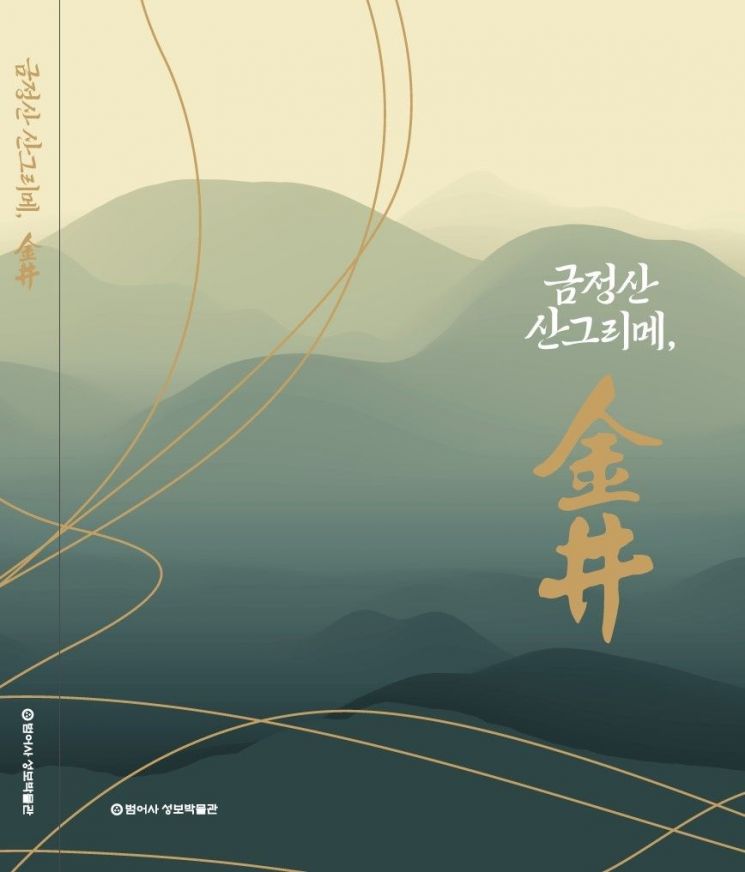
The academic catalogues released this time include the contents of the 2024 special exhibition "Geumjeongsan Sangeurime, Geumjeong" organized by the Ministry of Culture, Sports and Tourism and the Museum and Art Museum, as well as the photography exhibition "Geumjeongsan Bitgeurime, Geumjeong" by Moon Jinwoo. They also contain academic papers by local history experts on Geumjeongsan's tangible, intangible, and natural heritage, allowing local residents to approach the stories of their hometown more closely and deeply.
The Busan City Private Museum Support Project is one of the projects implemented by Busan City to preserve and succeed cultural heritage and to enhance citizens' enjoyment of culture.
Since 2018, Beomeosa Seongbo Museum has been publishing catalogues that encompass not only Buddhist culture but also the local history of Busan through the city's private museum support project, inspiring local pride and discovering the region's historical and cultural resources. In particular, in 2023 and 2024, children's picture books tailored to the eye level of children were published together, so that local children could develop an interest in the history and culture of their own neighborhoods.
The academic catalogue "Geumjeongsan Sangeurime, Geumjeong" published this time tells stories of "Geumjeong," the local area, as discussed by Beomeosa, the guardian temple of Geumjeongsan.
It includes the history of the founding of the guardian temple on Geumjeongsan, Beomeosa, which defended Geumjeongsanseong Fortress, Gukcheongsa, and Haewolsa, which now remains only in traces, as well as materials related to the poems of Dongnae magistrates and eminent monks who passed through this area during the Joseon Dynasty. It also features academic papers by local history experts on the tangible, intangible, and natural heritage of Geumjeongsan. In addition, it is enriched with photos of the mountain fortress village from the 1970s collected by Yoo Cheonggil, CEO of Geumjeongsanseong Makgeolli, and photographs of Geumjeongsan and Beomeosa by photographer Moon Jinwoo, which were unveiled at last year's special exhibition "Geumjeongsan Bitgeurime, Geumjeong."
The essay "Geumjeong Thoughts, Essay" by Park Eunkyung (Professor, Department of Archaeology and Art History, Dong-A University), which begins with the lyrics "Lae yurae yurae yurae ora ora ora" from the mystical story of Monk Yangji in Samguk Yusa, encapsulates the content of this academic catalogue. Godangbong, the highest peak in Busan, Geumjeongsan as a treasure trove of history and culture and a coexisting natural ecosystem, and the thousand-year-old Beomeosa on this famous mountain, all represent the significance and value of Beomeosa Seongbo Museum's focus on "Geumjeong" in the context of Busan's local history.
In "The Nature of Geumjeongsan" by Lee Sangwon (Professor Emeritus, Pusan National University), the natural heritage of Geumjeongsan, such as its geology, topography, and biology, which could not be covered in the special exhibition, is explored in depth. In "The Largest Fortress in Korea, the Southern Gate of Joseon: Geumjeongsanseong" by Na Dongwook (Director, Yeongnam Seonggak Research Institute), Geumjeongsanseong, the largest mountain fortress in Korea and a key strategic point in the late Joseon maritime route, is closely examined. Choi Chunwook (Cultural Heritage Appraisal Committee Member, National Heritage Administration) in "Guardian Temples and Buddhist Cultural Heritage of Geumjeongsan" looks into the history of Beomeosa, which repelled Japanese invaders with the power of Hwaeom Shinjung under Monk Uisang, and the guardian temples Gukcheongsa and Haewolsa, which stationed the righteous monk army after the construction of Geumjeongsanseong, exploring the history of Buddhist heritage and national defense in Geumjeongsan.
In addition, "Early Works of Yosan Kim Jeonghan and the Geumjeong Area" by Lee Jaebong (Professor, Pusan National University/Director, Yosan Literature Museum) covers the works of Yosan Kim Jeonghan and the history and culture of the Geumjeong area contained within them. In "Godang Protecting Geumjeongsan and the Lives of the People of Geumjeongsanseong" by Hwang Kyung Sook (Intangible Heritage Committee Member, National Heritage Administration), the stories of Godangjae, where Beomeosa monks still hold rituals on Dano Day, the mountain goddess Godang Sansinhalme, and the people of the fortress village who made paper, charcoal, and nuruk, are extensively explored.
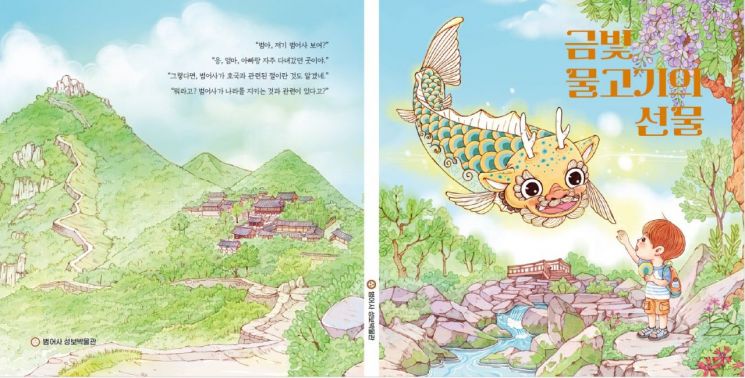
The picture book "The Gift of the Golden Fish," published together, follows the first picture book of Beomeosa Seongbo Museum themed on Samguk Yusa, "The Secret of the Golden Fish: Samguk Yusa Edition." In this new book, the protagonist Beomi goes on a picnic to Geumjeongsan with his family, meets a golden fish that came down from Geumsaem, and learns about the guardian temple Beomeosa, offering children the moment when the mountain behind their home becomes a historical space.
Jeong O, Chief Monk of Geumjeong Chongnim Beomeosa (Chief Monk of Beomeosa, Director of Beomeosa Seongbo Museum), said in the publication preface, "I hope this catalogue will provide an opportunity to view Geumjeongsan not as a 'mountain' but as 'life.' I also hope it will be a time to discover new aspects of Geumjeongsan, a place where our ancestors lived, where we live, and where future generations will live, with its diverse cultural and historical values."
© The Asia Business Daily(www.asiae.co.kr). All rights reserved.
![Clutching a Stolen Dior Bag, Saying "I Hate Being Poor but Real"... The Grotesque Con of a "Human Knockoff" [Slate]](https://cwcontent.asiae.co.kr/asiaresize/183/2026021902243444107_1771435474.jpg)

















