Direct Hit to Gumi Export Companies from US Tariff Policies... 7 out of 10 Firms Affected
32.5% of US Parts and Raw Material Suppliers Suffer the Most... Sales Decline Is the Top Concern
Insufficient Corporate Countermeasures, Urgent Need for Government-Level Support
A recent survey found that export companies in the Gumi region of North Gyeongsang Province are expected to be directly and indirectly affected by the high tariff policies of the United States.
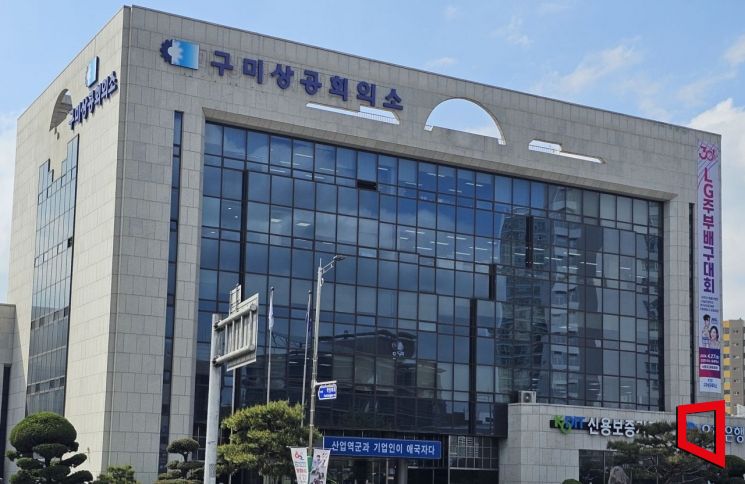
According to the results of the "Survey on the Impact of Trump Tariff Policies on Gumi Companies" conducted by the Gumi Chamber of Commerce and Industry (Chairman Yoon Jaeho) on 104 local manufacturing companies, 72.3% of respondents said they could not avoid the shock caused by the tariff policies.
On the other hand, 25.7% responded that they would not be affected, while 1.9% expected to benefit from the increased tariffs imposed on competing countries.
◆ Direct Hit to US Export Partners... Impact on Parts and Raw Material Suppliers
Looking at the types of companies affected by the tariffs, "suppliers of parts and raw materials to US export companies" accounted for the largest share at 32.5%. This was followed by "finished product exporters to the US" (14.3%) and "parts and raw material exporters to the US" (11.7%).
The share of exports to the US in the region's total exports reaches 11%. Major export items include wireless communication devices (13.9%), precision chemical materials (12.5%), other machinery (10.2%), semiconductors (6.8%), and plastic products (6.2%). As a result, a decline in sales is inevitable, especially in these sectors.
◆ Companies Say "Sales Decline Is the Biggest Concern"
The biggest concern regarding the Trump tariff policies was "sales decline due to indirect impacts" (56.6%). This was followed by "deterioration of profitability due to high tariffs" (19.7%), "worsening contract terms with clients and distribution networks" (11.8%), "burden of adjusting parts and raw material procurement networks" (6.6%), "decreased price competitiveness in the US market" (3.9%), and "additional costs due to relocation of production bases" (1.3%).
◆ Less Than 30% of Companies Have Prepared Countermeasures... Passive Response Continues
The level of countermeasure preparation among companies was found to be insufficient. Only 29.5% of all responding companies had prepared countermeasures, while 52.6% were only monitoring the situation. As many as 17.9% had not established any response plans.
Among the companies seeking countermeasures, 26.9% were pursuing "internal measures such as cost reduction," while only 2.6% were considering "fundamental tariff avoidance strategies such as local production and market diversification."
◆ Gumi Chamber of Commerce and Industry: "Urgent Need for Government-Level Support Measures"
The Gumi Chamber of Commerce and Industry plans to hold an "on-site consultation session" for export companies in May to minimize corporate damage. In addition, KOTRA, located on the 5th floor of the Gumi Chamber of Commerce and Industry, is operating a "Tariff Response 119" program to support affected companies.
Shim Gyujeong, head of the Economic Research and Corporate Attraction Team, emphasized, "It is urgent to establish practical government-level support measures to prevent the weakening of corporate competitiveness caused by changes in tariff policies."
© The Asia Business Daily(www.asiae.co.kr). All rights reserved.

















