Enjoying Foie Gras Without Animal Cruelty
German Research Team Succeeds in Developing Technology Using Fat-Degrading Enzymes
Traditional Foie Gras Produced by Force-Feeding High-Calorie Grains
Researchers: "It has long been our dream to make foie gras more accessible
while improving animal welfare"
A new technology has emerged for producing foie gras, one of the representative gourmet foods that has long been plagued by animal cruelty controversies. German researchers have developed a laboratory technique to produce foie gras without force-feeding ducks or geese.
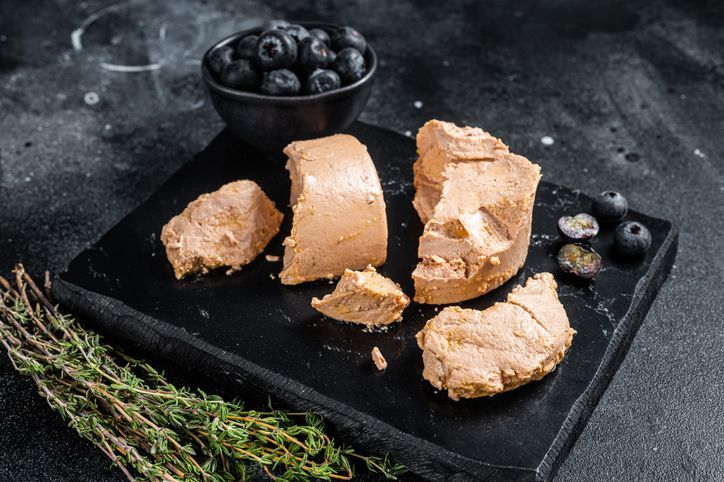
On the 26th (local time), Dr. Thomas Vilgis and his team at the Max Planck Institute for Polymer Research (MPIPR) in Germany announced that they developed a technology that treats the liver of ducks or geese that were not force-fed with lipase, a fat-degrading enzyme, to produce a taste and texture similar to traditional foie gras.
Foie gras is a French dish made from the fatty liver of ducks or geese. "Foie" means 'liver' in French, and "gras" means 'fatty.' This dish is favored by gourmets as one of the representative high-end foods because of its rich, fatty flavor and smooth texture. However, it is also one of the most criticized foods worldwide by animal rights advocates due to its notorious animal cruelty. This is because the farming method involves force-feeding ducks and geese high-calorie grains to enlarge their livers. In particular, the act of forcibly inserting rubber tubes into the animals' mouths to feed them has been a subject of condemnation.

Dr. Vilgis said, "I like foie gras, but I wondered if there was a more ethical way to enjoy it. It has long been my dream to improve animal welfare while making foie gras more accessible."
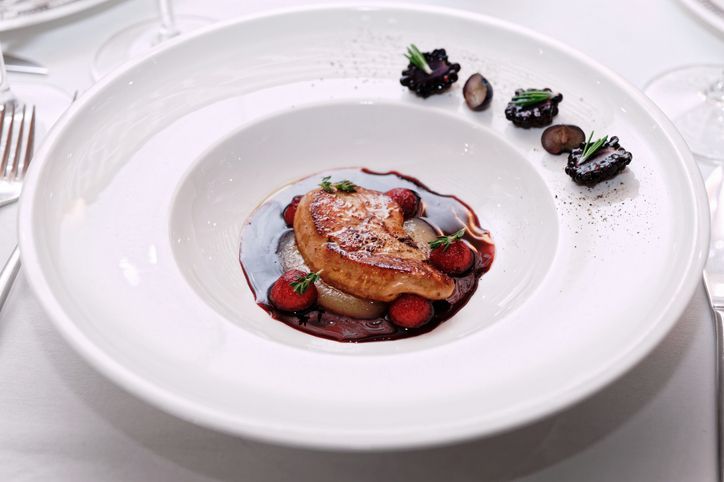
The research team first added collagen and fat extracted from the skin and bones to duck liver, but the results were unsatisfactory. After repeated experiments, they discovered that the 'lipase' enzyme plays a decisive role in producing the flavor of foie gras. The team harvested liver and fat from ducks that were not force-fed grains, treated the fat with lipase, then mixed and sterilized the two components. Using this method, the laboratory-produced foie gras had a taste very similar to that made by traditional methods. Verification through laser microscopy and stress deformation tests confirmed that the microstructure, aroma, texture, as well as physical and mechanical properties were very similar to traditional foie gras.
Dr. Vilgis said, "This manufacturing method is positive because it does not add any external materials and allows complete control over the entire production process. We have filed a patent for this technology and hope to collaborate with companies interested in scaling up production." The research results were published in the international journal Physics of Fluids.
© The Asia Business Daily(www.asiae.co.kr). All rights reserved.
![Clutching a Stolen Dior Bag, Saying "I Hate Being Poor but Real"... The Grotesque Con of a "Human Knockoff" [Slate]](https://cwcontent.asiae.co.kr/asiaresize/183/2026021902243444107_1771435474.jpg)


















