A Desperate Measure Amid Frequent Blackouts
Facing the Challenge of Trump's "Secondary Tariff"
Venezuela in South America, struggling with chronic fuel shortages, has reduced the statutory weekly working hours for public institutions.
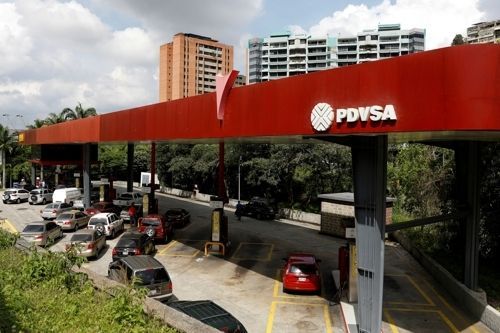
On the 28th (local time), local media El Nacional and other foreign outlets reported that the Venezuelan government authorities announced through state-run media that "considering the global temperature rise trend due to the climate crisis, the working hours for public institutions will be adjusted to 8:00 AM to 12:30 PM." Additionally, the Venezuelan authorities decided to reduce the statutory working days to three days a week. Therefore, the total working hours per week will be limited to 13 hours and 30 minutes. Furthermore, specific behavioral guidelines were issued, such as utilizing natural light instead of electric lights, raising air conditioner temperatures, and turning off unused electronic devices.
Initially, a six-week shortened work schedule was planned, but some speculated that the shortened work period could not be indefinite. There is no guarantee that the crisis will be overcome after six weeks. Local media explained, "There is no scientific evidence that the drought, which has made it difficult to operate hydroelectric power plants, will be resolved starting in May," and "If the crisis continues, the shortened work schedule may be extended." Venezuela's non-governmental organization (NGO) Provea forecasted that "Venezuela's power generation is only at 80% of normal levels," indicating that the power crisis will not be resolved in the short term.
Although Venezuelan authorities cited the 'climate crisis' as the main reason for the reduction in working hours, it is interpreted as a desperate measure to minimize power consumption amid frequent blackouts caused by recent fuel shortages. Venezuela has been experiencing repeated power supply problems across the country, including Caracas, during July and August when electricity consumption increases. In 2019, a large-scale blackout caused schools to close for about a week and public transportation to halt. National reports also indicate that between 2019 and 2021, 233 patients receiving treatment in hospitals died due to power outages. Last year, authorities explained the blackouts as "sabotage by external forces."
Known for having the world's largest crude oil reserves, Venezuela is struggling to produce fuel to operate power plants due to mismanagement and aging facilities of the state-owned oil company PDVSA (Petroleos de Venezuela, S.A). Additionally, compounded by U.S. sanctions, Venezuela has been unable to timely secure the components necessary to refine crude oil into gasoline, worsening the fuel shortage. Due to the lack of gasoline and diesel, residents are desperately searching for fuel.
To make matters worse, Venezuela has faced another obstacle in the form of the second round of tariffs imposed by former U.S. President Donald Trump. On the 24th, Trump announced on his social media platform Truth Social that "all countries importing oil or gas from Venezuela must pay a 25% tariff on all trade transactions with the United States," setting the tariff enforcement date as April 2.
Trump referred to this as the "Secondary Tariff" and explained the background for imposing the tariff by stating, "Venezuela has deliberately and deceitfully extradited numerous criminals to the United States in disguise," emphasizing that Venezuela should be held accountable for this.
© The Asia Business Daily(www.asiae.co.kr). All rights reserved.












