Inspections Targeting 153 Beekeeping Farms Until the End of Next Month
Promotion and Guidance for Control of "Honeybee Mite" and Other Diseases to Be Conducted Simultaneously
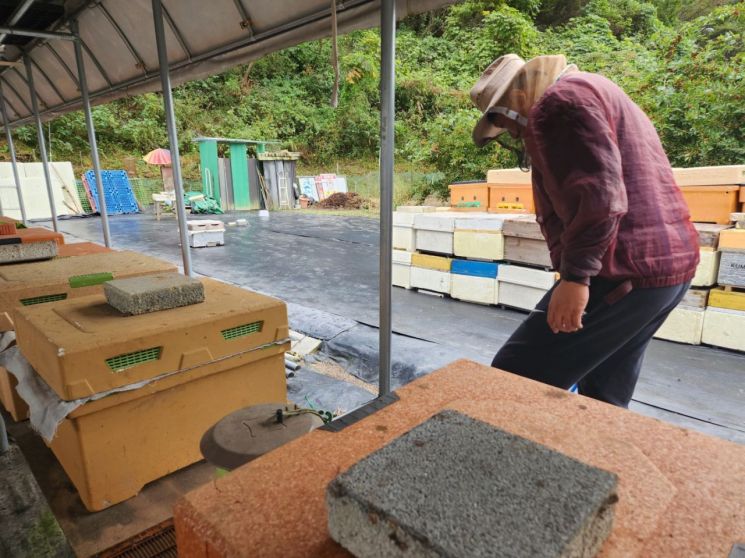 Gwangju Health and Environment Research Institute will conduct a "Honeybee Disease Monitoring Test" targeting 153 local beekeeping farms until the end of April to coincide with the spring flowering season. Photo by Gwangju Health and Environment Research Institute
The Gwangju Institute of Health and Environment announced on the 28th that it will conduct a "honeybee disease monitoring inspection" for local beekeeping farms during the spring flowering season, when honeybee activity becomes more vigorous.
The honeybee disease inspection involves visiting beekeeping sites to investigate the breeding conditions, collecting crawling or potentially diseased bees, and conducting detailed genetic tests. A total of 14 types of honeybee diseases will be tested, including American foulbrood, which is a legally designated infectious livestock disease.
This inspection will be carried out until the end of April, targeting 153 local beekeeping farms (approximately 17,730 colonies). The results will be promptly communicated to the farms. Guidance on disease prevention and treatment methods, as well as management practices, will also be provided.
According to the Gwangju Institute of Health and Environment, inspections conducted last year on 33 beekeeping farms (106 cases) detected the following: Deformed wing virus (87.7%), Black queen cell virus (54.7%), Israeli acute paralysis virus (46.2%), and Nosema disease (27.4%).
Alongside this inspection, the Gwangju Institute of Health and Environment will also begin active promotion and guidance for springtime "honeybee mite" control. The honeybee mite is a major parasite that feeds on bee body fluids, weakens immunity, and threatens the health of colonies. An increase in honeybee mites raises the risk of spreading various viral diseases such as deformed wing disease. Although honeybee mites increase rapidly from summer, starting control measures in spring is essential to minimize damage.
Director Jung Hyuncheol emphasized, "Mite control is not just about managing parasites; it is an essential process for maintaining colony health and preventing honeybee viral diseases. Beekeeping farms should thoroughly and regularly disinfect and control mites, and immediately report any suspected disease symptoms to the institute."
© The Asia Business Daily(www.asiae.co.kr). All rights reserved.
![A Woman Who Jumps Holding a Stolen Dior Bag... The Mind-Shaking, Bizarre Con of a "Human Knockoff" [Slate]](https://cwcontent.asiae.co.kr/asiaresize/183/2026021902243444107_1771435474.jpg)
















