Morphine Detected in Seasoning During Food Safety Inspection at Chinese Hot Pot Restaurant
Poppy Used as Ingredient
Owner Sentenced to Prison and Banned from Food Industry for Life
A hot pot restaurant in China was caught using the narcotic poppy as a spice. On the 27th, XiaoXiang Morning News in China reported, "As a result of food safety inspections conducted by the Public Security Bureau and the Market Supervision Administration of Yichang City, Hubei Province, on local restaurants, it was confirmed that morphine, a narcotic substance, was detected in the food waste of one restaurant."
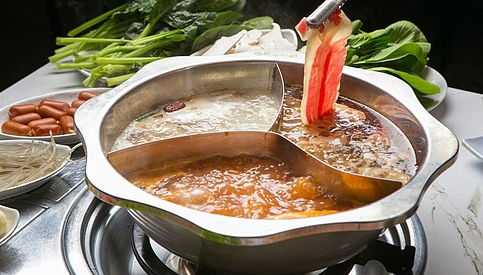
The authorities immediately launched an investigation into the restaurant, where a transparent spice container filled with suspicious powder was found in the kitchen. At the time, the restaurant owner, Mr. Li, claimed, "The seasoning is homemade," and stated that it contained spices such as star anise and cinnamon.
However, when the police conducted an on-the-spot drug test, morphine was detected in the seasoning. Subsequently, a specialized analysis agency revealed that the seasoning contained opium components such as morphine, codeine, thebaine, and narcotine.
It was investigated that Mr. Li had been grinding poppy seeds and mixing them with spices to add to food since February of last year. He told the police, "I found out that adding poppy as a seasoning to hot pot makes it taste better," and "I used it to improve the flavor and attract customers."
The police explained, "It appears that Mr. Li thought that grinding and using poppy seeds would make it less likely to be detected, which led to this behavior." Mr. Li was sentenced to six months in prison with a one-year probation for producing and selling harmful food, fined ten times the sales amount, and was banned from engaging in food manufacturing and sales for life.
Cases of using poppy as a seasoning in China are not new. In May last year, police in Taijiang County, Guizhou Province, in southwestern China, discovered opium poppy flowers on the rooftop of a residential building during a drone patrol. Following an on-site investigation, it was found that there were about 900 opium poppy plants on the rooftop. The woman who cultivated the poppies stated, "I grew them to use as a 'special' seasoning for the hot pot restaurant." In 2016, authorities conducted a crackdown and found that 35 well-known restaurants were using poppy as a seasoning.
Since opium extracted from poppy seeds can be used to produce highly addictive narcotics such as morphine, heroin, and codeine, crackdowns are being carried out. However, it is still reported that many restaurants in China continue to use poppy as a seasoning.
© The Asia Business Daily(www.asiae.co.kr). All rights reserved.
![Clutching a Stolen Dior Bag, Saying "I Hate Being Poor but Real"... The Grotesque Con of a "Human Knockoff" [Slate]](https://cwcontent.asiae.co.kr/asiaresize/183/2026021902243444107_1771435474.jpg)
















