National Statistics Research Institute Releases Cohort Report
Homeownership Rate in Early 30s Nears 50 Percent
Monthly Rent Occupancy Rises from 17.3 Percent to 21.3 Percent
Analysis Shows Housing Polarization Among Younger Generation Intensifies
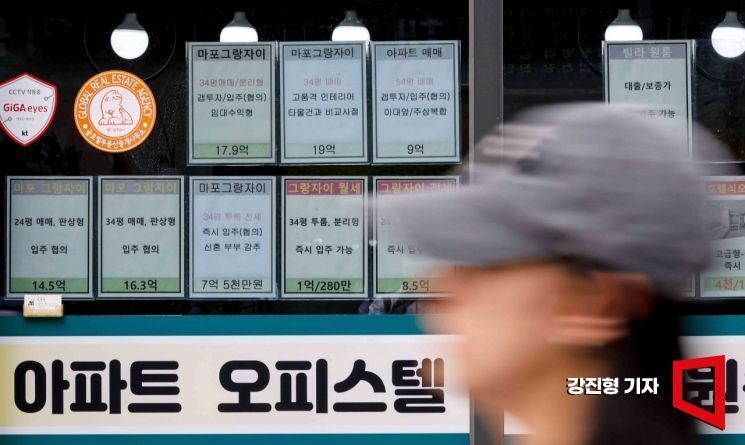 Last August, apartment sale and jeonse prices were posted at a real estate office in Mapo-gu, Seoul.
The 'housing polarization' among the younger generation is intensifying. While the proportion of jeonse tenants in their early 30s is gradually decreasing, the rates of monthly rent and homeownership are steadily increasing.
On the 27th, the National Statistical Office's National Statistics Research Institute released a report titled "A Cohort Comparative Study on Life Course Transitions: Marriage, Childbirth, and Housing," which contains these findings. The report analyzed the housing occupancy types of general household members born in 1970-1974, 1975-1979, 1980-1984, and 1985-1989 by conducting a cohort analysis (groups of people with common characteristics) based on the Population and Housing Census conducted every five years by the National Statistical Office.
The analysis showed that among household members aged 31-35 (early 30s), the proportion living in monthly rent has been gradually increasing. When those born in 1970-1974 were in their early 30s, the monthly rent occupancy rate was 17.3%. This rate increased to 19.0% when those born in 1975-1979 reached their early 30s. For those born in 1980-1984, the monthly rent rate was 20.8%, and for those born in 1985-1989, it rose to 21.3%. This indicates that the proportion of people living in monthly rent in their early 30s is steadily rising.
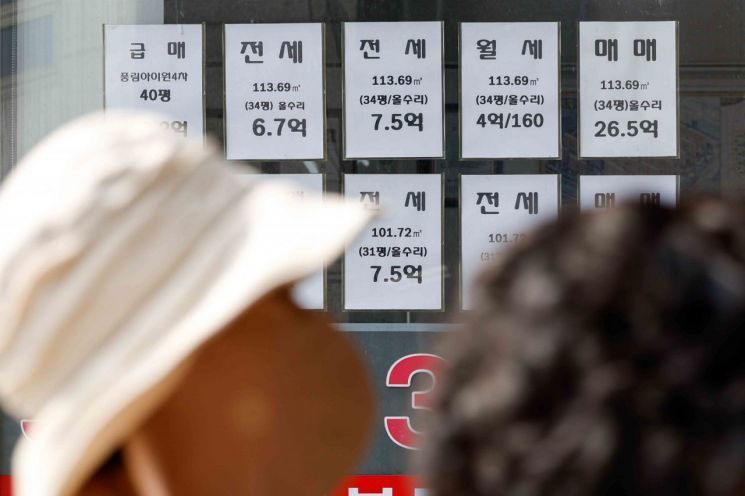
The proportion of people living in owned homes showed a similar trend. The homeownership rate in the early 30s was 48.1% for those born in 1970-1974, 46.6% for those born in 1975-1979, 51.1% for those born in 1980-1984, and 49.0% for those born in 1985-1989. Although there were slight fluctuations, the overall trend indicates an increase in homeownership rates in more recent cohorts. Conversely, the jeonse occupancy rate in the early 30s showed a gradual downward trend over time.
The report analyzed that "housing occupancy types among young people in their early 30s, the period when family formation is most active, are becoming polarized." Economically capable young people are moving from jeonse to homeownership, while those less capable are shifting from jeonse to monthly rent, deepening the polarization. The report added, "However, the homeownership rate is the result of a complex interplay of historical real estate policy changes and economic conditions," cautioning that "careful interpretation is necessary."
© The Asia Business Daily(www.asiae.co.kr). All rights reserved.
![Clutching a Stolen Dior Bag, Saying "I Hate Being Poor but Real"... The Grotesque Con of a "Human Knockoff" [Slate]](https://cwcontent.asiae.co.kr/asiaresize/183/2026021902243444107_1771435474.jpg)

















