Revision of Guidelines for Reviewing Unfair Support and Private Interest Appropriation
Consideration of Support Intent, Changes in Competitive Conditions, and Profit Attribution in Determining Unfairness
Going forward, the review of unfair internal transactions between wholly owned subsidiaries holding 100% of shares will become more flexible. Until now, the same standards applied to general affiliates will be used, but from now on, the special characteristics of wholly owned subsidiaries will be considered, including the intent of support and attribution of unfair profits.
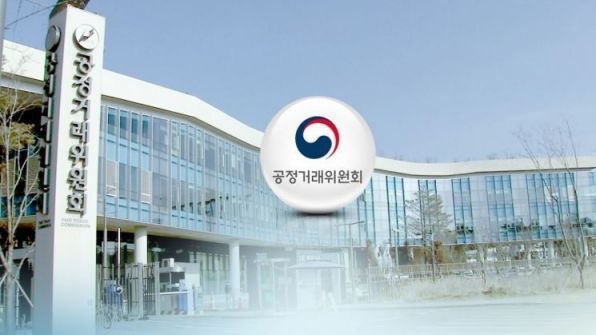
On the 27th, the Korea Fair Trade Commission (KFTC) announced that it will publicly notify the revision drafts of the "Guidelines for Reviewing Unfair Support Acts" and the "Guidelines for Reviewing Unfair Profit Provision Acts to Special Related Parties" until July 17.
This revision reflects the opinions of the business community that strictly regulating internal transactions between wholly owned subsidiaries in the same way as general affiliates hinders mutual efficiency between companies. A wholly owned subsidiary refers to a structure where a parent company within a corporate group holds 100% of the shares of a subsidiary and controls it, and the KFTC decided to regard such wholly owned subsidiary relationships as essentially a single business entity.
First, when determining the illegality of unfair support acts, new judgment criteria such as the intent of support, economic benefits, and changes in competitive conditions were established to consider the special characteristics of wholly owned subsidiary relationships.
Cases where unfair support acts between wholly owned subsidiaries are established were limited to those that may hinder fair trade in the relevant market, such as acts of evasion or regulatory avoidance, preventing the exit of marginal companies, and restricting bidding competition.
Examples of cases that do not constitute unfair support acts include transactions aimed at jointly increasing efficiency between wholly owned subsidiaries, transactions with wholly owned subsidiaries established through physical division where the transaction relationship before and after the division is essentially the same, and support provided for the performance of public interest tasks.
Additionally, in the guidelines for reviewing unfair profit provision acts to special related parties, the special characteristics of wholly owned subsidiary relationships were considered, and it was stipulated that whether there is a low risk of unfair profits accruing to special related parties should be judged through the intent of profit provision, economic benefits, and profits accruing to special related parties.
Furthermore, a "safe zone" requirement for acts of private interest appropriation was newly established. It defines conditions where the risk of profits accruing to special related parties is low, and if all these conditions are met, the application of the law can be excluded.
The safe zone requirements are fourfold: ▲ the total wealth of special related parties does not increase due to the profit provision act ▲ the act is not conducted for purposes other than jointly promoting efficiency between wholly owned subsidiaries ▲ no harm occurs to third parties such as creditors ▲ no violation of other laws occurs.
The KFTC expressed expectations that "through this revision, by establishing explicit review standards for unfair internal transactions between wholly owned subsidiaries for the first time, it will be possible to enhance both the predictability of law enforcement for companies and the efficiency of case handling."
It added, "For wholly owned subsidiaries belonging to publicly disclosed corporate groups subject to private interest appropriation regulations, compliance costs can be significantly reduced if the safe zone requirements are met."
© The Asia Business Daily(www.asiae.co.kr). All rights reserved.

![Clutching a Stolen Dior Bag, Saying "I Hate Being Poor but Real"... The Grotesque Con of a "Human Knockoff" [Slate]](https://cwcontent.asiae.co.kr/asiaresize/183/2026021902243444107_1771435474.jpg)















