Victor Cha: "Other Contributions Should Be Considered Before Increasing Alliance Cost-Sharing"
At a U.S. Senate Foreign Relations Committee hearing, there was a call for a strategy to utilize U.S. Forces Korea in the event of an emergency situation around the Korean Peninsula, including Taiwan.
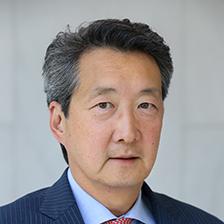 Victor Cha, Korea Chair at the Center for Strategic and International Studies (CSIS).
Victor Cha, Korea Chair at the U.S. think tank Center for Strategic and International Studies (CSIS), stated at the Senate Foreign Relations Committee hearing on the 26th (local time) that "if opportunistic aggression occurs in Taiwan, a political consensus must be reached regarding changes in U.S. military presence on the Korean Peninsula, South Korea’s rear support, and military capabilities to deter North Korea."
He described the current cost-sharing method for U.S. troop deployment as a legacy from the past, saying, "Many allies have a much greater capacity to share costs than they did 50 years ago," and added, "Sudden changes that surprise allies should be avoided, and unlike the U.S., allies that require congressional approval should be given political room for new (cost-sharing) agreements."
He also pointed out, referring to South Korea’s support for Ukraine, that "before exponentially increasing allies’ cost-sharing, other contributions from the alliance should be considered."
Randall Schriver, former U.S. Assistant Secretary of Defense for Indo-Pacific Security Affairs, said, "The cost-sharing issue is focused on one number, namely 'defense spending as a percentage of Gross Domestic Product (GDP),'" and added, "This approach does not always show the whole picture."
He described the U.S. position as a "geographical challenge" due to its distance from the Indo-Pacific region, saying, "This works to the advantage of adversaries and competitors such as China, Russia, and North Korea. When emergencies occur in the Taiwan Strait, the western Philippine Sea, or the East China Sea, the U.S. always has to play the game as the visiting team."
He emphasized that "strong alliances and partnerships are a good way to overcome the constraints of time and distance," and stressed the need to develop allies’ own capabilities in preparation for regional emergencies. He added, "The U.S. should have a comprehensive view of burden-sharing and recognize some of the alliance’s contributions."
Oriana Skylar Mastro, a researcher at the Freeman Spogli Institute for International Studies at Stanford, also said, "Burden-sharing is often discussed in financial terms." Regarding U.S. military facility construction, she noted, "Many allies, including Japan, are already making significant contributions," and stated, "South Korea can contribute more to these costs."
She continued, "The U.S. can utilize U.S. forces stationed on the Korean Peninsula for emergencies outside the peninsula, specifically those related to China. South Korea needs to agree to the U.S.’s strategic flexibility."
Furthermore, regarding the effective dismantling of functions such as the U.S. Agency for International Development (USAID) and Voice of America (VOA) broadcasts, she mentioned the need to resume support, saying, "These are relatively important and inexpensive tools for the U.S. to exert its power and influence."
© The Asia Business Daily(www.asiae.co.kr). All rights reserved.
![Clutching a Stolen Dior Bag, Saying "I Hate Being Poor but Real"... The Grotesque Con of a "Human Knockoff" [Slate]](https://cwcontent.asiae.co.kr/asiaresize/183/2026021902243444107_1771435474.jpg)















