About 1,500 Residents of Welfare Facilities Evacuated
Emergency Support Measures Including Up to 50% Reduction in Health Insurance Premiums for Special Disaster Area Residents
The Ministry of Health and Welfare will strengthen the disaster response system for the Ulsan, Gyeongbuk, and Gyeongnam regions where large-scale wildfires occurred on the 26th and provide emergency support to vulnerable groups such as disaster victims.
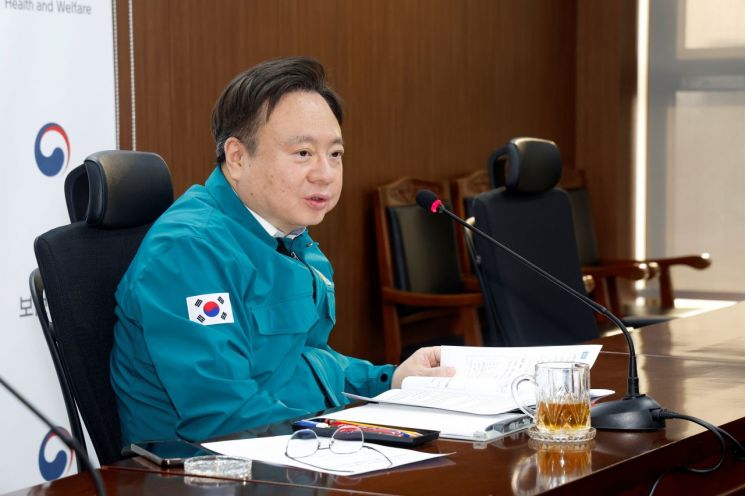 Minister of Health and Welfare Cho Kyu-hong held an emergency situation inspection meeting on the 26th to respond to wildfires in the Ulsan-Gyeongbuk-Gyeongnam region, reviewing the expansion and reorganization of the disaster response system and the support status for disaster victims. Photo by Ministry of Health and Welfare
On the same day, Minister of Health and Welfare Cho Kyu-hong held an emergency situation inspection meeting and announced that the existing 'Disaster Safety Initial Response Team' would be expanded to form an emergency countermeasure team including departments related to relevant facilities, and that full support would be provided for rapid recovery of daily life, including medical, livelihood, and psychological support.
The Ministry of Health and Welfare plans to first strengthen 24-hour situation monitoring of disaster evacuation vulnerable facilities such as nursing homes and long-term care hospitals located in wildfire risk areas, and take preventive measures to avoid casualties, including preemptive evacuation of residents if necessary.
They will strengthen the disaster medical support system by sharing hospital and bed information through the Central Emergency Medical Situation Room, and support the dispatch of Disaster Medical Assistance Teams (DMAT) composed of public health center rapid response teams, doctors, nurses, emergency medical technicians, and administrative staff for prompt emergency medical support.
Additionally, they will identify disaster victims who are experiencing difficulties in livelihood and housing due to wildfire damage and provide emergency support if necessary. For residents who are not eligible for emergency support, necessary assistance such as supplies will be provided in cooperation with local governments and the Community Chest of Korea.
Psychological support for the injured, bereaved families, and disaster victims will also be strengthened. Mental health professionals will provide psychological counseling by dispatching the 'Mind Relief Bus' to temporary residential facilities, centered on regional trauma centers in cooperation with metropolitan and basic mental health welfare centers.
Residents of Ulsan Ulju-gun, Gyeongnam Sancheong-gun and Hadong-gun, and Gyeongbuk Uiseong-gun, which have been declared special disaster areas, will receive benefits such as reductions in health insurance premiums and national pension contributions. For health insurance local subscribers' households, premiums will be reduced by 30-50% for three months depending on the extent of damage, and late fees will be waived for up to six months. National pension contributions will also be exempted for up to one year. Disaster victims can receive exemptions or reductions in out-of-pocket expenses when using hospitals and pharmacies for three months from the date of the disaster.
Minister Cho said, "We will continue to gather opinions from the affected sites and do our best to ensure that wildfire victims do not experience inconvenience through immediate measures."
© The Asia Business Daily(www.asiae.co.kr). All rights reserved.
![Clutching a Stolen Dior Bag, Saying "I Hate Being Poor but Real"... The Grotesque Con of a "Human Knockoff" [Slate]](https://cwcontent.asiae.co.kr/asiaresize/183/2026021902243444107_1771435474.jpg)
















