SCMP Reports "Beijing Extends Hand of Reconciliation to Seoul"
Relations Cooled After THAAD Deployment
Visa Exemption Measures Signal Cultural Exchange
A reconciliation mood is emerging in South Korea-China relations, which had cooled down following China's retaliatory measures against the deployment of the Terminal High Altitude Area Defense (THAAD) system. While it remains uncertain whether the return of Hallyu content and the expansion of cultural exchanges will lead to the lifting of the 'Hanhanryeong' (restrictions on Korean Wave), there is an interpretation that this could serve as a signal for improving bilateral relations.
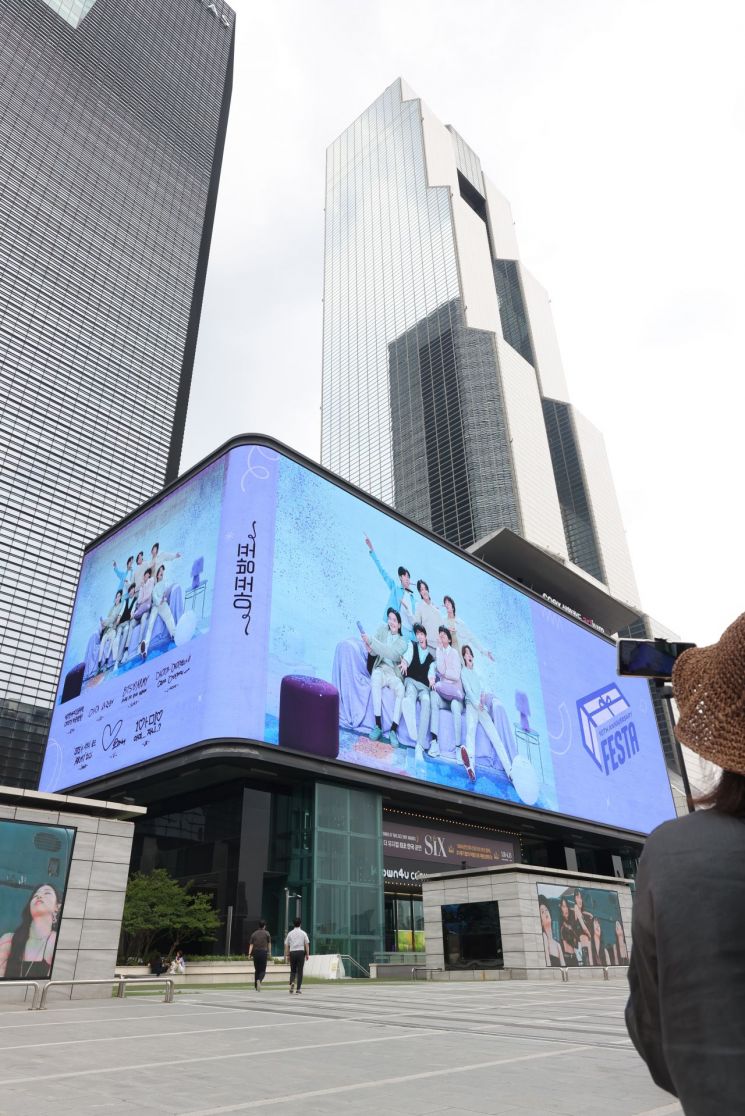
On the 25th, Hong Kong's South China Morning Post (SCMP) reported, "Beijing is extending a hand of reconciliation to Seoul through the return of Korean tourists and acceptance of cultural content such as K-pop, and both countries are taking measures to improve relations." The newspaper noted that about 200 Chinese fans gathered at a signing event for the K-pop girl group IVE held in Shanghai on the 20th, which was also the day the South Korean government announced a temporary visa-free entry for Chinese group tourists. This move by South Korea is seen as a reciprocal response to China’s visa exemption for Korean visitors since November last year.
Professor Chu Jae-woo of Kyung Hee University's Department of Chinese Studies said, "China's visa exemption for Koreans and the return of K-pop to China will be 'significantly' helpful in improving bilateral relations," adding, "Especially, the visa exemption program introduced last November is already showing effects." According to the South Korean Ministry of Justice, the number of Koreans visiting China from November last year to January this year was 647,901, a sharp increase of 60.6% compared to the same period the previous year (403,470).
The consumption and activities of Hallyu content in China are also gradually being permitted. Before IVE, the popular girl group TWICE visited Shanghai last month for the first time since 2015, and director Bong Joon-ho’s latest work, 'Mickey 17,' has been screening in Chinese cinemas since early this month. SCMP forecasted, "This cultural exchange has emerged as China seeks to restore relations with South Korea and raises expectations for further relaxation of unofficial restrictions on Hallyu." Since South Korea agreed to deploy THAAD in 2016, China has effectively banned the import of Hallyu content and the activities of Korean entertainers in China.
There is also an interpretation that U.S. President Donald Trump's pressure on China is a background factor prompting China to improve relations with South Korea. Zhou Xiaolei, Associate Professor of Foreign Studies at Beijing Foreign Studies University, said that Beijing is the main driver behind this cultural exchange, stating, "China wants to improve relations with South Korea before U.S. President Donald Trump intensifies pressure on China." This suggests that the recent active cultural exchanges between South Korea and China reflect the Chinese authorities' will.
Both the South Korean and Chinese governments have also formed a consensus on the necessity of human and cultural exchanges. Chinese President Xi Jinping emphasized the need to "expand human and cultural exchanges" to strengthen friendship between the peoples of the two countries when he met Woo Won-shik, Speaker of the National Assembly, who visited Harbin on the 7th of last month. SCMP also reported that Foreign Minister Cho Tae-yul expressed hope for President Xi’s visit to the Asia-Pacific Economic Cooperation (APEC) summit to be held in South Korea this year, mentioning that this visit could become a new turning point in bilateral relations.
© The Asia Business Daily(www.asiae.co.kr). All rights reserved.











