Central Headquarters Meeting Held on the 24th
Review of Outbreak Situation and Quarantine Measures
Following the outbreak of H5N1 highly pathogenic avian influenza at a laying hen farm (89,000 birds) in Sejong City, the government has decided to strengthen quarantine measures, including conducting nationwide simultaneous disinfection over two days on the 25th and 26th.
The Central Disaster and Safety Countermeasures Headquarters for Highly Pathogenic Avian Influenza held a meeting on the 24th with related agencies and local governments to review the outbreak situation and quarantine measures.
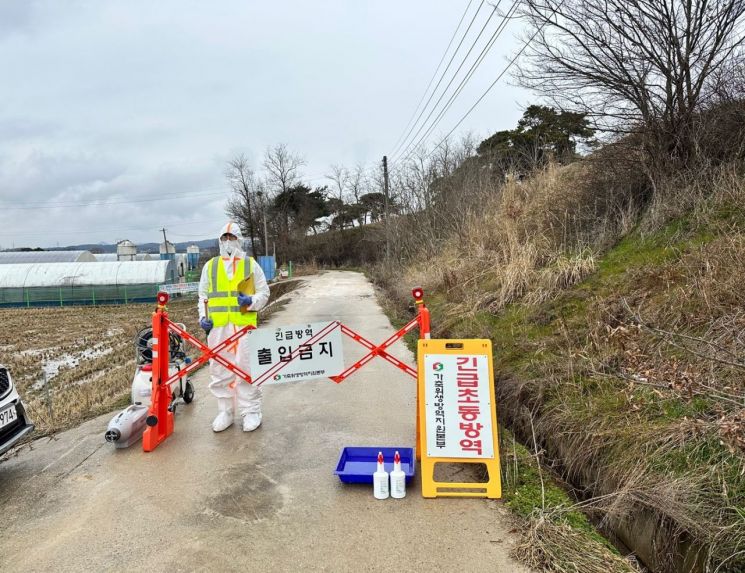
During a surveillance inspection by quarantine authorities at the Sejong laying hen farm on the 21st, an increase in mortality was confirmed, and a detailed examination on the following day, the 22nd, confirmed the presence of highly pathogenic avian influenza. This marks the 41st case since the first outbreak on October 29 of last year.
Since the 19th, four cases have occurred consecutively at laying hen farms in three adjacent regions (Cheonan, Sejong, Cheongju). A representative from the Central Headquarters stated, "The number of winter migratory birds is higher than last year, and there is a possibility of additional outbreaks in regions such as Chungcheong Province and Gyeonggi Province, which lie along the migratory route. Poultry farms in these areas need to strengthen biosecurity measures and immediately report any suspicious symptoms to quarantine authorities."
After the H5 antigen was detected at the Sejong laying hen farm, the Central Headquarters immediately deployed an initial response team according to the 'Avian Influenza Emergency Standard Operating Procedure (SOP)', controlling access and conducting culling of the laying hens at the affected farm along with epidemiological investigations to prevent further spread. Additionally, to block the spread of highly pathogenic avian influenza, a temporary movement restriction order was issued from 11 PM on March 21 to 11 AM on March 22 for laying hen farms, slaughterhouses, and livestock facilities and vehicles related to poultry in Sejong City and five adjacent areas (Cheonan, Gongju, Gyeryong, Daejeon, Cheongju), with compliance monitored. Furthermore, detailed inspections were conducted on 44 poultry farms within a 10 km quarantine zone around the affected farm, and all available disinfection resources were deployed to disinfect nationwide migratory bird habitats, small streams, reservoirs, surrounding roads, and access roads to poultry farms.
The Central Headquarters decided to strengthen quarantine measures to prevent sporadic outbreaks and spread of highly pathogenic avian influenza. First, to prevent additional outbreaks, the removal of manure from laying hen farms within the 10 km quarantine zones related to the Cheonan and Sejong outbreaks is temporarily banned until the 31st. The entry of egg transport vehicles into laying hen farms will also be inspected. Dedicated veterinary officers will be assigned and deployed to laying hen farms within the quarantine zones (29 farms in Cheonan, 18 in Sejong, and 5 in Cheongju) for inspection and management.
Surveillance and disinfection management will also be intensified in four provinces with a high risk of outbreaks during the northward migration of winter migratory birds (Gyeonggi, Chungnam, Chungbuk, and Sejong). In particular, March 25 and 26 have been designated as 'Nationwide Simultaneous Disinfection Days' to disinfect livestock farms, facilities, and vehicles. Until the nationwide movement restrictions are lifted, roads near migratory bird habitats and access roads to poultry farms near these habitats will be disinfected twice daily (morning and afternoon). Control posts will be strengthened at 10 nationwide laying hen dense complexes and 204 large-scale laying hen farms with over 200,000 birds, guiding and inspecting access to farms only after a three-stage disinfection process (base disinfection facility → control post → farm).
Finally, for seven provinces at the severe crisis alert level (Gyeonggi, Chungnam, Chungbuk, Gyeongbuk, Jeonnam, Jeonbuk, and Sejong), administrative orders, public announcements related to highly pathogenic avian influenza, and bans on gatherings of livestock-related personnel have been enforced since the 21st and will continue until the nationwide movement restrictions are lifted.
Choi Jeong-rok, Director of the Quarantine Policy Bureau at the Ministry of Agriculture, Food and Rural Affairs, said, "We expect that the nationwide simultaneous disinfection days on the 25th and 26th will reduce the density of residual viruses by disinfecting livestock farms, facilities, and vehicles." He urged local governments to "mobilize all available disinfection resources to thoroughly disinfect roads around major migratory bird habitats, nearby poultry farms, and livestock facilities."
According to the Ministry of Agriculture, Food and Rural Affairs, the number of laying hens culled due to avian influenza outbreaks in March reached 1.38 million (cumulative 4.07 million from October 2024 to March 2025), accounting for 1.8% of the total 77.58 million laying hens nationwide in March. Director Choi stated, "So far, egg supply has been stable thanks to the efforts of livestock farmers and related agencies," and added, "Local governments should thoroughly implement disinfection and vehicle control measures in laying hen dense complexes and large-scale laying hen farms to prevent any impact on egg supply due to additional outbreaks at laying hen farms."
© The Asia Business Daily(www.asiae.co.kr). All rights reserved.

















