Employed Persons to Turn Negative in 2029,
Economically Active Population to Decline in 2030
"Increase Youth, Women, and Productivity"
The number of employed persons and the economically active population in South Korea are expected to turn downward in 2029 and 2030, respectively. To achieve an economic growth rate of 1.9% by 2033, the required number of employed persons is projected to reach 821,000. As the labor force decline becomes more significant closer to 2033, it is advised to increase labor market participation among youth and women to expand the economically active population, while simultaneously enhancing labor market productivity and the labor force.
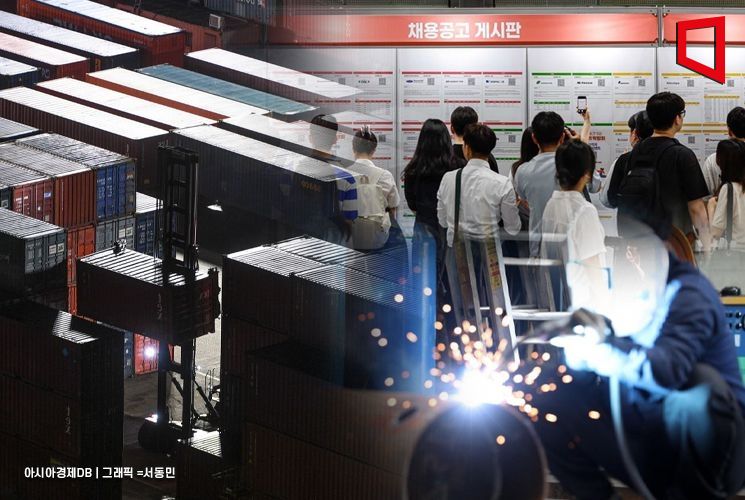
Employed Persons Negative in 2029, Economically Active Population Negative in 2030
The Korea Employment Information Service announced on the 17th its "Mid- to Long-term Labor Supply and Demand Outlook," which forecasts the supply (economically active population) and demand (employed persons) in the labor market until 2033 and estimates the additional workforce needed for sustained growth. This outlook was discussed at the 10th Emergency Population Countermeasure Meeting held on the 11th, and the results were disclosed this time.
According to this outlook, the economically active population is expected to increase by 248,000 from 2023 to 2033. However, the growth rate is projected to shrink to about one-tenth compared to the past decade. During the first half of the forecast period, from 2023 to 2028, the economically active population will increase, but a decline is expected in the latter half, from 2028 to 2033. Not only will there be a quantitative reduction, but the expansion of the elderly population proportion and other compositional effects may further constrain labor supply.
Jung Soon-ki, head of the Labor Supply and Demand Outlook Team at the Korea Employment Information Service, predicted, "The economically active population will start to decline from 2030." He added, "By 2030, the baby boomer generation will retire, creating a significant gap. From then on, the decrease in the economically active population will seriously impact the labor market, so preparations (responses) are necessary."
The number of employed persons is expected to increase by 312,000 from 2023 to 2033. However, due to labor supply constraints, the latter half of the forecast period may see a decrease of 85,000. Specifically, the Korea Employment Information Service expects employment to enter a decline phase in 2029 (-14,000), briefly rebound in 2030, and then continue a negative trend from 2031 onward.
By industry, employment is expected to increase most in social welfare and healthcare sectors due to aging and growing care demand. The publishing industry (including software development) is also expected to grow due to technological innovations such as digital transformation. Conversely, industries undergoing structural changes like retail, food and beverage services, wholesale and commodity brokerage, and general construction are expected to see employment declines due to online and platform-based transformations.
By occupation, significant employment growth is anticipated in care, healthcare, personal services, and health and social welfare jobs due to aging. Engineering and information and communication professionals are also expected to increase due to technological innovations like digital transformation. On the other hand, store sales positions may sharply decline due to online shifts. Additionally, automation is expected to reduce employment in device and machine operation jobs, and a decrease in school-age population will likely reduce education professionals.
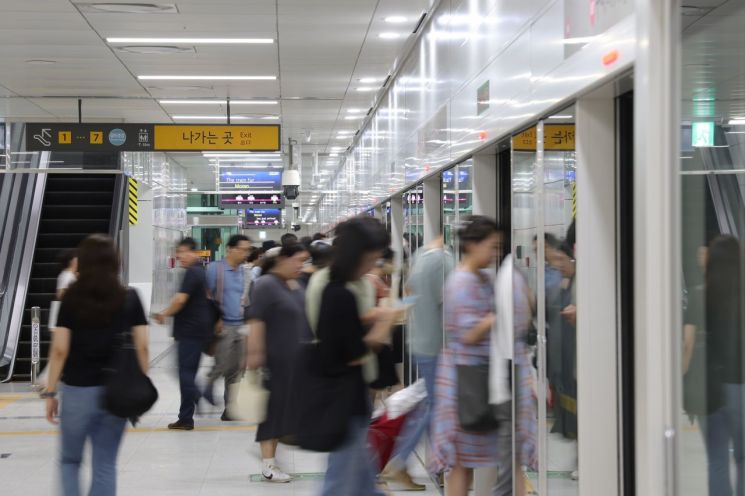 Commuters are boarding the train at Guri Station on the Byeollae Line extension of Subway Line 8 in Guri-si, Gyeonggi-do, on their way to work. Photo by Yonhap News
"Increase Youth, Women, and Productivity"
Among labor supply constraints, the additional workforce needed to achieve the long-term economic growth target of 1.9% by 2033 is 821,000. This means the number of employed persons that may be lacking in the process of targeting a 1.9% growth rate could reach this scale. Notably, the required workforce is estimated at an average of 58,000 per year in the first half of the period but rises to 107,000 per year in the latter half, highlighting the growing severity of the issue, according to the Korea Employment Information Service.
The Korea Employment Information Service also predicted that significant labor shortages will occur not only in healthcare and welfare sectors, which are expected to see the largest employment growth over the next decade, but also in manufacturing and retail sectors, where employment is expected to decline. Furthermore, by 2033, the proportion of the elderly population aged 65 and over among those aged 15 and above will exceed 30%, and with the surge in additional workforce needs amid industrial transformation and major structural changes in the labor market, systematic responses are necessary.
In particular, to address the decline in the labor force, it is necessary to promote labor market entry for potential workers such as youth, women, and the elderly, and to implement tailored policies that respond to changes by industry and occupation. Kim Jun-young, head of the Employment Information Analysis Office at the Korea Employment Information Service, said, "Compared to advanced countries, groups with low economic activity participation are youth, women, and the elderly, and increasing their labor market participation is a challenge." He added, "We need to respond by raising productivity and the labor force accordingly."
Lee Chang-soo, president of the Korea Employment Information Service, stated, "Employment and labor policy responses are necessary to minimize the negative impacts caused by future labor shortages." He added, "Following last year, we will continue to forecast the scale of additional workforce needs and enhance the mid- to long-term labor supply and demand outlook by introducing short-term (one-year) forecasts." He also said, "In this process, we will carefully consider the impact of technological changes and automation, such as artificial intelligence (AI), on employment."
© The Asia Business Daily(www.asiae.co.kr). All rights reserved.













