KDCA to Survey 24,000 Residents
in Five Major River Basins
for Intestinal Parasite Infections
The Korea Disease Control and Prevention Agency announced on the 17th that it will investigate the infection status of intestinal parasites such as Clonorchis sinensis, Fasciolopsis buski, Ascaris lumbricoides, Trichuris trichiura, and Paragonimus westermani among 24,000 residents of 39 cities and counties around the five major rivers: Han River, Nakdong River, Geum River, Seomjin River, and Yeongsan River, in cooperation with local public health centers.
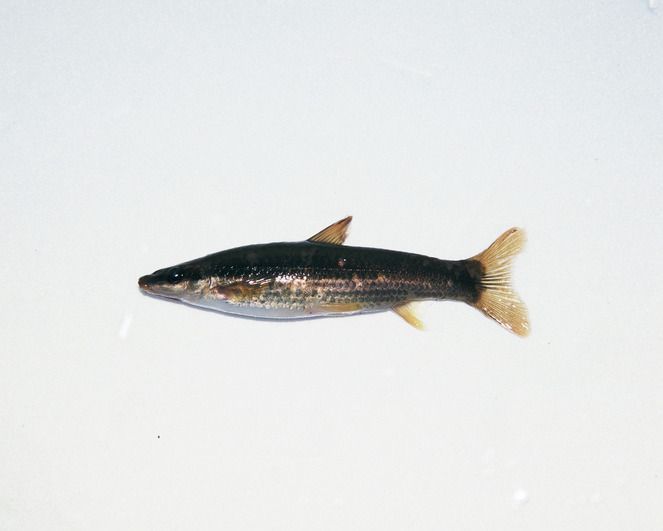
Clonorchis sinensis, which accounts for the highest proportion of intestinal parasitic infections in Korea, is a foodborne parasite transmitted by consuming raw freshwater fish from endemic river areas. Clonorchis sinensis can cause chronic biliary diseases and, in severe cases, may lead to cholangiocarcinoma, requiring caution.
Accordingly, since 2005, the KDCA has conducted surveys and treatment support projects focusing on areas endemic for Clonorchis sinensis. When parasitic infections such as Clonorchis sinensis are confirmed, management services including medication administration and retesting are provided at public health centers.
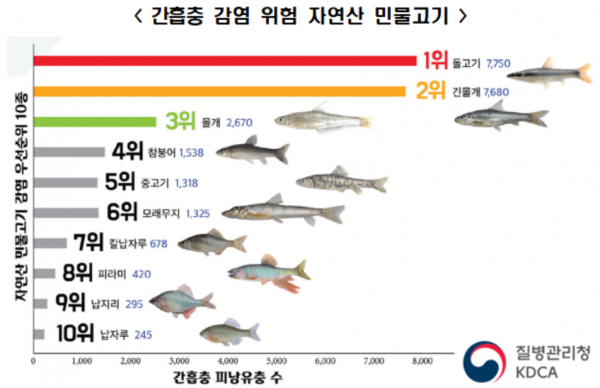
This year, specimen collection and diagnostic testing will be conducted from this month through October among residents of the relevant areas, and the survey results will be announced in December.
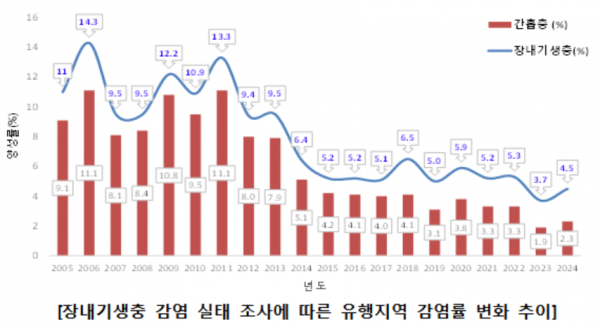
According to the results of the '2024 Intestinal Parasite Infection Status Survey' announced in December last year, the infection rate of Clonorchis sinensis has steadily decreased from 9.1% in 2005, 9.4% in 2012, 3.3% in 2021, to 1.9% in 2023, but slightly increased again to 2.3% last year. The KDCA explained that some endemic high-prevalence areas still show a high infection rate of over 5%. The overall intestinal parasite infection rate also slightly increased to 4.5% compared to 3.7% the previous year.
The KDCA plans to conduct a full survey and preventive education in cooperation with local public health centers in areas where the Clonorchis sinensis infection rate was confirmed to be over 9% in last year’s survey.
Ji Young-mi, Director of the KDCA, stated, "Although the intestinal parasite infection rate in Korea has decreased compared to the past due to continuous management projects in endemic areas and improved health awareness, infection rates remain high in some regions. Please make sure to cook wild freshwater fish thoroughly and actively get tested at local public health centers if infection is suspected."
© The Asia Business Daily(www.asiae.co.kr). All rights reserved.



















