Secretary Rubio: "Bilateral Negotiations Based on Fairness and Reciprocity"
South Korea Unlikely to Be an Exception... Possibility of Renegotiating the Korea-U.S. FTA
Secretary Besant: "A Healthy Adjustment to Prevent a Financial Crisis"
More Than Half of Americans View Tariff and Economic Policies Negatively
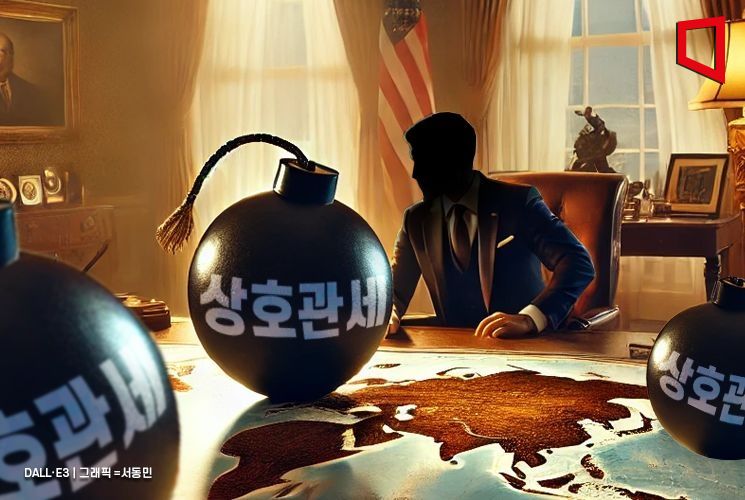
U.S. Secretary of State Marco Rubio announced that starting from the 2nd of next month, the United States may impose 'reciprocal tariffs' on countries worldwide and then begin bilateral trade negotiations with each country. This is interpreted as a clear indication of the intention to use reciprocal tariffs as leverage to individually tackle trade partners in order to resolve the U.S. trade imbalance. It is also expected that South Korea, which has a large trade surplus with the U.S., will not be able to avoid pressure to renegotiate the Free Trade Agreement (FTA) with the United States.
On the 16th (local time), Secretary Rubio appeared on CBS's "Face the Nation" and said regarding the reciprocal tariff policy, "We will impose the same tariffs on them (other countries) that they impose on the United States," adding, "We will reset the standards and ensure our trade is fair through bilateral agreements."
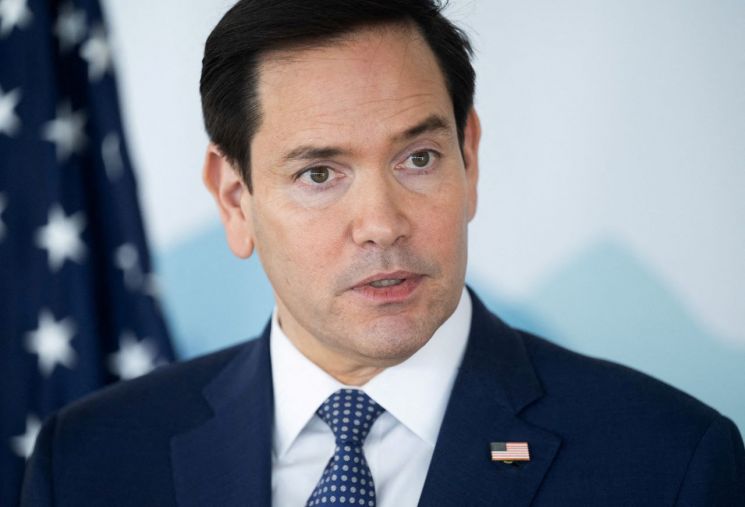
He stated, "This (reciprocal tariffs) is global and not targeted against Canada, Mexico, or the European Union (EU)," and added, "This is for everyone." He further explained, "We will engage in bilateral negotiations for potentially reasonable new trade agreements with countries worldwide under new standards of fairness and reciprocity," emphasizing that the U.S. will "reset the standards" to ensure fair treatment.
Previously, President Donald Trump had repeatedly announced that starting April 2nd, reciprocal tariffs corresponding to the tariffs and non-tariff barriers imposed by other countries would be applied. Secretary Rubio's remarks on this day can be seen as confirming the plan to use reciprocal tariffs as leverage to reduce the U.S. trade deficit and to engage in individual trade negotiations with each country.
Secretary Rubio said, "For 30 to 40 years, we have allowed other countries to treat us unfairly in global trade," adding, "This was because during the Cold War they were our allies and we wanted them to be wealthy and prosperous, but now that must change." He emphasized, "We do not like the current state," and said, "We will create a new state, and if others want, we can negotiate."
Accordingly, it is anticipated that South Korea, which has an FTA with the U.S., will have no choice but to enter new trade negotiations, including renegotiating the FTA, after the U.S. imposes reciprocal tariffs. South Korea revised its FTA with the U.S. once during the first Trump administration, but last year its trade surplus with the U.S. reached a record high of $55.7 billion. From the U.S. perspective, South Korea ranks as the eighth largest country with a trade deficit, placing it within the scope of President Trump's tariff attacks. Furthermore, President Trump claimed in his congressional speech on the 4th that South Korea's tariff rates are four times those of the U.S. Although this is inaccurate, there is a possibility that the U.S. will demand improvements to South Korea's various policies and regulations that burden U.S. companies or cause trade deficits. There are expectations that the U.S. might raise issues with South Korea's "Platform Fair Competition Promotion Act (Platform Act)" promoted by the government and National Assembly, as well as South Korea's import restrictions on U.S. beef limited to cattle under 30 months of age.
While fears of a tariff-induced economic recession are growing on Wall Street, the Trump administration continues to send messages that it is determined to enforce tariff policies and is not concerned about short-term stock market volatility. On the same day, U.S. Treasury Secretary Steven Mnuchin appeared on NBC's "Meet the Press" and regarding the recent sharp drop in the New York Stock Exchange due to tariff concerns, said, "I have been in investment for 35 years, and I can say this correction is healthy and normal," adding, "What is unhealthy is a market that is overly euphoric, which leads to financial crises." He particularly stated, "If someone had applied the brakes in 2006 or 2007, we would not have experienced the 2008 global financial crisis," arguing that this correction is a healthy adjustment that prevents a financial crisis. He emphasized, "I am not worried about the market," and said, "In the long term, the market will grow significantly through favorable tax policies, deregulation, and energy security policies."
However, more than half of Americans view the tariff and other economic policies of Trump's second term negatively. According to a poll conducted by NBC News through a polling firm from the 7th to the 11th among 1,000 American voters and released on the same day, 54% responded that they do not support President Trump's economic policies (margin of error ±3.1 percentage points). Those who supported the policies accounted for 44%. This is the first time in NBC polls, including during his first term, that negative responses to Trump's economic management exceeded half. Only 18% responded that the current economic situation is good. However, Trump's approval rating and personal favorability were recorded at 47% and 46%, respectively, the highest levels during his tenure including the first term.
© The Asia Business Daily(www.asiae.co.kr). All rights reserved.