Matching Small and Medium-Sized Shipbuilding Companies in Ulsan
The employment authorities and Ulsan Metropolitan City have joined forces to address the chronic labor shortage in the shipbuilding industry. They plan to train foreign workers tailored for the shipbuilding sector in Uzbekistan and then match them with domestic small and medium-sized shipbuilding companies through the Employment Permit System (E-9). Approximately 280 foreign workers customized for the shipbuilding industry are expected to arrive this year, between July and December.
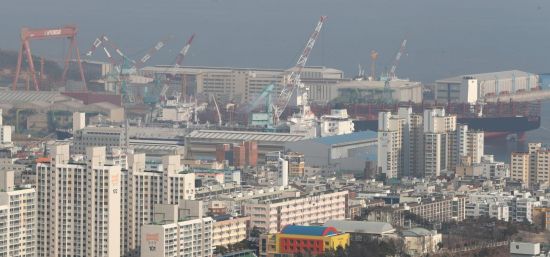 A panoramic view of Dong-gu, Ulsan City, where a shipyard has been established. Photo by Yonhap News
Customized Foreign Workforce Training with Demand-Side Participation
On the 13th, the Ministry of Employment and Labor announced that starting this month, it will jointly conduct a "Pilot Project for Training Foreign Workers Tailored for the Shipbuilding Industry" with Ulsan City. The core of this project is that under Ulsan City's leadership, specialized shipbuilding training will be conducted locally in Uzbekistan, and the Ministry of Employment and Labor will match the trainees who complete the training with small and medium-sized shipbuilding companies in Ulsan through the Employment Permit System.
The Ministry of Employment and Labor recently recognized the growing need for customized vocational training for foreign workers due to increasing demands for specialized personnel by industry and occupation. Accordingly, a cooperative model involving local governments and regional companies as demand-side participants has been newly established and is being piloted.
The Ministry of Employment and Labor and Ulsan City provide pre-arrival training so that foreign workers acquire the unique working environment and skills of the shipbuilding industry. The training is conducted in Uzbekistan for workers selected through the Ministry’s Employment Permit System. The training scale this year is about 280 people, who are expected to enter the country between July and December after completing the training.
Ulsan City supports the training costs and overall operation during this process. The training curriculum is directly designed to reflect the needs of local companies. The Ministry of Employment and Labor prioritizes placing trainees at small and medium-sized shipbuilding companies located in Ulsan. The Uzbekistan government also provides local training-related conveniences and agrees to expedite the workforce dispatch procedures.
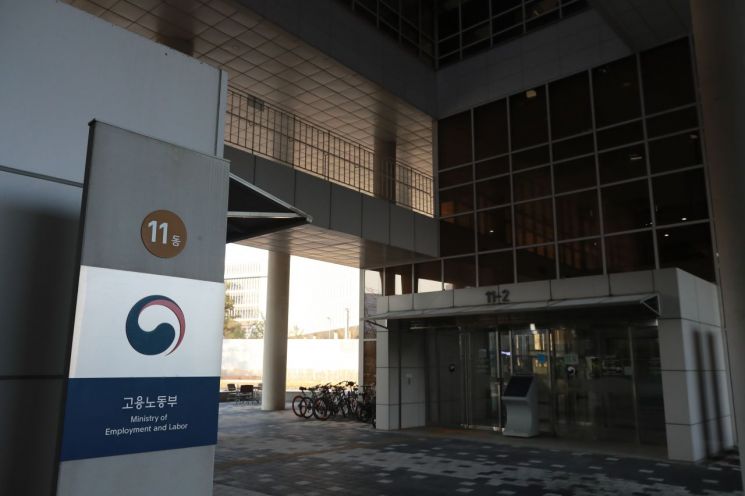
This pilot project is significant in that demand-side entities, such as local governments and companies, participate directly in training the necessary foreign workforce. Companies can secure skilled workers ready for immediate deployment on site, and foreign workers can reduce their adaptation period. The Ministry of Employment and Labor plans to review the project’s outcomes and expand various customized foreign workforce training programs conducted locally in the future.
Systematizing Pre- and Post-Arrival Education...Reducing Gaps in Specialized Training
The Ministry of Employment and Labor plans to systematize education and training before and after arrival for foreign workers under the Employment Permit System, including this cooperative model. Before arrival, demand-driven training like the Ulsan City cooperation model will be newly established and expanded. In particular, the pool of workers who complete pre-arrival training will be separately managed and prioritized for placement and matching with companies in need, such as those in shipbuilding and the root industry.
After arrival, specialized training, which was previously available only to foreign workers already employed, will be extended to workers immediately after arrival. This will be conducted if requested by employers, and workers will be assigned to the field after completing the training to minimize workforce gaps during the training period. The Ministry plans to pilot this primarily among root industry companies in the first half of the year and then expand it mainly to manufacturing sectors.
Kim Min-seok, Vice Minister of Employment and Labor, said, "Starting with the shipbuilding industry, a national key industry and a regional mainstay, we will expand collaborative models involving demand-side participants such as local governments and regional companies." He added, "We will continue to improve the selection and training system for foreign workers."
© The Asia Business Daily(www.asiae.co.kr). All rights reserved.

















