Launch with Solar Wind Observation Satellite 'PUNCH' Delayed Due to Weather
"It Doesn't Seem to Be a SPHEREx Issue, Waiting Patiently"
The launch of the next-generation space telescope 'SPHEREx' has been delayed again. This launch delay is due to weather conditions.
However, the fundamental issue is believed to be various problems that occurred during the process of mounting SPHEREx and the solar wind observation satellite 'PUNCH' together on the Falcon 9 rocket. Since this is NASA's first attempt to complete two missions in a single launch, some technical issues arose, and the resulting secondary problems made the launch delay inevitable.
The Space Force announced on the 11th that the launch was canceled about 40 minutes before liftoff due to bad weather, including heavy clouds near the Vandenberg Space Force Base in California, and that the launch would be rescheduled for 24 hours later.
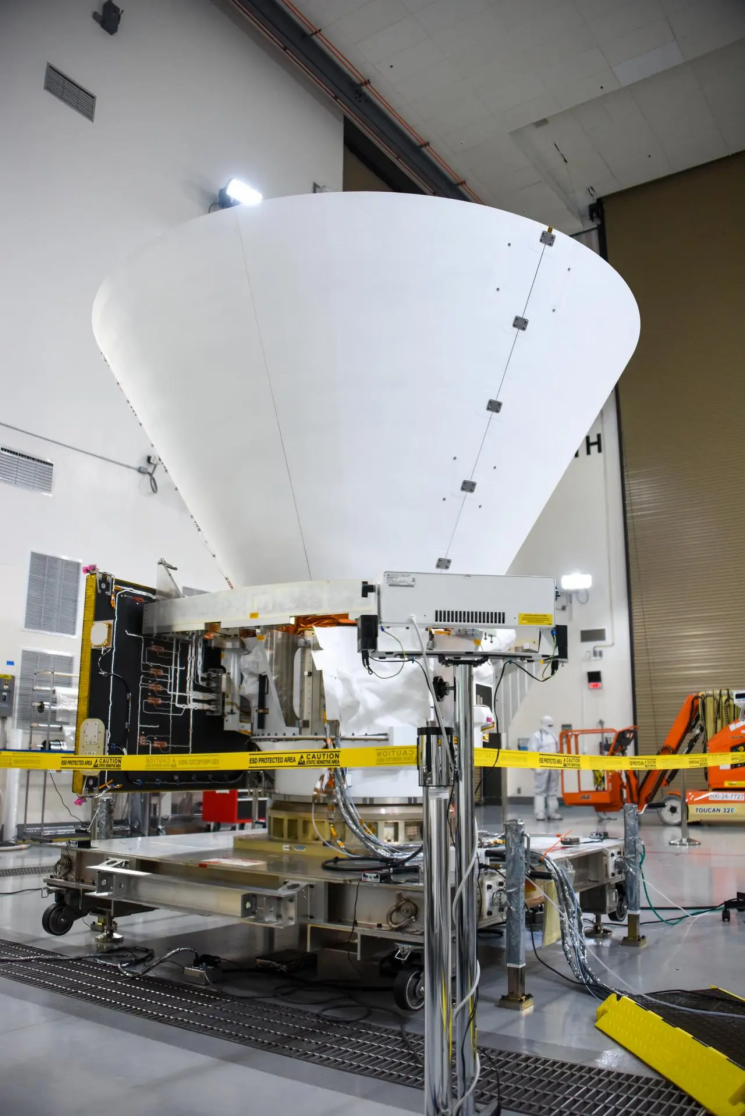 The SPHEREx space telescope is placed on a workbench at the Astrotech processing facility at Vandenberg Space Force Base in California, USA, ahead of pre-launch operations. Photo by Christopher, USSF 30th Space Wing
SPHEREx, jointly developed by NASA and the Korea Astronomy and Space Science Institute, was originally scheduled to be launched on SpaceX's Falcon 9 from Vandenberg Space Force Base in California at 12:09 PM on the 28th of last month (7:09 PM local time on the 27th).
However, the launch has been postponed eight times so far due to pre-launch inspections and weather conditions, and the new launch date has been set for 12:09 PM on the 12th (7:09 PM local time on the 11th). The next scheduled launch date tomorrow may also change depending on weather conditions.
According to the Space Force and NASA, several issues occurred during the process of mounting SPHEREx and the solar wind observation satellite 'PUNCH' on the Falcon 9, causing delays. A problem was identified in the internal system of the fairing (satellite protective cover), which mitigates the impact on the telescope and satellite payloads during Falcon 9's ascent, and the schedule was delayed while it was replaced.
Since this is NASA's first attempt to handle two missions?the solar wind observation satellite 'PUNCH' and the next-generation space telescope 'SPHEREx'?in a single launch, there is a cautious approach to avoid greater damage in case of failure, and several technical issues were also discovered.
Bad weather at the site was also one of the causes of the launch delay. It was reported that heavy clouds caused difficulties during the transportation of new equipment needed for PUNCH repairs to the launch site.
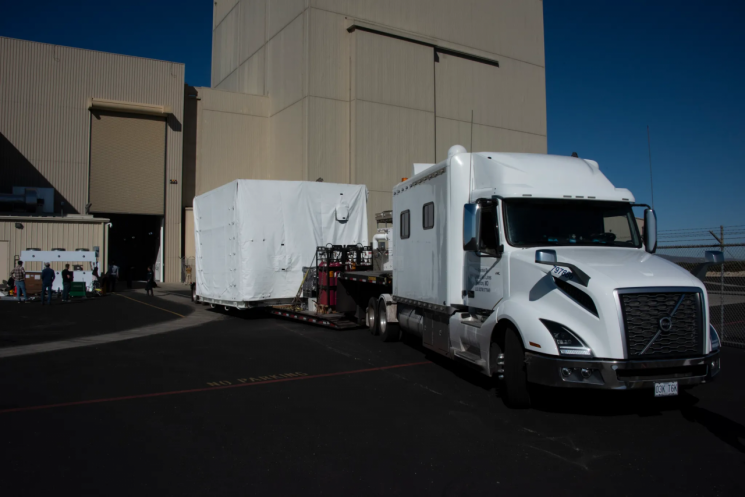 A vehicle carrying the SpearX space telescope arrived at Vandenberg Space Force Base in California, USA, on January 14. Photo by Tony Vauclin, USSF 30th Space Wing
Moreover, after the Starlink (SpaceX communication satellite) launch from Florida on the 2nd, an accident occurred during the return and landing process of the reusable Falcon 9 first stage, which toppled over. Combined with multiple launch delays, this caused scheduling conflicts and it is believed that the priority was lowered compared to the U.S. Space Force's Pacific-Indian mission.
A Korean official eagerly awaiting the launch on site said, "This time, the delay is clearly due to weather, but it seems there are some technical issues as well. There are talks about communication problems, but it does not seem to be an issue with SPHEREx." He added, "We are monitoring the situation in real time through NASA. Launch delays are common, so we are patiently waiting."
SPHEREx is an 'all-sky infrared imaging and spectroscopic survey space telescope.' This survey technology was developed by researchers at the Korea Astronomy and Space Science Institute. Using this technology, SPHEREx can observe infrared light, which is difficult to observe from the ground, and survey the entire sky in 102 wavelength bands to obtain physical information on about one billion celestial objects, creating the world's first three-dimensional infrared space map.
© The Asia Business Daily(www.asiae.co.kr). All rights reserved.


















