Apartment AI Analyzes Heating Costs in Seoul and Gyeonggi Apartments
792 Won Per Square Meter... About 8% Increase from Last Year
"Average Temperature Below Freezing... February's Increase Expected to Be Even Greater"
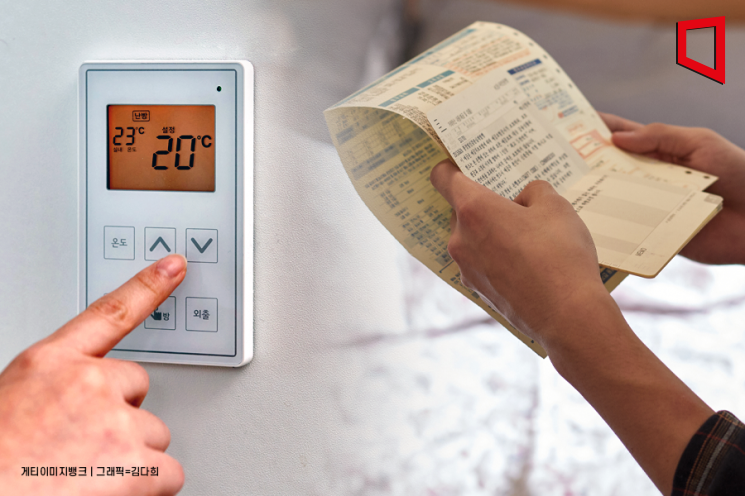
Last month, as numerous accounts of 'heating bill shock' flooded social networking services (SNS), it was reported that the heating costs per household in apartments in the Seoul metropolitan area rose by about 8% in January compared to the same period last year. Furthermore, it is expected that the increase in heating bills in February will be even greater than in January.
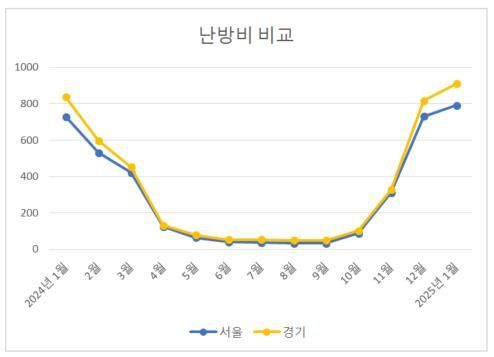
On the 9th, Apartment AI, an apartment living support platform, analyzed the January heating bills of 2,600 apartment complexes in Seoul and found that the heating cost per square meter based on exclusive area was 792 won. This represents an 8.34% increase from 731 won in the same period last year. For residents living in an 85㎡ apartment, known as the 'national standard size' in Seoul, the January heating bill can be interpreted as 67,320 won, about 5,000 won more than last year.
The heating costs for apartments in Gyeonggi Province showed a similar trend. The January heating bill for 5,000 apartments managed by Apartment AI in Gyeonggi was 911 won per square meter, up 8.84% from 837 won in the previous year. Converted to an 85㎡ apartment, this amounts to a heating bill of 77,435 won.
The rise in heating bills compared to last year is analyzed to be due to lower temperatures this winter, which increased heating usage. According to the Korea Meteorological Administration's 'Climate Characteristics for January 2025,' the nationwide average temperature last month was minus 0.2 degrees Celsius, 1.1 degrees lower than the 0.9 degrees average in January last year. This is the 14th coldest record since 1973, when the meteorological observation network was significantly expanded nationwide. In particular, the number of days with snowfall nationwide last month was 9.7, ranking third historically for January. A representative from Apartment AI explained, "The average temperature in January last year was 4 degrees, but this year it was below freezing," adding, "Considering the temperature difference, the increase in heating bills in February is expected to be even greater."
Meanwhile, last month on X (formerly Twitter), a statement showing a management fee of 686,080 won for a 37-pyeong house for January sparked attention. Additionally, users shared experiences of 'heating bill shock,' such as "Usually, it was in the mid-300,000 won range, but this time it was 650,000 won," and "I barely used the boiler because December's bill was too high, but this month it was even higher." At the time, this surge in heating bills was presumed to be influenced by the increase in residential heating usage fees implemented in July last year and the severe cold wave.
© The Asia Business Daily(www.asiae.co.kr). All rights reserved.


















