Survey of 71 Companies by Gwangju HR Development Committee
One-third Suffer from AI Talent Shortage
263 New and Experienced Hires Planned This Year
Only 7% of Companies Have Annual Sales Over 5 Billion KRW
Financial, Technical Support and Talent Development Needed
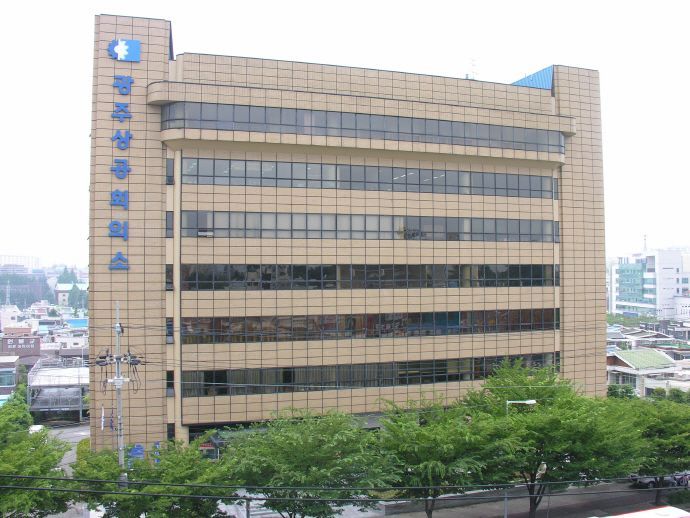
The artificial intelligence industry in the Gwangju region continues to require AI talent, but it has been found that companies are reluctant to adopt AI technology due to a lack of skilled personnel and the burden of initial investment costs.
According to the Gwangju Regional Human Resources Development Committee on the 7th, a survey conducted last November by the committee targeting 71 companies related to the artificial intelligence industry in Gwangju revealed that the biggest challenge in using AI technology was 'lack of AI talent,' cited by 31.0% of respondents.
This was followed by the burden of initial investment costs (25.4%), issues with securing and ensuring the quality of data (23.9%), lack of AI computing resources (9.9%), uncertainty in technology development and commercialization (8.4%), and the limited size of the domestic market (1.4%).
As for difficulties in training (education) for nurturing talent, the lack of practical, hands-on curricula and long-term, systematic training programs was pointed out. The number of hires by respondent companies last year was 205 for entry-level positions and 163 for experienced positions. The number of hires planned for this year is 145 for entry-level and 118 for experienced positions, indicating a decrease compared to last year.
Looking at the sales and workforce status of AI-related companies in the Gwangju region, 69.0% of the respondent companies were small businesses with 'annual sales of less than 500 million KRW.' This was followed by those with sales between 500 million and 1 billion KRW (14.1%), and between 1 billion and 3 billion KRW (9.9%). Only 7.0% of companies had annual sales of 'over 5 billion KRW.'
In terms of workforce, 50.7% of respondent companies had 1 to 5 employees, the largest proportion, followed by 6 to 10 employees at 32.4%. Only 7% of companies had 50 to 100 employees.
The main area of AI technology usage was the establishment of artificial intelligence platforms (28.2%). This was followed by AI service implementation (23.9%), AI service planning (16.9%), AI remodeling (14.0%), AI system operation and management (8.5%), and AI training data construction (8.5%).
AI companies in the Gwangju region cited financial support (71.8%) as the most needed assistance to expand AI technology utilization. This was followed by technical support (11.3%), talent development (8.5%), and support for training data (4.2%).
A representative from the Gwangju Regional Human Resources Development Committee stated, "If the AX Demonstration Valley project currently being promoted by Gwangju City gets into full swing, there will be a greater demand for AI-related talent and training in Gwangju, and advanced training will become necessary." The representative added, "Together with the Gwangju Human Resources Development Center, Honam Vocational School, and Korea Polytechnics, we plan to establish six AI training programs as regular courses in 2025."
© The Asia Business Daily(www.asiae.co.kr). All rights reserved.

![Clutching a Stolen Dior Bag, Saying "I Hate Being Poor but Real"... The Grotesque Con of a "Human Knockoff" [Slate]](https://cwcontent.asiae.co.kr/asiaresize/183/2026021902243444107_1771435474.jpg)















