Cases of Chinese-made golf clubs being disguised and sold as domestic products are increasing, riding on the popularity of park golf.
The Seoul Customs Office of the Korea Customs Service announced on the 7th that it recently conducted intensive crackdowns on such activities and seized goods worth approximately 9 billion KRW.
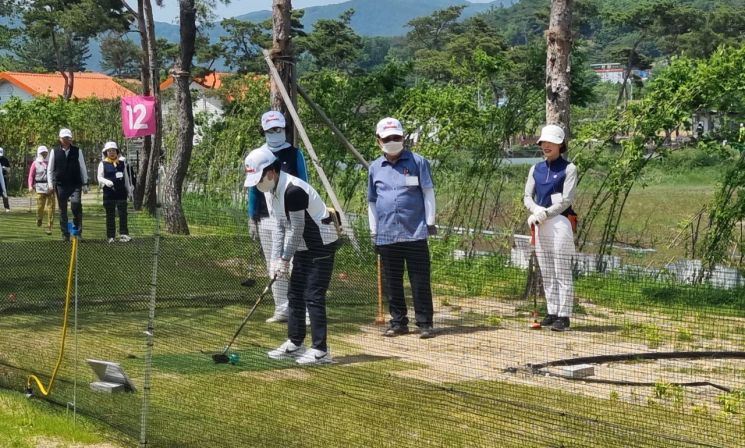 Park golf tournament participants are engaged in the competition. Photo is unrelated to the article. Source=Asia Economy DB
The intensive crackdown was carried out in response to the rapid increase in demand for related products as the number of park golf participants, mainly among the elderly, exceeded 1 million.
They analyzed import performance and domestic distribution status in advance, focusing on items suspected of being sold as domestic products, and then investigated whether importers and sellers violated origin labeling regulations.
The main types of violations detected were falsely labeling the origin as domestic or removing the Chinese origin label before selling.
Importers and sellers who falsely labeled and sold the origin as domestic imported the head and grip?key components of park golf clubs?from China, then assembled them with domestically produced shafts to disguise the origin as domestic.
The Foreign Trade Management Regulations stipulate that "domestically produced goods using imported raw materials can only be labeled and sold as domestic if the domestic manufacturing cost ratio is 51% or higher." However, the companies caught in the crackdown did not meet this standard but still falsely labeled the origin as domestic and sold the products.
There were also cases where all major components of park golf clubs?head, shaft, grip?were imported from China and only simple assembly was done domestically, yet the Chinese origin label displayed at import customs clearance was removed before sale, which was detected in this crackdown.
The companies caught violated the Foreign Trade Management Regulations, which state that "if two or more countries are involved in the production, manufacturing, or processing of imported goods, the country performing only simple processing activities cannot be labeled as the origin."
A Seoul Customs official said, "To protect domestic consumers and producers and guarantee the public's right to know, we plan to continue cracking down on origin labeling violations, focusing on socially sensitive products."
© The Asia Business Daily(www.asiae.co.kr). All rights reserved.

















