Announcement on 'Student Return and Normalization of Medical Education'
If Medical Students Return by the End of March,
Medical School Admissions Set at 3,058 for 2026
The government is reportedly set to conditionally accept the opinions of medical school deans and university presidents. If medical students return to classes by the end of this month, there will be no increase in medical school admissions for 2026, and the number of medical school seats will revert to ‘3058 students.’
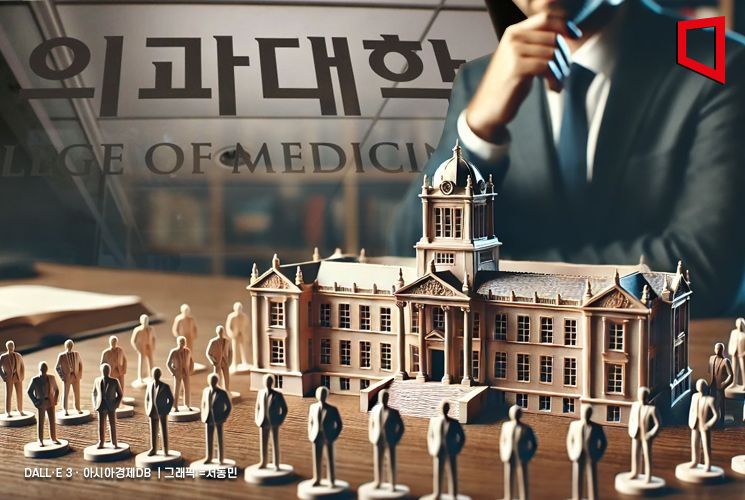
At 2 p.m. on the 7th, the Ministry of Education will hold a briefing titled ‘Student Return and Normalization of Medical Education’ at the Government Seoul Office. At this event, Yang Obong and Lee Haewoo, co-chairs of the Council of University Presidents for Medical School Advancement (UIC), and Lee Jongtae, chairman of the Korea Association of Medical Colleges (KAMC), will deliver a proposal to the government. Deputy Prime Minister and Minister of Education Lee Juho is expected to accept it and announce support measures for medical education in the 2026 academic year.
As concerns arose that the refusal of medical students to attend classes in protest against the increase in medical school admissions could result in ‘zero doctors graduating’ over the next two years, the government accepted the urgent demand to prevent disruption in medical education and to promptly restore normalcy. According to the Korean Medical Students Association (KMSA), 97% of enrolled students from the 24th cohort onward declared their intention to take a leave of absence for the first semester of this year. Catholic University (pre-med and medical courses), Jeju University, Kosin University, Kangwon National University, and Ulsan University postponed the start of their semesters while waiting for the absent medical students to return.
The ‘3058 students’ plan is premised on the return of these medical students. The UIC included a condition in their proposal stating that ‘all enrolled students from all years must return by March 28, before which normal academic schedules and course completion are possible.’ While they agree with the government’s direction to increase medical school admissions to prevent the collapse of essential and regional healthcare, they emphasize that preventing the collapse of medical education is the priority at this time.
From the 2027 academic year onward, the Medical Workforce Supply and Demand Estimation Committee (Estimation Committee) will review medical school admissions, and the Ministers of Health and Welfare and Education will decide through consultation. The ‘3058 students’ plan applies only to 2026 because if the Estimation Committee fails to reach an agreement that year, the number will be determined through consultation among university presidents and the Ministers of Education and Health and Welfare. Therefore, the ‘3058 students’ plan is a temporary measure applicable only for next year.
© The Asia Business Daily(www.asiae.co.kr). All rights reserved.

![Clutching a Stolen Dior Bag, Saying "I Hate Being Poor but Real"... The Grotesque Con of a "Human Knockoff" [Slate]](https://cwcontent.asiae.co.kr/asiaresize/183/2026021902243444107_1771435474.jpg)














