Uncertainty Over Tariffs and Weak Economic Indicators
Probability of Recession Rises from 17% to 31%
A warning has been issued that the likelihood of a recession in the U.S. economy is increasing due to uncertainties caused by tariffs and weak economic indicators.
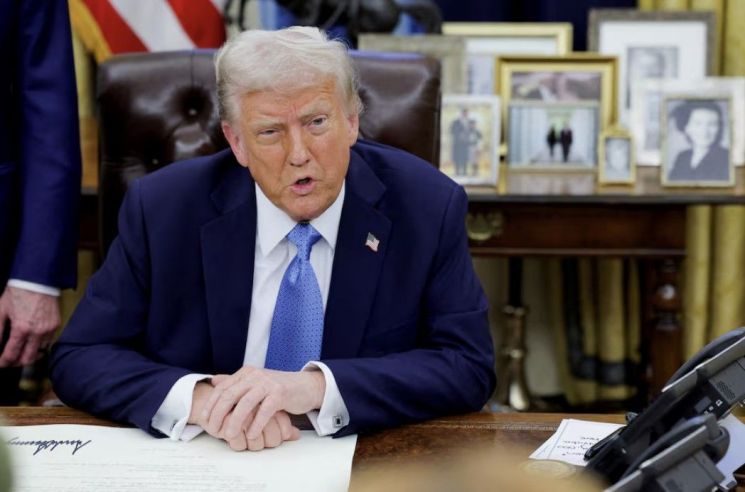
According to Bloomberg News on the 5th local time, JP Morgan, the largest bank in the U.S., reported that the probability of a recession based on its economic analysis model as of the 4th was 31%. This is nearly double compared to 17% in November last year.
Judging by indicators such as the 5-year Treasury bond prices, major metal price indexes, and small-cap stock price indexes, the probability of a recession has risen to about 50%.
Investment-grade, or high-quality bond market indicators, show the possibility of economic contraction at 8%, which is still relatively low. However, this is also significantly higher compared to virtually 0% at the end of November last year.
In a similar analysis model by Goldman Sachs, a major U.S. investment bank (IB), the probability of a recession was 23%, nearly double the 14% recorded in January.
Nikolaos Panigirtzoglou, a strategist at JP Morgan, said, "In recent weeks, U.S. economic activity indicators have weakened, and corporate and consumer confidence indexes have already declined. With tariffs imposed on Canada, Mexico, and China, the risk of a greater hit to future corporate and consumer confidence is increasing," adding, "This ultimately raises the possibility of a U.S. economic recession."
Meanwhile, Goldman Sachs identified the sectors benefiting and suffering from the current tariff war in a separate report. The report analyzed, "The biggest beneficiaries are primary steel and aluminum manufacturing and raw material production industries, while the most affected industries are secondary manufacturing that uses steel and aluminum, as well as secondary manufacturing sectors such as petroleum and coal products and pharmaceuticals."
© The Asia Business Daily(www.asiae.co.kr). All rights reserved.
![Clutching a Stolen Dior Bag, Saying "I Hate Being Poor but Real"... The Grotesque Con of a "Human Knockoff" [Slate]](https://cwcontent.asiae.co.kr/asiaresize/183/2026021902243444107_1771435474.jpg)











