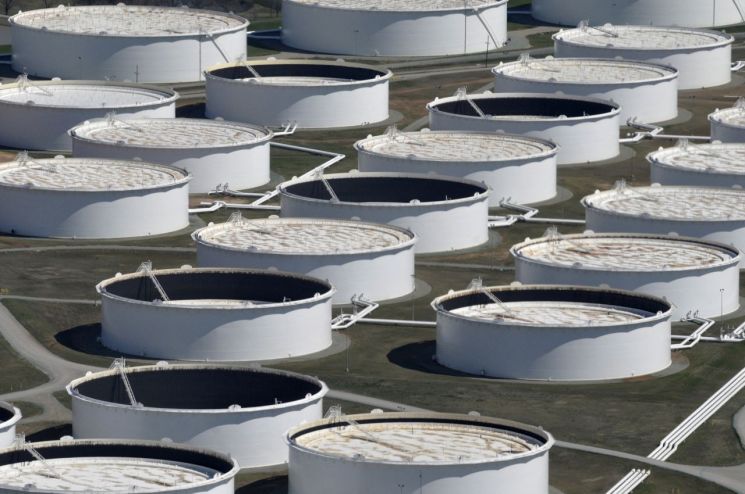
As U.S. President Donald Trump imposes tariffs on Canada and Mexico, there are forecasts that the global crude oil supply chain will be newly reorganized.
On the 4th (local time), Bloomberg reported that as the Trump administration pushes forward with tariff policies, the crude oil supply chain could undergo its biggest change since Russia's invasion of Ukraine in 2022.
The change in the crude oil supply chain is expected to occur as the crude oil from Canada and Mexico purchased by the U.S. is replaced by products from other regions. In the case of Canadian crude, the volume flowing into the U.S. may decrease, but Bloomberg reported that since the tariff rate is relatively low, the supply structure is unlikely to change significantly.
Kit Haines, a researcher at energy consulting firm Energy Aspects, predicted, "If tariffs persist long-term, more crude oil that can be exported to the U.S. without tariffs from Latin American countries such as Brazil will flow in," adding, "In addition, crude oil imported from the Middle East may also increase."
Industry experts forecast that gasoline and other fuel prices in the U.S. will rise due to the reorganization of energy trade. George Leon, head of geopolitical analysis at energy research firm Rystad Energy, said, "Tariffs could in some way stimulate inflation and affect consumer confidence."
Chad Thompson, CEO of the American Fuel & Petrochemical Manufacturers (AFPM), also pointed out, "One reason the U.S. has been able to secure energy security is because of crude oil trade with Canada and Mexico," adding, "Imposing tariffs on energy and petrochemical products does not make the U.S. safer in terms of energy nor lower costs for consumers."
© The Asia Business Daily(www.asiae.co.kr). All rights reserved.












