Both Driver and Passengers Respond to Sudden Emergency
Bus Driver Oversees Patient Transfer Until the End
A story has emerged about a grandmother who collapsed on a city bus operating in Seoul and was helped through the combined efforts of a bus driver in his 50s and passengers. Yonhap News reported on an incident that occurred around 4 p.m. on the 20th of last month on Seoul city bus number 3413. At that time, a grandmother passenger on the bus suddenly lost her balance and staggered. She tried to hold onto the bus handrail to steady herself but soon let go, bumped into another passenger, and then fell backward with a thud onto the floor. Passengers who were preparing to get off due to the sudden situation postponed their exit and rushed over. In particular, Kim Sook (52), who was driving the bus, hurriedly stopped the vehicle and ran to the grandmother’s side.
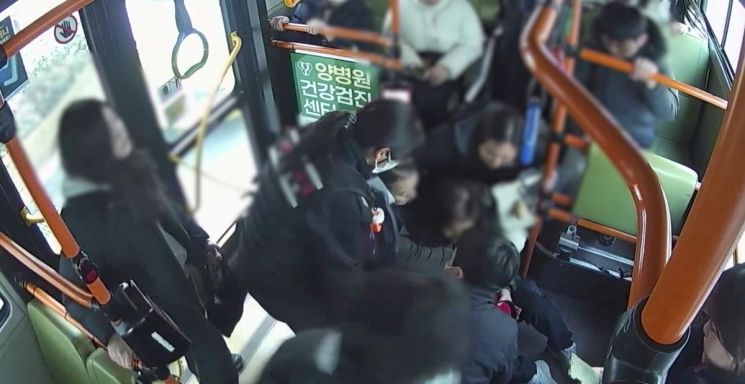 A story has emerged about a grandmother who collapsed inside a city bus operating in Seoul, and how a bus driver in his 50s and passengers worked together to help her. Provided by Seoul City Bus Transportation Association
Fortunately, the collapsed grandmother was conscious. Kim asked another passenger to call 119 (emergency services) and held the grandmother while checking on her condition. Passengers searched the grandmother’s bag for a mobile phone and tried to contact her family. Over the phone, the grandmother’s daughter said, "Mom, try eating a candy," so those nearby found some candy and gave it to the grandmother while waiting for the 119 ambulance. After guiding other passengers onto another bus on the same route that arrived, Kim stayed behind alone to oversee the patient’s transfer. After returning to the company, Kim said she was worried about the patient’s condition and called the guardian.
Kim said, "The grandmother was discharged without any major issues, and I received thanks from her daughter," adding, "I just did what any driver would do, so I feel a bit embarrassed." She continued, "I have been driving buses for about 10 years at this company, and this was the first time I experienced an emergency situation, so I was momentarily flustered," and said, "I’m glad we were able to respond quickly together with the passengers." Netizens who read the story responded with comments such as, "It’s heartwarming to see both passengers and the driver respond as one," "A society where people help each other, a considerate Korea," and "I’m really relieved the grandmother wasn’t seriously injured."
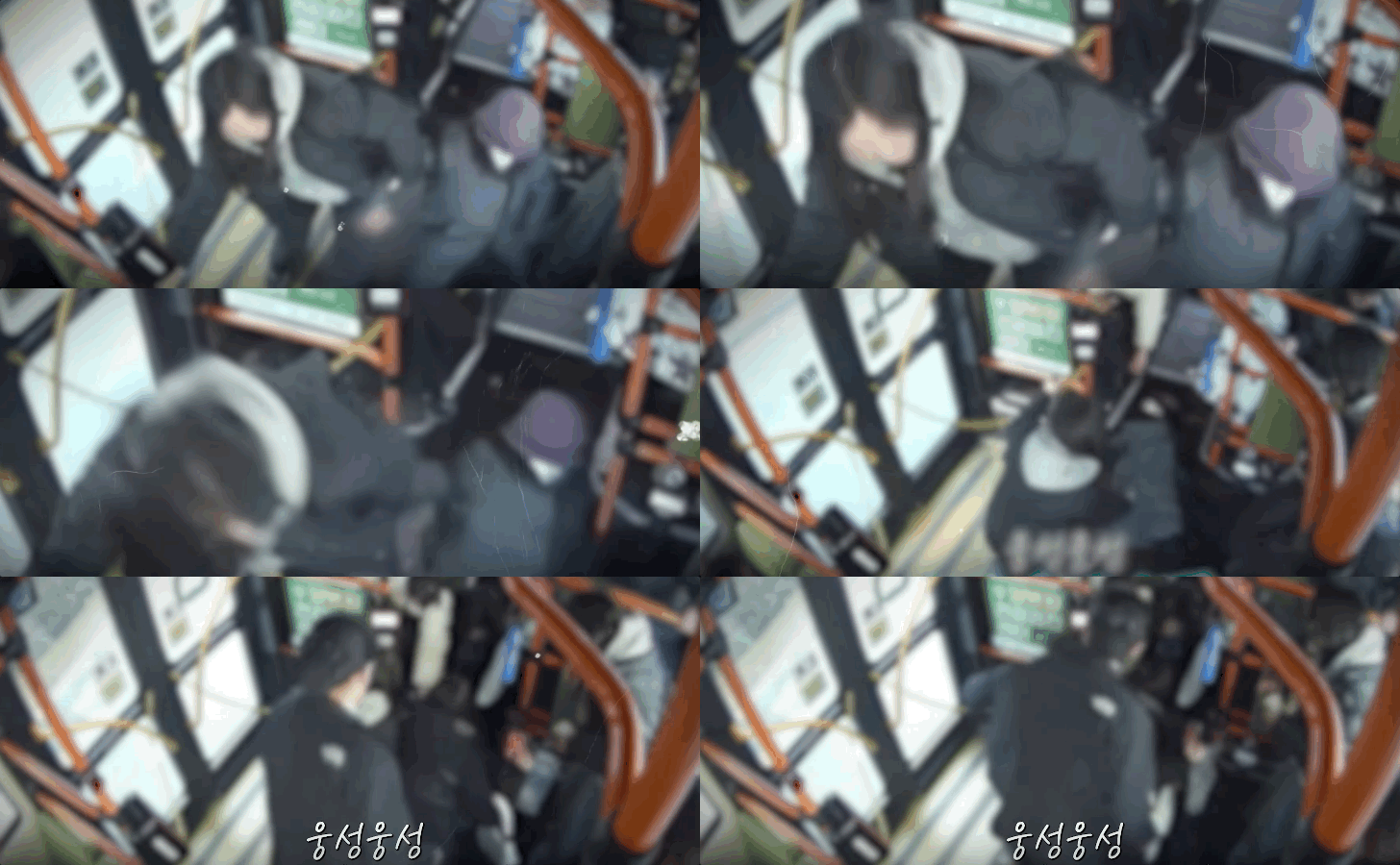 A story has emerged about a grandmother who collapsed inside a city bus operating in Seoul, and how a bus driver in his 50s and passengers worked together to help her. Provided by Seoul City Bus Transportation Business Association
Meanwhile, if a patient with diabetes experiences low blood sugar, hypoglycemia symptoms may appear. Older patients may not recognize these symptoms early on, increasing the risk of the situation worsening. Diabetic patients with kidney problems may experience more severe symptoms when hypoglycemia occurs. If hypoglycemia symptoms are detected, the patient should be allowed to rest immediately and their consciousness checked. If conscious, they should be given foods containing sugar. Two or three sugar cubes or about half a cup of cola or juice are recommended. Conversely, if the patient is unconscious, they should never be fed.
There is a risk that food could enter the lungs and block the airway, so the patient must be transported to the emergency room quickly. Although less frequent than hypoglycemia, hyperglycemia is also a risk for diabetic patients. When insulin is insufficient and blood sugar levels rise significantly, dehydration occurs in the body. If a diabetic patient frequently feels thirsty, urinates often, or has bad breath, hyperglycemia may be suspected. Symptoms such as fatigue, drowsiness, loss of appetite, vomiting, abdominal pain, and diarrhea are also signs of hyperglycemia. If severe, it can lead to loss of consciousness. The risk of hyperglycemia and dehydration increases during the hot summer months when sweating is heavy.
If a patient showing hyperglycemia symptoms is conscious, first check whether they have taken their diabetes medications such as insulin or blood sugar-lowering drugs on time, and if missed, help them take it. Drinking water without sugar can also help if thirst is severe. If symptoms do not improve or the patient is unconscious, they should be taken to the hospital immediately. If a diabetic patient collapses and it is unclear whether it is due to hypoglycemia or hyperglycemia, emergency medical services (119) should be called first, sugar cubes placed under the tongue, and the legs elevated.
© The Asia Business Daily(www.asiae.co.kr). All rights reserved.


















