"Foreigners Paying the Tourism Tax
Will Be Eligible for Life and Accident Insurance"
The Thai government is pushing to introduce a 'tourism tax' targeting foreigners entering the country.
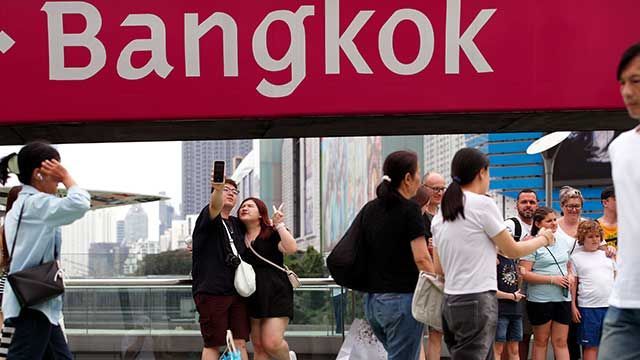
Local Thai media, including The Nation, reported on the 28th of last month that Sarawong Tiantong, Minister of Tourism and Sports of Thailand, announced plans to impose a tourism tax of 300 baht (approximately 13,000 KRW) per person on foreign tourists upon entry within this year. Minister Sarawong explained that once the tourism tax system is approved next month and published in the Royal Gazette, it will be implemented starting from the winter season, which is the peak tourism period in Thailand. He stated, "All foreigners paying the tourism tax will be able to enroll in life and accident insurance," and predicted, "Since the burden is not significant, it will not lead to a decrease in tourists."
This tourism tax will be collected not only from those arriving by air but also from foreigners entering via land and sea routes. However, Minister Sarawong added that tourists who revisit within 60 days will not be charged the tourism tax again.
Previously, Thailand had been attempting to impose a tourism tax known as an 'entry tax' since the previous government, but it was scrapped due to opposition from the tourism industry. Last year, the Thai government planned to charge foreign tourists an entry fee of 300 baht but later canceled the plan. The industry argues that the tourism tax could become an obstacle to the recovery of the tourism sector, which has been severely impacted by the COVID-19 pandemic.
Tourism in Thailand is a key industry, accounting for about 20% of the gross domestic product (GDP) and jobs both directly and indirectly. In 2019, the amount spent by foreign tourists in Thailand accounted for about 11% of the GDP. The number of foreign visitors to Thailand was around 40 million annually in 2019, but due to the COVID-19 pandemic, it sharply dropped to 430,000 in 2021. Last year, 35 million visitors came, recovering to pre-pandemic levels.
Meanwhile, many famous tourist destinations worldwide have been collecting tourism taxes due to overtourism caused by a surge in tourist numbers. Amsterdam in the Netherlands raised its tourism tax on hotel stays from about 7% of the accommodation fee per night to 12.5%, and for passengers staying on cruise ships and other vessels, the tourism tax increased from 8 euros (approximately 12,000 KRW) to 11 euros (approximately 16,500 KRW). Japan is also reportedly considering raising its 'International Tourist Passenger Tax' from the current 1,000 yen (approximately 9,660 KRW) to between 3,000 and 5,000 yen (approximately 29,000 to 48,000 KRW).
More local governments are introducing or planning to introduce accommodation taxes imposed on hotel and inn guests. The Bali provincial government in Indonesia has been charging a tourism tax of 150,000 rupiah (approximately 13,000 KRW) on foreign tourists entering Bali since February last year. The tax is collected for purposes such as protecting local culture and environment and investing in infrastructure.
© The Asia Business Daily(www.asiae.co.kr). All rights reserved.

![Clutching a Stolen Dior Bag, Saying "I Hate Being Poor but Real"... The Grotesque Con of a "Human Knockoff" [Slate]](https://cwcontent.asiae.co.kr/asiaresize/183/2026021902243444107_1771435474.jpg)















