Supreme Court Overturns Lower Court Ruling
Affiliates' External Transactions Also Deemed "False Tax Invoices"
The Supreme Court has ordered a retrial on the part where the second trial acquitted former Samyang Foods Chairman Jeon In-jang of some charges related to fabricating false tax invoices exceeding 50 billion won through paper companies.
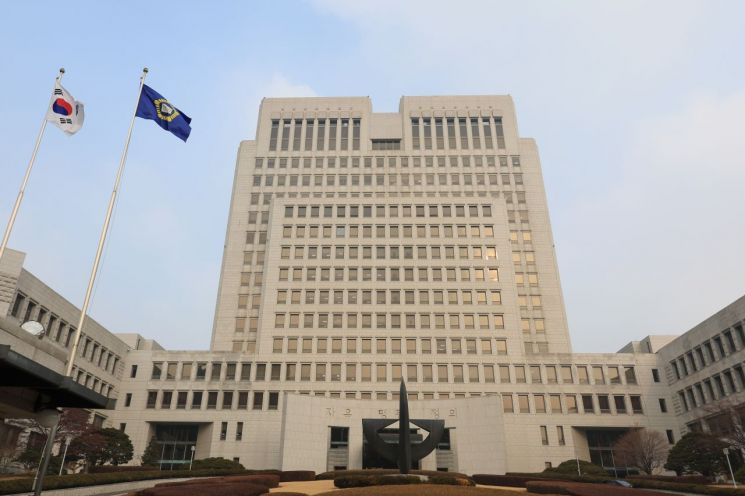
On the 27th, the Supreme Court's 3rd Division (Presiding Justice Lee Heung-gu) overturned the original ruling that sentenced former Chairman Jeon, who was indicted for violating the Act on the Aggravated Punishment of Specific Crimes (issuance of false tax invoices, etc.), to 1 year and 6 months in prison with a 3-year probation and a fine of 650 million won, and remanded the case to the Seoul High Court.
The Supreme Court found that the High Court's acquittal on the charges of violating the Tax Offense Punishment Act related to external transactions of two affiliates should be reconsidered. Former Chairman Jeon was indicted for issuing false invoices and tax invoices worth 53.8 billion won through two paper companies he operated from 2010 to 2017.
The first trial sentenced former Chairman Jeon to 3 years in prison with a 5-year probation and a fine of 19.1 billion won. However, the High Court acquitted him of the charges of violating the Tax Offense Punishment Act, stating that "the two affiliates conducted external transactions, operated their businesses with their own assets and responsibilities, and paid value-added tax." Accordingly, the sentence was reduced to 1 year and 6 months in prison with a 3-year probation and a fine of 650 million won.
In response, the Supreme Court ruled, "The remaining transactions, excluding the internal transactions judged as guilty in the original trial, also constitute the issuance of false tax invoices." It further explained, "The affiliates only borrowed the names of the paper companies to register as business operators, not to conduct actual business, but for the purpose of embezzlement or in the process of transferring the affiliates' sales to the paper companies, they used the existing business registrations under the paper companies' names to falsely issue and receive tax invoices."
© The Asia Business Daily(www.asiae.co.kr). All rights reserved.